As an Amazon Associate, we earn from qualifying purchases. Some links on this site are affiliate links at no extra cost to you. Our recommendations are based on thorough research and editorial judgment.


How Do I Properly Adjust My Helmet Straps for Maximum Safety?

To properly adjust our helmet straps for maximum safety, we should follow these steps. First, verify the helmet fits snugly without sliding. The side straps should form a “Y” shape just below our ears, with the yoke buckle near the jawline. We need to balance strap lengths, allowing for slight movement during shake tests. Additionally, snug the chin strap to prevent excessive movement. Regular adjustments and inspections are essential for maintaining security. We can learn more about helmet safety practices next.
Key Takeaways
- Ensure the side straps form a “Y” shape just below each ear for proper alignment and stability.
- Position the yoke buckle near the corner of the jawbone for enhanced comfort and security.
- Adjust strap lengths to achieve a snug fit, allowing about one inch of movement during a shake test.
- Regularly check for strap wear and tighten straps to prevent “strap creep” and ensure helmet stability.
- Inspect your helmet frequently for damage and replace it if there are visible cracks or after significant impacts.
Importance of Properly Adjusted Helmet Straps
You may be interested


Why is it vital to have properly adjusted helmet straps? Proper strap tension is important for injury prevention. When our helmet straps fit well, they keep the helmet stable on our heads during impacts. This stability minimizes helmet movement, which can lead to serious injuries.
Straps should be snug enough that the helmet moves slightly down when we open our mouths wide. Loose straps allow the helmet to shift, exposing vulnerable areas of our heads.
To guarantee the best fit, we must regularly check and tighten the straps. This helps prevent “strap creep,” which occurs over time and compromises helmet positioning. A secure fit is vital; it reduces the risk of concussions and other head injuries during accidents, making helmet adjustments a non-negotiable safety measure. Additionally, ensuring that your helmet meets CPSC Safety Standards can further enhance protection and peace of mind while riding.
Sizing Your Helmet for Optimal Fit

Sizing your helmet correctly is essential for ensuring ideal safety and comfort. To achieve this, we first need to take an accurate head measurement. Using a flexible tape measure, wrap it around the largest part of our head, just above the eyebrows and ears. Note the measurement in centimeters or inches for universal sizing compatibility.
Next, we must focus on determining shape. Recognizing whether we have a long oval, intermediate oval, or round oval head shape affects helmet comfort and fit. This is vital for safety effectiveness. We can use a mirror or ask someone to observe our head from the top. Finally, we should compare our measurements to brand-specific sizing charts for the best fit, as sizes may vary by manufacturer. Additionally, ensuring that the helmet meets safety certification standards is crucial for maximizing protection during rides.
Positioning the Helmet Correctly

When we position our helmet correctly, we enhance both safety and comfort, ensuring maximum protection during use. The helmet position on our head should be level—neither tilted forward nor backward. Ideally, it sits 1 to 2 finger widths above our eyebrows, allowing visibility while protecting our forehead. The front edge must cover the upper forehead without blocking our sight.
Additionally, we should avoid helmet height that exposes our forehead or obstructs vision. When we shake our heads gently, the helmet should remain stable without sliding. Achieving this balance between comfort and safety is essential; the helmet must feel snug, yet not cause discomfort. By focusing on these positioning details, we optimize our helmet’s protective capabilities. Proper helmet fitting is crucial for maximizing safety and comfort.
Adjusting the Side Straps for Stability

To guarantee our helmet fits securely and remains stable, we must adjust the side straps properly. The side straps should form a distinct “Y” shape just below the ears. We need to ascertain the yoke buckle rests near the jawbone corner. If the straps are too high or low, they’ll compromise helmet stability.
Next, we should balance strap lengths on both sides. Proper strap alignment helps maintain a snug fit without causing discomfort. The straps must be taut but not overly tight, allowing for comfort adjustments while keeping the helmet stable.
Before finalizing, we’ll verify that the side straps allow no more than an inch of movement during shake tests. This ascertains our helmet remains securely in place during use. Additionally, a well-fitted helmet can significantly enhance impact protection features, making it crucial for safety during rides.
Securing the Chin Strap for Comfort

Securing the chin strap is essential for guaranteeing both comfort and safety during helmet use. We should verify the chin strap fits snugly under the chin without being too tight. The strap must sit properly under the jaw, avoiding discomfort from buckle interference with the jawbone.
To achieve the best chin strap comfort, we should follow these guidelines:
- The chin strap forms a “Y” shape under the ears.
- Adjust the tightness so one finger fits between the strap and chin.
- Test by yawning; we want the helmet to shift slightly.
Keeping the straps away from sensitive areas prevents discomfort during extended wear. Regular checks will maintain strap integrity and effective helmet function. Additionally, ensuring that the helmet complies with safety standards can enhance overall protection during rides.
Checking the Overall Fit of the Helmet
Ensuring a helmet fits correctly is essential for ideal safety and comfort during use. To conduct effective fit testing, let’s check several key parameters.
Position and Stability
The helmet should sit level on our heads, covering the forehead with the front rim 1 to 2 finger widths above the eyebrows. When we perform a shake test, it shouldn’t rock forward, backward, or side to side.
Strap Alignment
Side straps should form a “Y” just below each earlobe, lying flat without twisting.
Forehead Coverage
Ensure the helmet doesn’t rise too high or fall too low, blocking vision. After fit adjustments, conduct a helmet checkup to confirm comfort and snugness, as minor tweaks might be necessary for optimal coverage and security. Additionally, ensure that the helmet meets U.S. CPSC safety standards for reliable protection during your rides.
Common Mistakes to Avoid
When we adjust helmet straps, we must be cautious about common mistakes that can compromise safety and comfort.
Incorrect Strap Positioning: Straps should form a “V” around our ears for stability. We must position the buckle closer to our chin to avoid discomfort.
Tension Adjustment: Straps need proper tension. Too loose allows shifting, while over-tightening causes discomfort. We should always test fit with the “big yawn test” to guarantee security.
Helmet Position: The helmet should rest evenly on our heads, not too high or too low. Proper rear strap adjustments are essential for helmet alignment to maintain even force distribution during impacts. Ensuring that the helmet meets CPSC safety standards further enhances protection while riding.
Regular Maintenance for Helmet Safety
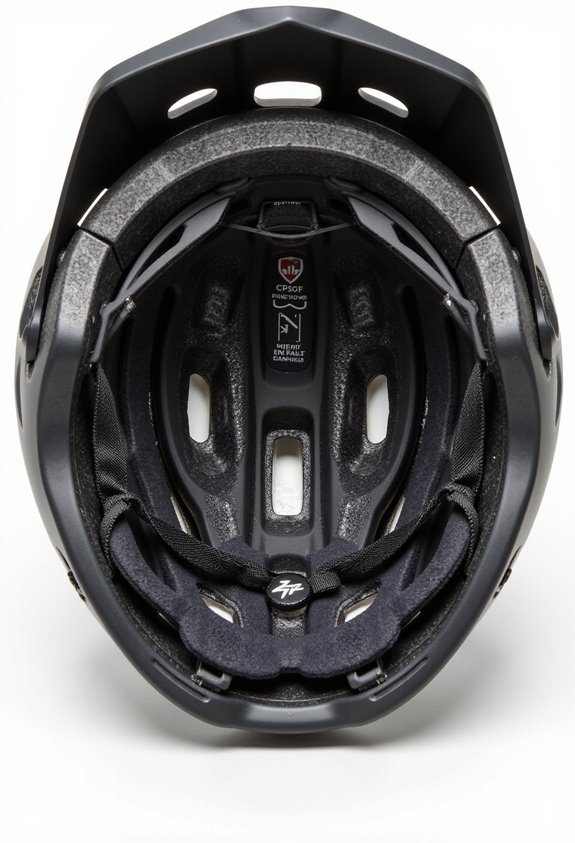
To maintain helmet safety and longevity, we must engage in regular maintenance practices. Routine inspections are vital. We should visually check for cracks, dents, or discoloration daily. It’s important to examine chin straps and suspension systems for fraying or tears, which can impair fit and protection.
Cleaning is another key component. We should deep clean our helmets monthly with mild soap and warm water, ensuring we replace sweatbands and interior padding regularly. Additionally, proper storage protects our helmets. We need to keep them in dry, cool places, away from sunlight and heat. Following a structured maintenance schedule, including documenting inspections and cleaning, helps track our helmet’s condition, ensuring our safety is never compromised. Regular checks should also include assessing the fit of your helmet to ensure it remains snug and secure over time.
When to Replace Your Helmet
Understanding when to replace your helmet is essential for maintaining safety. We must follow specific replacement criteria to guarantee maximum protection. First, we should replace the helmet after any significant impact, regardless of visible damage. Visible cracks or dents indicate compromised safety and require immediate replacement.
Next, manufacturer guidelines suggest a lifespan of 2 to 5 years, particularly for helmets consistently exposed to sweat and sunlight. Environmental factors like UV exposure, heat, and chemicals can accelerate degradation, further impacting helmet longevity. Additionally, aero handlebars can be affected by similar environmental conditions, emphasizing the importance of regular inspections for all cycling gear.
A thorough daily inspection can spot wear, such as damaged suspension systems. By adhering to these guidelines, we can maintain the necessary compliance with safety metrics set by organizations like ANSI and OSHA, guaranteeing ideal helmet performance.
Frequently Asked Questions
How Often Should I Check My Helmet Strap Adjustments?
Did you know 70% of helmet users neglect regular strap checks? We should check our helmet strap adjustments before each use and monthly, adopting smart strap maintenance tips for ideal safety and comfort.
Can I Wear a Hat Under My Helmet?
We can’t recommend wearing a hat under our helmets due to fit issues. Comfort factors are essential, so let’s opt for compatible helmet liners instead to maintain safety without compromising snugness or protection.
What if My Helmet Size Varies Between Brands?
When it comes to helmet fitting, we’ve all been there—jumping from brand to brand can be a real circus! Always try on multiple helmets since sizes can vary considerably. Comfort and safety should go hand in hand!
Are There Specific Helmets for Different Activities?
Yes, there are specific helmets for different activities. For instance, mountain biking helmets provide enhanced protection for rough terrains, while skateboarding helmets are designed to handle repeated impacts, ensuring we stay safe during our adventures.
How Should I Clean the Straps Without Damaging Them?
To clean helmet straps safely, let’s soak them in warm, soapy water. We’ll gently scrub using our fingers, avoiding harsh chemicals. Regular strap maintenance techniques keep them strong—mild cleaning solutions are best for longevity.