As an Amazon Associate, we earn from qualifying purchases. Some links on this site are affiliate links at no extra cost to you. Our recommendations are based on thorough research and editorial judgment.
Are Expensive Bike Helmets Worth the Extra Money?

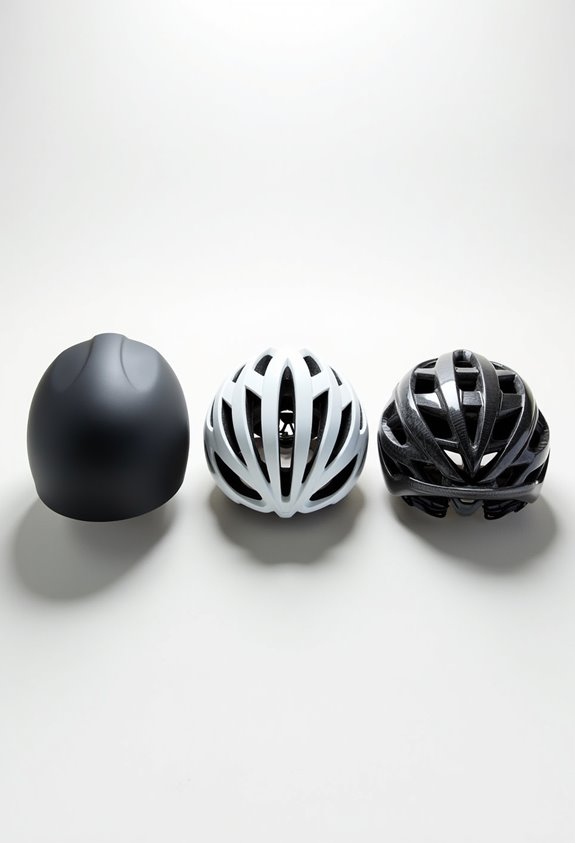
When considering expensive bike helmets, we find that their advanced materials and technologies can greatly enhance safety. Helmets using features like MIPS and composite shells can better absorb impacts and protect against rotational forces. While cost doesn’t always equate to superior protection, higher-priced options usually incorporate rigorous safety standards. Our analysis shows that investing in quality helmets can save on medical costs due to reduced injuries. Let’s examine more details about the value of these safety investments.
Key Takeaways
- Premium helmets often feature advanced materials and technologies that enhance impact absorption and protection against rotational injuries.
- Higher-priced helmets may provide better aerodynamic efficiency, potentially improving cycling performance over long distances.
- Price doesn’t always correlate with safety, as some affordable helmets effectively protect against severe injuries.
- Investing in quality helmets can lead to substantial medical cost savings, aligning with long-term economic benefits.
- Helmets, regardless of price, significantly reduce the incidence of head injuries and serious trauma among cyclists.
Economic Impact of Bike Helmets
You may be interested


The economic impact of bike helmets is profound and multi-faceted. Each year, bicycle-related injuries and fatalities cost the U.S. over $23 billion. By promoting helmet donations and community programs, we can greatly reduce this financial burden. Helmets can prevent 49-56% of fatal head injuries, translating into an estimated savings of $5.8 billion in medical costs.
Investments in helmets are comparatively small, at around $261 million annually, but yield savings of approximately $30 for every dollar spent. Implementing helmet programs for children not only protects their well-being but also mitigates the $2.2 billion spent annually on youth injuries. Fostering awareness through community initiatives will contribute to a safer cycling environment and enhance public health, ultimately benefiting society’s economic landscape. Additionally, mini bike pumps play a crucial role in ensuring cyclists can maintain their equipment, further promoting safety and reducing the risk of accidents.
Recommended Products

Powerful 9000W Motor & Performance: Experience the ultimate in speed and power with the 9000W peak motor on this electric monowheel. It effortlessly climbs 45° inclines and reaches a thrilling 75 mph top speed. With up to 93 miles of range on a single charge, this self-balancing electric unicycle is perfect for long-distance rides and high-performance adventures, whether you're navigating city streets or exploring rugged trails.

The bike comes with an unlocked controller, 𝐃𝐍𝐌 Air Shock Absorber, windproof goggles, rearview mirror, rear rack, fenders, phone holder, helmet, lock, front light, bottle cage, seat bag, pump, two pairs of brake pads, and a bike cover. These accessories are shipped separately.

Powerful 8500W Motor & High Performance: Experience ultimate power with the 8500W peak motor on this electric unicycle, reaching speeds up to 43.5 MPH (70 km/h) and easily handling 40° inclines. With a 124-mile (200 km) range, it's perfect for long commutes and off-road adventures. Whether you're a beginner or experienced rider, this self-balancing unicycle offers smooth, exhilarating performance, making it ideal for electric unicycles for adults and electric one wheel enthusiasts.
Cost-Benefit Analysis of Helmet Use

When considering the economic implications of bike helmets, we need to look at the tangible benefits they provide vis-à-vis their costs. Helmet affordability is essential in guiding consumer preferences. For every $11.50 spent on a helmet, we save about $53 in medical expenses for children. This represents a significant return on investment, highlighting the economic benefits of prevention. Additionally, investing in a quality helmet that meets CPSC Safety Standards can further reduce the risk of severe injuries, amplifying the value of this preventive measure.
Recommended Products

Spherical Technology By Mips: Spherical Technology’s Ball-and-Socket design, powered by Mips, helps redirect impact forces away by allowing the outer liner to rotate around the inner liner during a crash.

PRO-GRADE SHELL MATERIALS — 12K carbon fiber shell with RHEON Cells give you strength and comfort. Certified to ASTM F1952 (DH), CPSC and CE EN1078 standards for racing-level gear.

CONVERTIBLE FULL-FACE: A true 2-in-1 helmet, the Parachute MCR MIPS has a Magnetic Chinbar Release (MCR) to allow instant conversion between full- and open-face modes — delivering all-terrain versatility for enduro, all-mountain, and e-MTB riding.
Safety Performance: Price vs. Protection

Safety performance in bike helmets often raises questions about whether higher price tags equate to better protection. Studies show that expensive helmets generally perform well against direct impacts, yet some cheaper options outperform them. This occurs because modestly priced helmets may contain more protective materials that enhance safety.
In terms of rotational impacts, which are essential for preventing brain injury, more affordable helmets often excel. They can include specific design features that absorb energy better.
Current testing methodologies, such as those from Imperial College London, reveal that price doesn’t consistently correlate with safety ratings. Helmets under $100 sometimes achieve similar or better performance metrics, proving that effective protection isn’t solely tied to cost. Ultimately, material quality and design are vital. Additionally, advanced features like MIPS technology in some lower-priced helmets provide enhanced safety against rotational forces, illustrating that innovation can be found beyond just the premium options.
Recommended Products
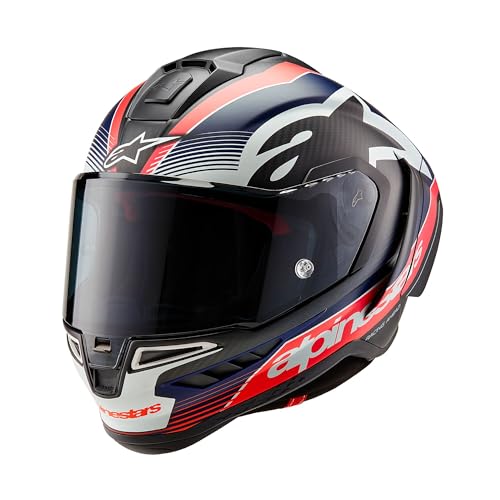
High-Performance Carbon Shell: 3K high-density carbon and uni-directional carbon layers for superior strength and energy dissipation.
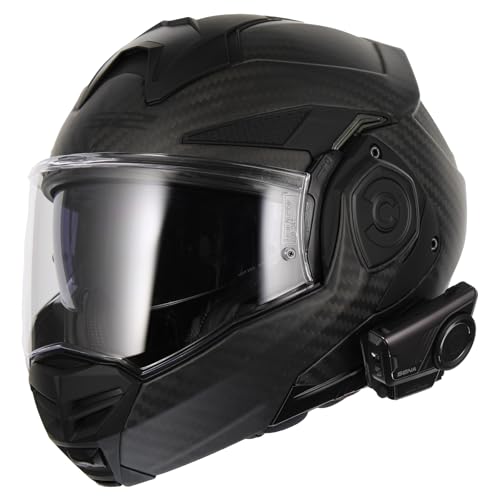
CARBON FIBER SHELL – Ultra-lightweight 9K carbon fiber construction including chin bar weighs only 1,470g (±50g); modular design with dual ECE certification for open and full face use
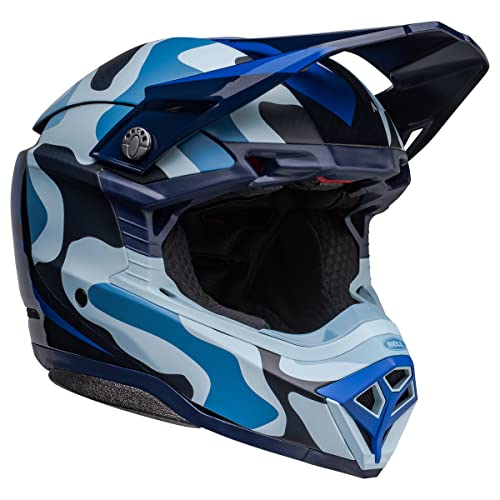
Ball-and-socket design to help manage rotational energy transfer
Advanced Features in Higher-Priced Helmets

Advanced features in higher-priced helmets enhance both safety and performance, integrating cutting-edge technology to meet the demands of serious cyclists.
Impact Absorption
Many premium helmets utilize advanced materials like Fluid Carbon 12, improving impact absorption compared to standard foam. Technologies such as MIPS offer rotational impact protection, while structures like Multipod reduce both linear and rotational forces in crashes. Composite shells combine layers of materials for optimized shock absorption, boosting overall protection. Additionally, helmets featuring advanced technologies can provide enhanced safety benefits during crashes.
Ventilation Efficiency
These helmets feature aerodynamic designs tested in wind tunnels, enhancing efficiency while reducing drag. Ventilation channels created through computational fluid dynamics improve airflow, cooling cyclists effectively. Adjustable internal structures allow for airflow management without sacrificing aerodynamics, ensuring comfort during extended rides.
Investing in these features can greatly elevate riding safety and performance.
Recommended Products

Tailored shell sizing ensures each size uses one of four shells and fits XS perfectly for reduced weight and improved impact performance.

Precision shell sizing solution ensures each fit size from XS to XXL uses the correct shell for superior comfort, reduced weight and optimized impact performance.

Pro-level protection for high-speed gravity-fed riding
Real-World Data on Injury Reduction

Real-world data confirms the significant impact of helmet use on reducing injury rates among bicyclists. Research shows bicycle helmets reduce head injuries by 58% to 72%. More specifically, helmet use decreases the odds of serious head injuries by about 51%. This real-world effectiveness demonstrates that helmeted riders require fewer cranial neurosurgeries, indicating less severe injuries.
Key Findings:
- Helmets reduce facial injuries by roughly 60%.
- They especially mitigate severe injuries compared to mild or moderate ones.
- Trauma registries support these benefits, showing lower hospitalization rates for helmeted cyclists.
Given these findings, promoting helmet adoption becomes essential. The evidence strongly indicates that investing in helmets, regardless of price, offers substantial safety benefits in real-world cycling scenarios. Furthermore, helmets equipped with MIPS technology provide enhanced protection against rotational forces during impacts.
Factors Influencing Helmet Safety Value
Finally, effective ventilation design enhances airflow while maintaining structural integrity. Premium helmets often strike a balance between safety and comfort, ultimately affecting our well-being on every ride. Understanding these factors helps us make informed purchasing decisions. Additionally, helmets equipped with MIPS technology significantly reduce rotational forces during impacts, providing an extra layer of safety for cyclists.
Frequently Asked Questions
Recommended Products

【Experience Motorcycle-Level Power in an E-Bike!】 The TUTTIO ICT e-bike packs a 60V motor for lightning-fast acceleration and 170N·m torque, making uphill climbs effortless. Reach speeds up to 50MPH (with 264LBS rider) for an exciting ride.. With an ultra-responsive throttle and motorcycle-like roar, enjoy instant power and smooth control. Ride faster, stronger—feel the electric motorcycle experience on an e-bike!(off-road use only,high speed—helmet & gear mandatory.)

Peak Performance & Advanced Control: Unleash robust power with the Narrak trike's 750W motor, peaking at 1350W. Equipped with a rear central hub motor and an innovative differential system, it ensures different speeds for the rear wheels, enhancing maneuverability and stability, especially during turns.

Advanced Flip-Up Design: The SHOEI Neotec 3 Anthem features a convenient flip-up face cover and shield, offering versatility for both full-face protection and open-face comfort during rides.
How Often Should I Replace My Bike Helmet?
Like petals wilting in the sun, our helmets age. We should replace them every 3 to 5 years, heeding expiration guidelines. Watch for replacement signs, such as cracks or changes, to guarantee safety remains intact.
What Maintenance Is Necessary for Bike Helmets?
To maintain our bike helmets, we should regularly clean them gently, check for damage after impacts, and replace them according to guidelines. Proper cleaning and impact testing guarantee our helmets stay safe and effective.
Do Colors or Styles Affect Helmet Safety?
Yes, colors considerably enhance visibility, reducing crash risks. While diverse designs primarily focus on comfort, investing in a well-fitted, bright helmet can improve safety through better detection by motorists and promote consistent helmet usage.
Can a Helmet Fit Be Adjusted Over Time?
Absolutely, helmet fit can be adjusted over time. In fact, 70% of cyclists experience changes in head shape. Regular fit adjustments and factoring in longevity can greatly enhance comfort and safety for our rides.
Are There Age-Specific Considerations for Choosing a Helmet?
Yes, age-specific considerations are essential when choosing youth helmets or those for the elderly. We must guarantee proper fit, coverage, and comfort to enhance safety and encourage consistent use across all age groups.