As an Amazon Associate, we earn from qualifying purchases. Some links on this site are affiliate links at no extra cost to you. Our recommendations are based on thorough research and editorial judgment.


What Are the Benefits of Tubeless Tires Versus Traditional Tubes?

Tubeless tires offer several key benefits over traditional tubes. They provide improved puncture resistance, effectively sealing small holes with liquid sealant. This means fewer flats and less downtime. We can ride at lower pressures, enhancing comfort and traction. Tubeless setups also reduce rolling resistance, enhancing efficiency and performance. Additionally, we save weight, improving acceleration. While they require regular maintenance, their long-lasting nature can offset initial costs. Let’s explore these advantages in greater detail.
Key Takeaways
- Tubeless tires provide improved puncture resistance, with sealant quickly sealing punctures and preventing air loss during rides.
- Users experience enhanced ride quality, as lower tire pressures conform better to uneven surfaces, reducing vibrations and increasing comfort.
- Rolling resistance is minimized in tubeless systems since there are no inner tubes, allowing for better acceleration and handling.
- The elimination of inner tubes results in approximately 200 grams of weight savings per wheel, enhancing overall cycling efficiency.
- Tubeless tire setups require periodic sealant maintenance but can ultimately lead to lower long-term repair costs compared to traditional tube systems.
Improved Puncture Resistance and Sealant Benefits
You may be interested

3 Best Bike Tubeless Sealants: Keep Your Tires Running Smoothly
December 31, 2024

How Do I Improve My Cycling Endurance Safely?
August 28, 2025

How Do I Prevent Chafing on Long Bike Rides?
October 3, 2025
When we consider improved puncture resistance and the benefits of sealants in tubeless tires, it becomes clear that these innovations greatly enhance our riding experience. Tubeless tires utilize sealant that quickly fills punctures, preventing air loss. This is vital for effective puncture prevention strategies.
The sealant formulation effectiveness varies by brand but generally provides remarkable coverage against small debris and thorns. A well-maintained sealant volume of 30-45 ml is essential, needing replenishment every few months. Additionally, tubeless systems eliminate pinch flats, allowing us to ride with lower pressures for better traction without increased risk. This combination of features not only increases reliability but also lessens downtime during rides, making tubeless tires a significant improvement over traditional tubes. Furthermore, many users report rapid sealing abilities that enhance their overall riding experience.
Recommended Products

Long-lasting latex formula provides superior durability, staying effective for 2-3 times longer than standard sealants to minimize maintenance and downtime. 60-120 days between top-offs.

The world’s first tubeless sealant and the first choice of riders today

FAST FIX: Quickly seals punctures up to 6.5mm (1/4")
Enhanced Ride Quality and Comfort

Elevating our riding experience, tubeless tires greatly enhance ride quality and comfort. One of the main benefits is the ability to run lower tire pressures without the risk of pinch flats. This allows the tires to conform better to uneven surfaces, enhancing ride smoothness.
The absence of an inner tube offers improved shock absorption. Tubeless tires flex naturally, reducing vibrations and bumps. Sealant further dampens vibrations, contributing to a softer ride experience.
Customizable tire pressure means we can optimize traction. Adapting pressure according to terrain guarantees maximum grip and comfort. Additionally, the use of puncture resistance liners can further enhance durability by minimizing flat risks during rides.
Recommended Products
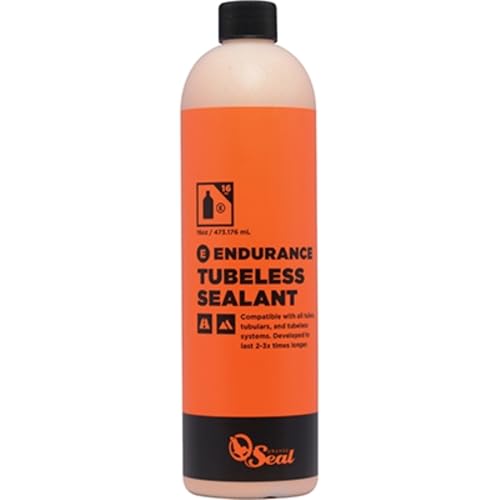
Long-lasting latex formula provides superior durability, staying effective for 2-3 times longer than standard sealants to minimize maintenance and downtime. 60-120 days between top-offs.
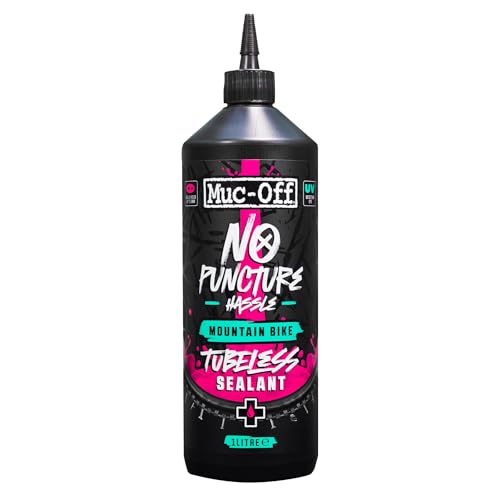
GOING TUBELESS?: No Puncture Hassle Tubeless Sealant is compatible with tubeless ready and full UST wheels/tyres. It’s perfect for Downhill, Enduro and Road cycling.

Long-lasting latex formula provides superior durability, staying effective for 2-3 times longer than standard sealants to minimize maintenance and downtime. 60-120 days between top-offs.
Performance Gains and Rolling Resistance

Tubeless tires offer significant performance gains primarily through reduced rolling resistance. By eliminating friction between the tire casing and an inner tube, they enhance rolling efficiency. Manufacturers can utilize thinner and more supple casings, which improve tire flexibility, allowing for better ground conformity without the fear of pinch flats.
Achieving lower tire pressures becomes easier with tubeless systems. This capability enhances traction and cornering, especially on uneven surfaces. Additionally, the liquid sealant in tubeless tires maintains ideal pressure, further minimizing energy loss. Furthermore, puncture resistance is significantly improved due to the sealant, allowing for seamless repair of small punctures during rides.
Recommended Products

Lighter, faster and with stronger sidewalls. The new standard in road tubeless ready technology. Ride faster, more comfortable, and with increased puncture protection. Tubeless Ready.
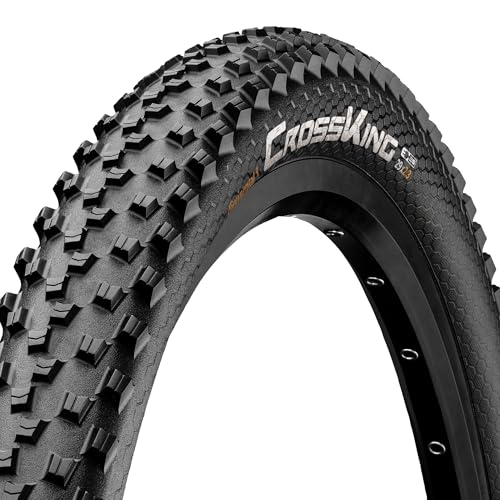
The Cross King is a versatile competition and trail tire, sure footed in turns
The Cross King is a versatile competition and trail tire, sure footed in turns
Weight Savings and Efficiency

As we explore the benefits of weight savings in cycling, it’s important to recognize that eliminating traditional inner tubes can lead to significant efficiency gains. By removing tubes, we save about 200 grams per wheel, which directly impacts weight distribution. This reduction in static weight is beneficial, but the real advantage lies in diminished rotational inertia.
With lower rotational mass, we conserve energy during acceleration and maintain speed more efficiently. Tubeless setups still utilize sealant and valves, which add some weight, but the overall setup remains lighter than standard tubes. Improved acceleration and climbing performance arise from this lighter wheel-tire combination, making tubeless advantages particularly pronounced in competitive cycling scenarios. Ultimately, reduced weight correlates directly with enhanced cycling efficiency. Additionally, power transfer is optimized with the right tire setup, further enhancing performance on the road.
Recommended Products

GOING TUBELESS?: Muc-Off Ultimate Tubeless Setup Kit is a one-stop shop for everything you need to make the switch with your tubeless-ready wheelset. Whether you're a seasoned tinkerer or a complete newb, our nifty kits have got you covered!

GOING TUBELESS?: Our bike rim tape is the perfect choice if you’re looking to make the switch to tubeless bike tires. High quality rim tape is the first step in your tubeless conversion - so grab yourself a roll and let's get cracking!

GOING TUBELESS?: Muc-Off Ultimate Tubeless Setup Kit is a one-stop shop for everything you need to make the switch with your tubeless-ready wheelset. Whether you're a seasoned tinkerer or a complete newb, our nifty kits have got you covered!
Maintenance, Installation, and Cost Considerations

When considering tubeless tires, the maintenance, installation, and cost aspects warrant careful attention.
Maintenance Considerations
Tubeless tires require periodic sealant additions, usually a couple of times yearly. Regular monitoring of tire pressure is vital for peak performance. While small punctures self-seal, routine inspections for sealant levels and integrity guarantee safety. Additionally, the puncture resistance of tubeless tires often surpasses that of traditional tires, enhancing overall reliability.
Installation Process
Correct rim compatibility is essential to create an airtight seal, making tubeless installation more complex than traditional tubes. This process demands specific tubeless tires, sealant, and possibly new rims.
Cost Considerations
Initial costs range from $200 to $300, which can be higher than traditional setups. However, tubeless tires may last longer and reduce ongoing repair expenses, ultimately leading to cost efficiency by minimizing roadside flats and tube replacements.
Recommended Products

High-Capacity: It's nice that you get a full 500ml bike tire sealant and a 120cc tire sealant injector kit
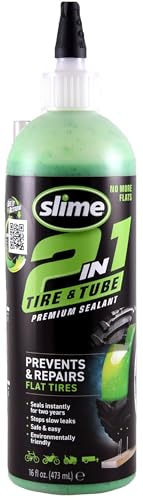
No more flats! Slime's 2-in-1 Tire & Tube Premium Sealant protects your tubes and off-highway tires to get you back on the road quickly and easily when you get a flat
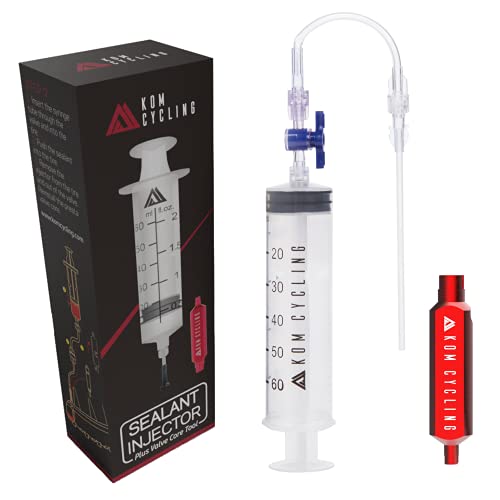
SIMPLE & EASY: Setting up tubeless can be a pain, but it doesn't have to be. This tubeless syringe injector takes the headache out of tubeless installation with a simple and effective design.
Frequently Asked Questions
Do Tubeless Tires Work in All Weather Conditions?
Yes, tubeless tires can perform well in all weather conditions. They offer excellent grip and reduce tire maintenance due to self-sealing properties, but we should still consider dedicated tires for extreme winter conditions.
How Do I Know When to Add Sealant?
We should add sealant when it’s thickened, we notice slow leaks, or see little liquid inside. Regular maintenance tips include checking every couple of months and knowing our sealant types for best performance.
Can Tubeless Tires Be Used With Traditional Rims?
No, tubeless tires shouldn’t be used with traditional rims due to rim compatibility issues. For successful installation, we recommend exploring proper rim designs and following installation tips to guarantee safety and performance.
What Are the Best Brands of Tubeless Tires?
When it comes to the best tubeless tire brands, we’ve found Continental, Vittoria, Hutchinson, and Pirelli stand out for their tire performance. Each offers unique features, making brand comparison essential for choosing the right one for our needs.
How Do I Convert My Bike to Tubeless?
To convert our bike to tubeless, we should guarantee tire compatibility, apply precise sealing techniques, carefully apply rim tape, install the valve, mount the tire, and add sealant for peak performance. Let’s make it happen!


