As an Amazon Associate, we earn from qualifying purchases. Some links on this site are affiliate links at no extra cost to you. Our recommendations are based on thorough research and editorial judgment.


What Are Glueless Patches and How Do They Work?

Glueless patches are innovative adhesive devices that quickly repair tires without traditional glue. Made from flexible materials like polyethylene and thermoplastic polyurethane, they bond to surfaces through pressure-sensitive adhesives. Their design allows for easy application in under five minutes, making them ideal for emergencies. Proper surface preparation enhances their adhesion and prevents leakage. However, we should remember they are temporary fixes, and understanding their limitations is important. More details await to help us utilize them effectively.
Key Takeaways
- Glueless patches are adhesive medical devices that stick to the skin without traditional glue, utilizing bioadhesive materials for comfort and flexibility.
- They offer quick emergency tire repairs, allowing application in approximately five minutes with no drying time needed.
- Made from composite materials, they provide strong adhesion and are designed to withstand mechanical stress and environmental exposure.
- The self-adhesive layer bonds through pressure-sensitive adhesives, ensuring a secure seal under moisture and pressure conditions.
- Ideal for temporary repairs, glueless patches are not suitable for high-stress applications or permanent solutions, requiring careful surface preparation for effectiveness.
Definition of Glueless Patches
You may be interested


Glueless patches, as the name suggests, are adhesive medical devices that adhere to the skin without the use of traditional glue. Utilizing glueless technology, these patches rely on bioadhesive materials that offer skin compatibility while ensuring comfort and ease of use.
Material Composition
Typically, they consist of polymers designed for gentle adhesion, which harnesses factors like moisture and pressure.
Adhesion Mechanism
Through specialized surface patterns, these patches enhance grip on the skin’s microtopography, allowing for secure attachment without chemical adhesives.
Design Features
These patches are thin, flexible, and stretchable, mimicking skin elasticity.
Application and Removal
Applying these patches is straightforward: just press them onto the skin for a secure fit, and removing them is painless, leaving no residue behind. They are designed with a breathable fabric that enhances user comfort during extended wear.
Purpose of Glueless Patches

When it comes to tire repairs, the purpose of these patches extends beyond mere convenience. Glueless patches serve as effective solutions for emergency repairs, allowing for quick fixes that minimize downtime. They simplify the repair process, enabling us to operate quickly without waiting for glue to dry, which can take over 30 minutes.
Key advantages include:
- Fast application, often completed in about five minutes.
- User-friendly design, requiring minimal tools for prep.
- Ideal for roadside situations, where conditions may limit repair options.
These patches also act as temporary measures, facilitating travel to a repair shop. Their lightweight and compact nature guarantees that we can carry them easily, providing peace of mind during our rides or trips. Additionally, pre-glued patches are essential components of many roadside repair kits, enhancing their effectiveness in emergencies.
Materials Used in Glueless Patches

In tire repair applications, the materials used in glueless patches play a significant role in their effectiveness and dependability.
Material Properties:
Composite materials are common in durable glueless patches. For example, Schwalbe patches utilize these for enhanced flexibility and strong adhesion. Polyethylene (PE) provides excellent durability, while thermoplastic polyurethane (TPU) guarantees lightweight compatibility with TPU tubes.
Patch Durability:
Glueless patches are designed to withstand mechanical stress and environmental exposure. PE patches adhere firmly, making repairs efficient without glue. TPU patches are exclusive to TPU tubes, assuring effective bonding.
Surface Compatibility:
Material selection is essential, as patches must fit the tube composition for secure sealing. Some patches incorporate pre-applied adhesives tailored to specialized materials, enhancing their patch durability and dependability in diverse applications. Additionally, the effectiveness of bike-specific cleaners can improve overall maintenance, ensuring that tire repairs and other components are well cared for.
Recommended Products

VERSATILE- Use on the tire innerliner for any kind of puncture or injury repair, along with the correct patch repair unit

Enough to Use: you will receive 80 pieces of tire patches, abundant in quantity, enough to use and replace, can meet your daily needs; You can also share them with your friends and family members

Adequate to Meet Your Needs: you will receive 500 pieces of rubber tire patches in total, packaged in buckets for easy storage, 150 pieces for each bucket, sufficient to meet your various tire repairing needs
Adhesive Technology Behind Glueless Patches

Understanding the adhesive technology behind glueless patches is vital for effective tire repairs. These patches feature a self-adhesive layer that chemically bonds to the tube material. This bond relies on pressure-sensitive adhesives (PSA), which provide impressive adhesive strength without the need for messy glue.
Chemical Bonding
The adhesive layer utilizes sulfur-containing compounds that create cross-linking among rubber molecules. This process enhances bond durability, resulting in a strong, flexible connection.
Surface Preparation
To maximize adhesion, it’s imperative to have clean, dry, and roughened surfaces. Scuffing the tube guarantees better micromechanical interlocking, enabling the patch to adhere effectively.
Durability and Flexibility
Glueless patches are designed to remain flexible and airtight, maintaining performance under pressure and while in motion. Additionally, the use of high-quality materials in their construction ensures longevity and reliability during repairs.
Recommended Products

Designed in conjuction with 3M to make for a self adhesive tube patch that stretches, flexes, twists, and turns right along with the tube.

Fitment: Our 90/100-14 inch tire rim assembly fit for 125cc 140cc 150cc 160cc off road motocross pit dirt bike compatible with 85 SX/ 85 CX, SSR SR150, TTR125 YZ85 YZ80 (1974-2001), RM80 (1986-2001) RM85 (2002, 2015, 2016), KLX125 KLX140R (2025) KX85 KX80 (Big Wheel), TaoTao DB17 DB27, Apollo RFZ Open 125cc DB-X18 DB-X19 DB-Z20, TM* MX80 (1995-2000) MX85 (2012), Icebea* PAD140-V2, Baja DR90
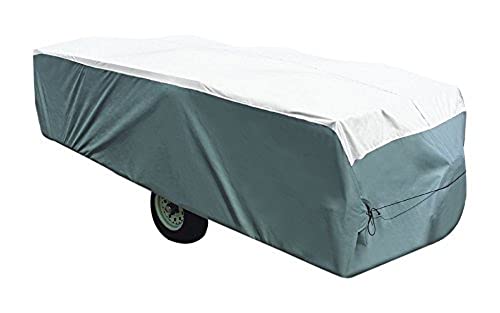
216" x 85" x 54" Ideal for moderate climates & short term storage
Application Process for Glueless Patches

After gaining insight into the adhesive technology that enables glueless patches, we can now focus on the application process.
Recommended Products

COMPLETE 37-PIECE BIKE TOOL KIT – Includes chain whip, cassette remover, bottom bracket tools, spoke wrench, cable cutters, hex and Torx keys, tire levers and more so you can handle tune-ups, upgrades and full overhauls at home.

Features a fine tooth ratchet mechanism with reverse lever and thumb wheel with adjustable torque TorqBit for ease and accuracy in tight spots

COMPLETE CYCLING REPAIR SET - Everything you need for roadside fixes and home maintenance, all in one sleek presentation box. Includes essential tools to keep you riding – ideal for cyclists of all levels and a thoughtful gift for any bike enthusiast.
Surface Preparation
To start, we need to select the punctured area and clean it thoroughly. Using a scuff pad or sandpaper, we roughen the surface surrounding the hole. This enhances mechanical adhesion. After cleaning, we wipe the area with an alcohol pad and allow it to dry for about 30 seconds.
Applying the Patch
Next, we peel the backing off the patch and align it over the puncture. Press it gently from the center outward to avoid air bubbles, applying firm pressure to guarantee strong contact.
Post-Application
We allow the patch to set for 30 seconds to one minute, checking for leaks afterward. Proper application techniques contribute considerably to patch durability. Additionally, maintaining sealant levels is crucial for ensuring long-lasting performance and minimizing the risk of future punctures.
Advantages of Using Glueless Patches
Glueless patches provide several advantages over traditional adhesive methods, making them a preferred choice for quick tire repairs.
Convenience Benefits
These patches are simple to apply, often taking less than five minutes. There’s no waiting for glue to dry, allowing for immediate usability. Their lightweight and compact design means we can carry them easily, fitting into jersey pockets or saddle bags without adding bulk.
Repair Efficiency
The peel-and-stick application allows for a straightforward repair process with minimal cleanup. We avoid messy glue handling, making it user-friendly for any skill level. Choosing glueless patches not only enhances our readiness for roadside repairs but also promotes efficient maintenance routines, ensuring we can quickly address tire issues and get back on the road. Properly maintained tire pressure, as noted in the benefits of using bike pumps, is crucial for optimal riding performance.
Recommended Products
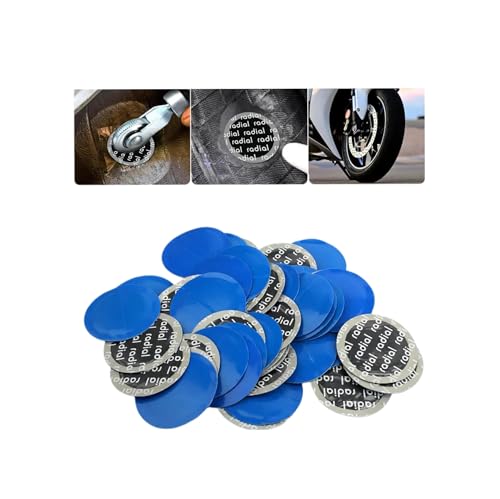
Comprehensive Tire Repair Solution - Our Tire Repair Patch Kit includes 1000Pcs 57mm 2 1/4 inches heavy-duty medium round tubeless patches, perfect for repairing punctures in all types of tires.

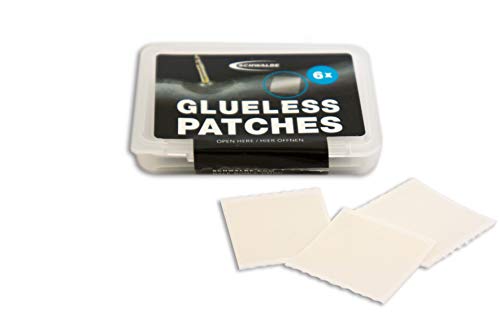
Made of high quality material
Limitations of Glueless Patches
While glueless patches offer convenience for quick repairs, they do come with several defined limitations that we should consider.
Temporary Nature
Glueless patches are generally for temporary repairs, serving as quick fixes rather than permanent solutions. They typically last only a few months compared to glued patches.
Adhesion Issues
These patches require careful placement without bubbles or wrinkles, as improper application can lead to leaks. Their adherence weakens in dirty or damp conditions, limiting effectiveness during repairs.
Suitability Limitations
Not all puncture types are suited for glueless patches. Larger holes or those near the tire sidewall present significant adhesion issues. Finally, glueless patches are less reliable for high-stress situations, making them unsuitable for extreme cycling conditions. Additionally, their temporary nature often necessitates the use of more durable solutions for long-term repairs.
Performance Considerations for Glueless Patches
When considering performance characteristics, it’s essential to assess how glueless patches function under various conditions. Their performance efficiency can vary, especially in adverse environments.
Adhesion Quality
Glueless patches bond quickly but may form less airtight seals, risking air leakage. Proper surface preparation is critical for ideal adhesion and durability.
Longevity and Durability
Generally, glueless patches offer a shorter lifespan than glued options. Environmental factors like moisture and temperature impact longevity; data is lacking, particularly in extreme weather.
Performance in Different Conditions
They perform best in dry, mild climates. Surfaces must be smooth for effective sealing. Mechanical durability may be lower, raising concerns for high-mileage repairs. Additionally, maintaining proper tire pressure is crucial to ensure optimal performance and prevent excessive wear on patches.
Usage Recommendations for Glueless Patches
In situations where quick repairs are crucial, glueless patches serve as an effective option. These patches are ideal for temporary repairs, functioning as emergency solutions when traditional tools or glues aren’t available. We can use them for short-term fixes during daily commutes; however, they shouldn’t be relied upon for high-speed or long-distance rides, as their effectiveness may diminish under stress.
To maximize their performance, we should verify that the patch area is clean and dry. Glueless patches perform best in dry conditions, as moisture can weaken adhesion. Regular checks after application are important, especially during longer rides. Remember, while they provide quick fixes, they’re not a substitute for permanent repairs. Additionally, using high resistance materials can improve the durability of patches in demanding situations.
Recommended Products

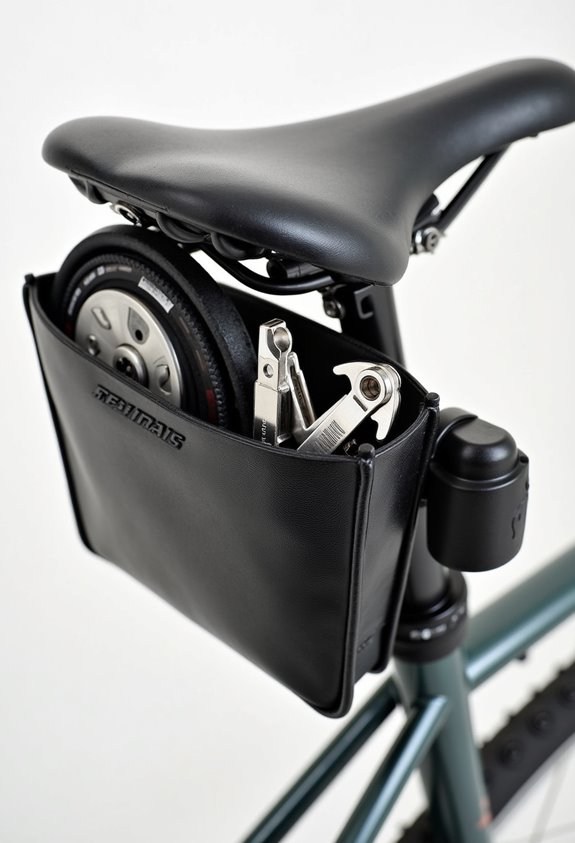
Allows easy access to a full 17-piece tool kit and all your equipment under the saddle

R-3500 America Style Most Popular Universal Tire Repair radial bias tire repair cold patch for Passenger Car 2 1/4" 500PCS

Beach Cruiser Tire Size : 26 x 2.35 inch. P.S.I. 40--65. Suitable for bike rim: 26x2.10,26x 2.125,26x2.35 inch
Best Practices for Applying Glueless Patches
To achieve peak results when applying glueless patches, we must prioritize thorough surface preparation. Start by scuffing the puncture area with a rasp or sandpaper and cleaning it to remove dirt and oil. Inflate the tube slightly to locate the puncture, guaranteeing the surface is dry for maximum adhesion.
For proper patch application, we’ll carefully peel the backing off the patch and center it over the hole. Press down firmly to eliminate air bubbles, holding pressure for at least 30 seconds. After applying the patch, slowly inflate the tube without overstretching the patched area. Check for any lifting edges and re-press if necessary. By following these best practices, we can guarantee effective and lasting patch application. Additionally, using eco-friendly formulations can enhance the overall safety and effectiveness of your repair efforts.
Transitioning From Glueless to Permanent Repairs
Switching from glueless patches to permanent repairs is a common consideration for many riders, especially after experiencing a temporary fix. While glueless patches are designed for quick repairs, they often lack durability. In contrast, glued patches, when applied correctly, offer reliable, long-term solutions.
Repair Durability
- Glueless patches typically last only a few miles.
- Glued patches can last the lifetime of the tube if done properly.
Ease of Shift
- Riders should carry both temporary repair kits and glued options for emergencies.
- Glueless patches save time, requiring no drying, but glued ones offer better stability.
Ultimately, shifting to permanent repairs enhances reliability and minimizes future failures, especially for long-distance rides.
Frequently Asked Questions
How Long Do Glueless Patches Typically Last?
Glueless patches typically last about 2 to 3 years, though real-world durability can vary. For better patch performance, we should guarantee proper application, as it considerably affects the patch’s longevity and reliability.
Can Glueless Patches Be Used on Tubeless Tires?
We’d love to say glueless patches are perfect for tubeless tires, but let’s be real. Their patch performance evaluation shows compatibility issues, making them less than desirable. Stick to tubeless-specific solutions for best results!
Are There Different Sizes of Glueless Patches Available?
Yes, there are different sizes of glueless patches available. We usually find common patch dimensions around 25mm, but some kits offer smaller or larger options, catering to various repair needs on different bicycles.
Is It Safe to Ride at High Speeds With Glueless Patches?
When we ride, we definitely want to play it safe. Glueless patches can handle typical speeds, but we should heed safety concerns. For anything beyond speed limits, glued patches or tube replacements might be wise.
Can I Reuse a Glueless Patch After Removing It?
We can’t reuse a glueless patch after removing it; doing so compromises its effectiveness and durability. For reliable repairs, we should always opt for a new patch or tube to guarantee our safety on rides.