As an Amazon Associate, we earn from qualifying purchases. Some links on this site are affiliate links at no extra cost to you. Our recommendations are based on thorough research and editorial judgment.


How Do I Maintain My Bike Chain for Optimal Performance?

To maintain our bike chain for peak performance, we should regularly clean and lubricate it. Start by using a degreaser and a stiff brush to remove dirt and grime. After cleaning, dry the chain and apply lubricant to the rollers and pins, ensuring even coverage. It’s important to check for wear and replace worn chains. By following these steps, we can enhance efficiency and prevent malfunctions. Want to discover more detailed maintenance practices?
Key Takeaways
- Regularly clean your bike chain with a degreaser and brush to prevent dirt accumulation and ensure smooth operation.
- Lubricate chain rollers and pins appropriately, applying lubricant sparingly to avoid attracting excess dirt.
- Inspect the chain frequently for wear signs like elongated links and rough shifting, replacing when necessary for safety and performance.
- Maintain a clean and dry chain environment to prevent rust; rinse thoroughly after cleaning and air dry completely.
- Adjust maintenance frequency based on riding conditions, performing checks more often in muddy or harsh environments to ensure efficiency.
Importance of a Clean Bike Chain
You may be interested


When we think about maintaining our bikes, the chain often gets overlooked, yet it plays an essential role in safety and performance. A clean chain is vital for ensuring chain safety. Dirt accumulation can weaken chain links, increasing the risk of snapping during rides. This not only threatens our safety but also undermines rider confidence.
Regularly cleaning and lubricating the chain maintains its strength, preventing hazardous malfunctions. In doing so, we minimize the risk of sudden ride interruptions or accidents. Furthermore, a clean chain enhances power transfer efficiency, resulting in smoother pedaling and sharper handling. Using the right chain lubricant based on riding conditions ensures optimal performance and longevity of the chain.
Tools Needed for Chain Maintenance

To maintain a bike chain properly, we need a specific set of tools that facilitate both cleaning and lubrication. Here are some essential tools for effective chain maintenance:
Basic Hand Tools
- Allen Wrench Set (2-12mm): For removing and adjusting components.
- Screwdrivers (Flat-head and Phillips): Useful for fine adjustments.
- Needle-nose Pliers: For manipulating master links.
- Chain Pin Removal Tool: Enables splitting and joining chains easily.
Cleaning Tools
- Chain Cleaning Device: Holds solvent while cleaning the chain.
- Degreaser: Dissolves built-up grease.
- Clean Rags: Wipe off excess degreaser and lubricant.
Lubrication Supplies
- Bike-specific Chain Lube: Reduces friction based on riding conditions. Dry lubes excel in dry and dusty conditions.
- Lubricant Applicator: Guarantees lubrication reaches internal parts.
Using these tools will help us follow effective chain maintenance tips and enhance our bike’s performance.
Step-by-Step Chain Cleaning Process

Cleaning a bike chain is a critical maintenance task that can greatly enhance performance and longevity.
Initial Chain Preparation
We start by removing the chain using a quick-link or chain tool. Next, we perform a chain inspection, checking for wear and damage, as replacing worn chains improves drivetrain performance. We wipe the chain with rags to eliminate surface dirt.
Degreasing Process
We submerge the chain in a degreaser bath, agitating it to remove grease. For heavy contamination, repeating this step guarantees all grime is cleared. Using a biodegradable degreaser can help protect water sources during disposal.
Mechanical Cleaning
Employing stiff-bristled brushes, we scrub the chain, paying close attention to rollers and pins.
Drying and Final Inspection
Finally, after air drying the chain, we visually inspect it to confirm cleanliness before reinstallation. An appropriate cleaning frequency keeps the chain performing at its best.
Lubrication Techniques for Your Chain

After ensuring your bike chain is clean and free from grime, the next step is applying lubricant effectively. We need to focus on lubrication importance, as it reduces friction and prevents wear.
To apply lubricant, we should target the chain rollers and pins directly, avoiding overspray on other components. Rotating the pedals backward while applying helps distribute the lubricant evenly. A pumping motion enhances penetration into the chain’s internal surfaces. It’s vital to avoid excessive lubrication, as this attracts dirt and can lead to performance issues. Regular cleaning improves chain longevity and maintains optimal performance.
For ideal lubrication frequency, we should lubricate every few hundred miles or after harsh riding conditions. Timing is essential, especially after cleaning. Consistent lubrication intervals prevent residue build-up and maintain our chain’s efficiency.
Choosing the Right Lubricant
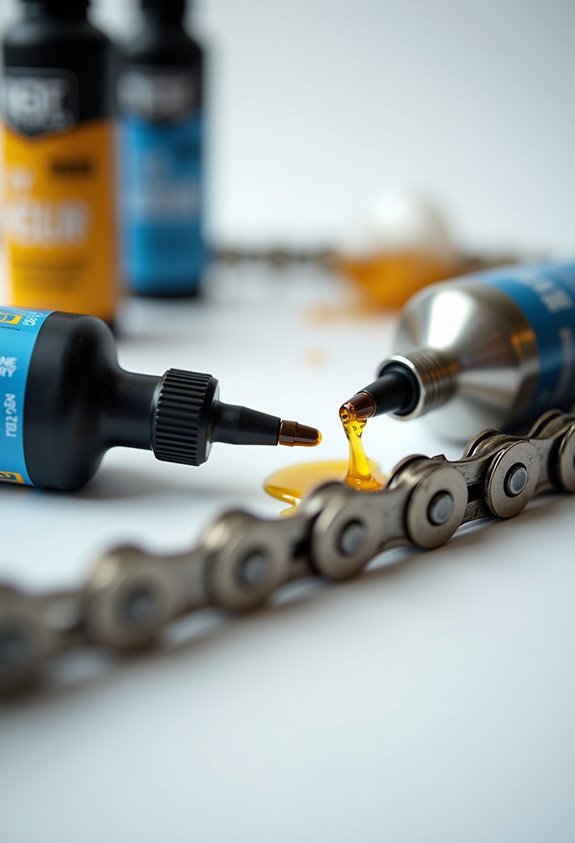
When selecting the right lubricant for our bike chain, we should evaluate the conditions we typically ride in. There are three primary lubricant types: dry, wet, and wax-based.
- Dry Lubes: Best for dry conditions, they reduce contamination but wash off easily in the wet.
- Wet Lubes: Ideal for rain, they last longer but attract dirt more, requiring frequent cleaning.
- Wax-Based Lubes: These provide clean, long-lasting lubrication with minimal dirt attraction.
Additionally, we should consider the environmental impact of our choices. Biodegradable formulations are now available, reducing petroleum reliance. This not only benefits our rides but also the planet. Ultimately, matching our lubricant choice to our riding conditions guarantees peak chain performance and longevity. Investing in high-quality tools can further enhance your maintenance routine, ensuring your bike chain remains in optimal condition.
Recognizing Signs of Chain Wear
How can we identify signs of chain wear to confirm our bike performs at its finest? Recognizing chain indicators is essential for maintaining peak performance. We should look for the following signs:
- Elongated valleys between chainring teeth signal early wear.
- Chain skipping or dropping during rides suggests worn components.
- Excessive noise or rough shifting often points to chain deterioration.
- A simple test involves lifting the chain off the largest front chainring; increased daylight under the chain indicates wear.
Conducting regular wear assessments with a chain checker tool guarantees accurate measurements. For 6 to 10-speed chains, replacement is recommended at 0.75% elongation. By monitoring these signs, we can prevent unexpected drivetrain issues and extend our chain’s lifespan. Additionally, using a chain wear checker tool can greatly enhance your ability to assess the condition of your bike chain effectively.
Understanding Chain Stretch
Understanding chain stretch is essential for maximizing our bike’s performance and longevity. Chain elongation occurs primarily due to metal fatigue. This is a result of repeated stress cycles causing microscopic cracks in the steel components of the chain. Over time, this leads to a reduction in the cross-sectional area of the links, which decreases load capacity and increases flexibility—perceived as stretch.
The chain’s design, with its interconnected pins and plates, means that wear in any part contributes to overall elongation. Additionally, bending stresses from engaging with sprockets further accelerate metal fatigue, leading to premature degradation. To maintain peak performance, we must recognize and proactively address chain elongation before it impacts drivetrain efficiency. Regular maintenance can mitigate these issues. Using high-quality ceramic lubes can significantly reduce friction and extend chain life, further supporting optimal performance.
Common Chain Issues and Their Solutions
Addressing common chain issues is key to maintaining a bike’s performance and extending its lifespan.
Chain Slipping
Chain slipping often occurs due to worn chains or misaligned derailleurs. To solve this, we can use a chain checker tool to detect wear and perform a chain replacement if necessary.
Shifting Adjustments
Loose cables can lead to skipping. Regularly checking cable tension and replacing stretched cables guarantees consistent shifting.
Derailleur Alignment
A misaligned derailleur can also cause problems. We should periodically check its alignment with the bike frame and make necessary adjustments.
Regular Maintenance
Routine cleaning and lubrication prevent dirt accumulation, which can lead to excess wear. Keeping our drivetrain components tight is essential for peak performance. Additionally, regular cleaning of the bike chain enhances performance and prolongs the lifespan of bike components.
Impact of Chain Maintenance on Efficiency
Proper chain maintenance greatly impacts our bike’s efficiency. A clean and well-lubricated chain can save us significant energy, especially considering that dirt and grime can lead to efficiency losses ranging from 2 to 12 watts. When conditions are muddy, we may experience losses up to 18 watts, highlighting how vital maintenance is under different environments.
Friction also plays a role; chain elongation increases frictional losses, which can rise by about 2 watts for every 1% of wear. By keeping our chain clean and lubricated, we can minimize these losses, ensuring improved chain efficiency and overall performance optimization. Regular maintenance not only enhances our cycling experience but also makes our efforts more effective while riding.
Best Practices for Regular Chain Care
To guarantee our bike chains operate at peak performance, we need to adopt best practices for regular chain care. First, proper cleaning techniques are essential. We should use dedicated degreasers, brushes, or chain cleaning devices to remove grime effectively. Always rinse and thoroughly dry the chain to prevent rust.
Next, lubrication practices are critical for chain health. Selecting the right lubricant based on conditions helps maintain drivetrain efficiency. We apply lubricant sparingly and allow it to penetrate before wiping off excess to avoid dirt buildup.
Lastly, regular preventive care includes inspections for dirt and wear. Keeping adjacent parts in check enhances overall drivetrain health, prolonging our bike’s lifespan. Additionally, incorporating bike paint protection products can further safeguard against environmental damage. By adhering to these practices, we guarantee our bike chains perform at their best.
Frequency of Chain Maintenance
Frequency of chain maintenance is a key factor in ensuring our bike’s performance and longevity. Experts recommend that we lubricate our chains approximately every 200 km (124 miles) under average conditions. In drier environments, this interval may extend to 300 km (186 miles). However, mountain bikes in wet or muddy conditions require more frequent care, ideally every 150 km (93 miles).
It’s also essential to clean chains before lubrication if dirt is visible, preventing damage. Signs that indicate maintenance is needed include noise during pedaling, visible rust, or rough gear shifting. By adhering to these maintenance schedules, we can effectively double the chain lifespan, ensuring our rides remain smooth and trouble-free. Regular attention prevents costly replacements of drivetrain components. Additionally, maintaining optimal performance through regular chain care can enhance the overall cycling experience.
Integrating Chain Care Into Overall Bike Maintenance
Integrating chain care into our overall bike maintenance routine is crucial for maximizing performance and enhancing durability. By establishing consistent chain maintenance habits, we guarantee our bikes function smoothly.
Regular Inspections
Let’s incorporate chain inspections into our regular bike checks. We should also evaluate the cassette and chainrings, as this helps in extending their lifespan.
Preventive Care Strategies
Using preventive care strategies includes cleaning and lubricating our chain frequently. Remember to clean derailleur components to maintain smooth shifting.
Toolkit Essentials
Maintain a well-stocked toolkit with recommended cleaning supplies and lubricants. Adapting maintenance frequency based on conditions—like wet, muddy, or dusty environments—will keep our chain in prime shape.
Frequently Asked Questions
How Can Weather Conditions Affect My Bike Chain Maintenance Needs?
Ironically, we love cycling in winter riding and rainy conditions, yet these weather extremes demand our serious attention. More frequent cleaning and suitable lubricants guarantee our bike chain survives, preventing rust and maximizing performance despite the elements.
Can I Use Motor Oil for Lubricating My Bike Chain?
We can use motor oil to lubricate our bike chain, but its drawbacks include attracting dirt and grime. Instead, we should consider alternative lubricants designed specifically for bikes to guarantee peak performance and longevity.
What Types of Riding Require More Frequent Chain Maintenance?
Mountain biking and commuter biking require more frequent chain maintenance due to harsh conditions and varied exposure, while road cycling demands regular upkeep for performance. Recreational riding can be less frequent but still needs periodic checks.
How Do I Know if My Chain Cleaner Is Safe for My Bike?
Choosing the right chain cleaner feels like selecting the perfect partner. We should look for safe cleaning techniques and compatible chain cleaner ingredients, avoiding harsh solvents that could damage our beloved bikes—and keeping our rides smooth and joyous.
Are There Environmental Concerns Regarding Chain Lubricants and Cleaners?
Yes, there are environmental concerns with chain lubricants and cleaners. We should opt for eco-friendly alternatives and guarantee proper chain lubricant disposal to minimize pollution while protecting waterways and ecosystems from harmful chemicals.