As an Amazon Associate, we earn from qualifying purchases. Some links on this site are affiliate links at no extra cost to you. Our recommendations are based on thorough research and editorial judgment.


How Accurate Are GPS Computers for Tracking Cycling Speed and Distance?

GPS computers can track cycling speed and distance accurately but are influenced by several factors. They rely on signals from satellites, leading to expected accuracy within about 13 feet under ideal conditions. However, in urban areas, tall buildings and vegetation can disrupt signals, causing inaccuracies, especially on curves. Utilizing multi-band GNSS technology can enhance precision. Calibration also plays an essential role in maintaining accurate measurements. To understand more about how these factors interact, let’s explore further.
Key Takeaways
- GPS computers typically achieve accuracy within 13 feet under ideal conditions but can be affected by environmental factors like tall buildings and dense vegetation.
- GPS may overestimate distance due to corner-cutting during turns, particularly at lower speeds, affecting cycling speed metrics.
- Wheel-based computers provide more consistent and reliable readings, especially in environments where GPS signals are compromised.
- Regular calibration of wheel sensors is essential to minimize distance errors, as even slight miscalibration can significantly impact accuracy.
- Combining GPS and speed sensor data through sensor fusion enhances reliability of cycling metrics, compensating for GPS inaccuracies in challenging conditions.
Understanding GPS Technology in Cycling Computers
You may be interested


When we explore GPS technology in cycling computers, it’s vital to understand how it works and its limitations. GPS operates by triangulating signals from at least four satellite constellations to accurately determine our position on Earth. Typically, we can expect an accuracy within about 13 feet under ideal conditions.
However, the environment plays a significant role in accuracy. Obstructions like buildings and tunnels can degrade signals, causing errors and “jitter.” To mitigate these issues, modern devices utilize multiple satellite systems, such as GLONASS, BeiDou, and Galileo, which enhance positioning stability. Furthermore, GPS sampling rates influence our distance and speed calculations. Frequent sampling helps reduce error but may lead to battery drain. Therefore, understanding these factors is vital for effective cycling performance. Additionally, advanced models like the Garmin Edge 540 incorporate multi-band GNSS for improved navigation accuracy.
Comparing GPS Accuracy With Wheel-Based Computers

Comparing GPS accuracy with wheel-based computers reveals significant differences in how each technology measures distance and speed. GPS reliability can vary, especially in urban settings where signal interference is common. Wheel sensor accuracy remains stable, relying on consistent wheel circumferences for measurement comparison.
- Distance Measurement: GPS can underestimate distance on curved paths due to “corner-cutting.” In contrast, wheel sensors measure actual revolutions, providing reliable data.
- Speed Measurement: Wheel computers offer precise speed readings since they calculate based on immediate rotations. GPS can show spikes due to its sampling method.
- Environment’s Role: Environmental influences affect GPS, making it less reliable in forested or densely built areas, while wheel sensors maintain accuracy unless incorrectly calibrated. Additionally, high waterproof ratings (e.g., IPX7 waterproof ratings) are essential for durability and reliable performance under various weather conditions.
Recommended Products

Enhanced, high-performance SRAM XX SL Eagle T-Type AXS Power Meter Crankset for mountain biking enthusiasts seeking precision and reliability.
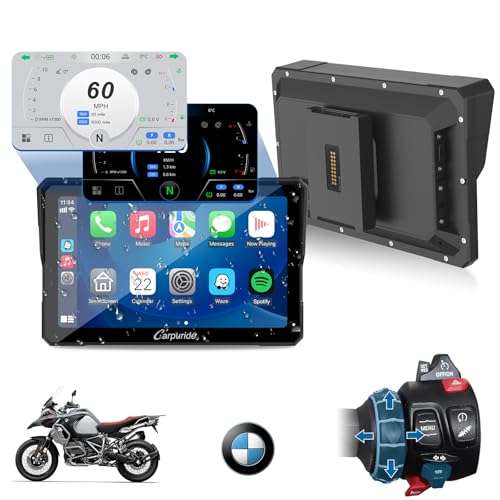
【Native Wonder Wheel Control】 The BMW Wonder Wheel allows you to effortlessly control the audio display on the W702BS PRO motorcycle, such as TPMS, fuel levels, engine RPM, mileage, and more. The TPMS requires that your BMW motorcycle is equipped with a pre-installed TPMS system. Without it, the TPMS will not be operational. And, please ensure that you are using an original BMW bracket, as third-party mounts are not compatible with the BMW Wonder Wheel Control.

【Package Content】1*BSC100S Bike Comuter; 1*CAD70 Cadence Sensor; 1*SPD70 Speed Sensor; 1*Mount; 1*Case; 1*Charge Cable.
The Impact of Environmental Conditions on GPS Performance

The accuracy of GPS performance can considerably fluctuate due to various environmental conditions, which ultimately affects our cycling experience.
Urban Environments:
In cities, tall buildings create signal disruptions through multipath propagation, leading to distorted position data. Narrow streets further limit satellite visibility, resulting in reduced accuracy and increased cycling errors.
Vegetation Influence:
Dense tree canopies also impact GPS signals, attenuating strength. Cycling under such foliage often results in significant tracking inaccuracies.
Weather Conditions:
Heavy rain and cloud cover degrade signal propagation, which can shift readings and introduce errors. Clear skies generally yield better GPS performance, while robust waterproof ratings can enhance the reliability of devices during adverse weather.
Satellite Geometry:
The number and position of visible satellites influence precision. Poor satellite geometry diminishes accuracy, affecting our speed and distance measurements during rides.
Recommended Products

Built to Endure, Designed for Performance: The Garmin fenix 8 AMOLED Sapphire Multisport GPS Smartwatch combines rugged durability with sophisticated technology. Dive-rated and tested to U.S. military standards, it features a 1.4” AMOLED display with a scratch-resistant lens and titanium bezel. Its leakproof buttons and robust construction ensure reliability under extreme conditions, making it ideal for serious athletes and adventurers who demand both durability and high performance.

ELEMNT BOLT 2
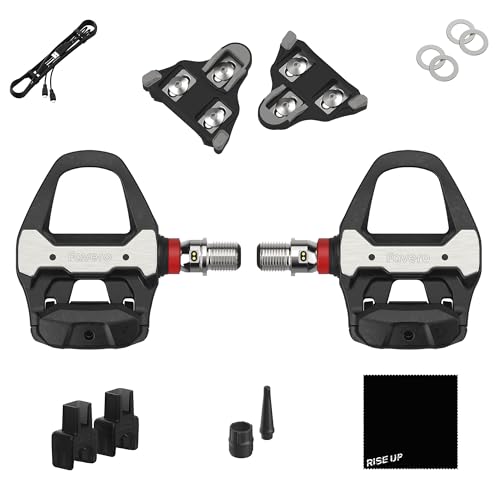
UNIVERSALLY COMPATIBLE: A revolutionary pedal-based power meter for road 100% SPD-SL compatible. You can use it with the cleats provided within the box or with the original Shimano SM-SH10, SM-SH11 or SM-SH12.
Effects of GPS Jitter on Distance Measurements

GPS jitter can significantly affect distance measurements during cycling, leading to inaccuracies that riders need to understand. The GPS jitter effects arise from random signal fluctuations, causing our position to oscillate around the true location. This is particularly problematic for cyclists moving slowly or remaining stationary, as it often leads to distance overestimation.
At higher speeds, the sampling rate influence becomes significant. With a typical rate of ~1 Hz, fewer recorded positions can mean that sharp turns lead to underestimations, as straight lines cut corners. Consequently, our total distance may be inaccurately inflated or deflated due to these factors. Overall, understanding these complexities can help us interpret our cycling data more accurately. Additionally, utilizing devices with high waterproof ratings can ensure consistent performance in various conditions, minimizing the impact of environmental factors on GPS accuracy.
Advantages of Multi-Band GNSS Technology

As we explore the advantages of multi-band GNSS technology, it’s important to recognize how it enhances cycling experiences.
Improved Multi-Band Accuracy
Multi-band systems utilize multiple frequencies to correct ionospheric errors, achieving sub-meter accuracy. This precision is essential in GPS devices we rely on while cycling.
Enhanced Signal Availability
Access to various bands increases signal reliability, ensuring continuous tracking. Redundant paths support consistent data collection, even when one frequency gets blocked.
Interference Resilience
Multi-band GNSS is more resistant to natural and artificial disruptions. By cross-checking signals, it effectively mitigates unreliable data. Moreover, using high-quality cleaning tools ensures that the bike’s performance is not compromised by dirt, which can affect GPS signal reception.
Recommended Products


Rugged, military-inspired design features an always-on 1.4” solar powered display, black DLC-coated steel bezel, black PVD-coated steel rear cover and new LED flashlight

IN THE BOX: 1x Garmin Edge 1040, 1x Flush out-front mount, 1x standard mount, 1x tether, 1x USB-A to USB-C cable, 1x Wearable4U E-bank, 1x Speed Sensor, 1x Cadence Sensors
Limitations of GPS Tracking in Urban Areas
While cycling in urban environments, we encounter significant limitations with GPS tracking that can affect our overall experience. The high-rise buildings create “urban canyons,” obstructing signals and causing multipath errors. This makes urban navigation challenging, as GPS accuracy can drop beyond the typical 10-meter range.
Additionally, environmental interferences, like cars, trees, and tunnels, further disrupt signals. Adverse weather conditions, such as rain or cloud cover, also degrade the quality of satellite transmissions.
These factors lead to unreliable speed and distance data. Achieving precise location accuracy on crowded streets becomes complex. Although some map-matching techniques help correct GPS data, they require accurate mapping, which is often inadequate in fast-paced urban areas, ultimately impacting our cycling analytics. Moreover, safety certifications are essential for ensuring that the equipment used, including GPS devices, meets the necessary standards for reliability in various conditions.
How Cycling Computers Calculate Speed and Distance
Wheel Rotation Sensors
Speed sensors track the number of wheel rotations, multiplying this by the wheel circumference to calculate distance. Accurate wheel circumference measurement is vital; even a 1 mm error can lead to a 10 m discrepancy over 20 km. These sensors also account for changes in elevation, boosting precision on varied terrains.
GPS Technology
GPS relies on satellite signals to determine speed and distance by calculating positional changes. While it updates every second, GPS can be affected by signal noise, especially in crowded areas. In contrast, speed sensors deliver more stable results on predictable routes, allowing for a more reliable measure of distance and speed. Additionally, maintaining optimal tire pressure is critical for achieving accurate cycling performance, as it influences speed and rolling resistance.
Recommended Products

Walk-through design makes it easy to get on and off the machine

960Wh Removable Battery UL2271: This UL2849-certified semi-recumbent electric tricycle is equipped with a removable 48V*20Ah lithium battery, fully charged in 8-10 hours. It ensures an estimated max range of 85 miles.

High-Capacity Battery & Extended Range: Experience extended adventures with our electric motorcycle, featuring a powerful 60V 30Ah, lithium-ion battery. This high-capacity battery provides a remarkable range of up to 60 miles on a single charge, allowing you to explore further without worrying about running out of power. Enjoy the freedom to travel longer distances and discover new horizons with confidence.
The Role of Calibration in Accurate Measurements
Calibration is essential for achieving accurate measurements in cycling computers, as it directly affects the reliability of distance and speed data. Proper calibration techniques are vital; they adjust the wheel circumference input to eliminate distance errors. For instance, a mere 3% miscalibration leads to a similar increase in distance errors.
Additionally, sensor drift can occur if barometers and magnetometers aren’t calibrated correctly. These sensors require adjustments for local conditions to guarantee accurate readings. Regular calibration reduces systematic errors and guarantees that our cycling data remains reliable. Moreover, recalibrating these systems over time accounts for factors like wear and environmental changes. To conclude, diligent calibration keeps our cycling metrics accurate and trustworthy. Furthermore, accurate heart rate monitoring is crucial for effective training, enhancing the overall cycling experience.
Recommended Products

ALL YOUR FAVORITE STATS: Displays current, max, and average speed, total distance, trip distance, elapsed time, calorie consumption, pace arrow, and clock.

ALL YOUR FAVORITE STATS: Displays current, max, and average speed, total distance, trip distance, elapsed time, pace arrow, and clock.

FUNCTION: Calibration the resistance of your exercise bikes to provide you with a satisfactory riding experience
Integrating GPS and Sensor Data for Reliable Metrics
Integrating GPS and sensor data offers a more reliable approach to measuring cycling metrics, especially when faced with environmental challenges. This process, known as sensor fusion, combines the strengths of both technologies to enhance data reliability.
GPS Limitations
GPS signals can be obstructed by buildings, trees, or tunnels, leading to inaccuracies in speed and distance. These errors can cause “drift,” negatively impacting the recorded metrics.
Sensor Benefits
Speed sensors measure bike wheel rotations, offering precise instantaneous speed and distance, particularly in GPS-poor environments. When calibrated correctly, they greatly improve accuracy.
Combined Metrics
Modern bike computers leverage both GPS and sensor data to provide cross-validation. This integration allows us to maintain precise totals while using GPS for route navigation, ultimately enhancing the reliability of our cycling metrics. Additionally, using high-quality tools like hardened steel tools ensures that bike maintenance does not impact performance accuracy during rides.
Frequently Asked Questions
How Do Weather Conditions Affect GPS Cycling Computer Accuracy?
Weather conditions notably impact GPS cycling computer accuracy. Temperature impacts can distort measurements, while signal interference from clouds and storms leads to inconsistencies, making it essential for us to be mindful of these factors during rides.
Can GPS Computers Lose Signal in Open Areas?
Yes, GPS computers can lose signal in open areas. For example, we’ve experienced dropped signals while cycling in open terrain due to battery issues, affecting overall signal strength despite our clear surroundings.
Are GPS Cycling Computers Waterproof?
Yes, GPS cycling computers can be waterproof, often featuring ratings like IPX6 or IPX7. We should prioritize cycling durability by choosing models with solid waterproofing to better handle harsh weather conditions and extended outings.
How Often Do GPS Satellites Orbit the Earth?
Like celestial dancers, GPS satellites gracefully orbit Earth every 12 hours, maintaining precise satellite positions. With a reliable GPS orbital frequency, we continuously find our way in the vastness, ensuring accurate navigation for everyone’s adventures.
What Is the Lifespan of a Typical GPS Cycling Computer Battery?
A typical GPS cycling computer battery lasts between 2 to 5 years, depending on usage. By practicing effective power management, we can enhance battery longevity, ensuring our devices perform efficiently on every ride.


