As an Amazon Associate, we earn from qualifying purchases. Some links on this site are affiliate links at no extra cost to you. Our recommendations are based on thorough research and editorial judgment.


What Sensors Can I Pair With My Cycling GPS Computer?

We can enhance our cycling GPS computer’s functionality by pairing it with a variety of sensors. Key options include:
- Speed Sensors: Magnet-based and magnetless for accurate speed tracking.
- Cadence Sensors: Both magnet and accelerometer types to monitor pedal revolutions.
- Power Meters: Measuring watt output for performance insights.
- Heart Rate Monitors: Chest straps or optical sensors for tracking cardiovascular effort.
You may be interested


Exploring these sensor options will optimize our cycling experience and improve our performance analysis.
Key Takeaways
- Speed Sensors: Pair magnet-based, magnetless, or hub-based speed sensors for accurate distance and speed measurements needed for performance tracking.
- Cadence Sensors: Use magnet-based or accelerometer cadence sensors to measure pedal revolutions per minute for optimal pedaling efficiency.
- Power Meters: Connect pedal, crank, spider, or hub power meters to monitor power output directly, enhancing training precision and pacing.
- Heart Rate Monitors: Integrate chest strap or optical heart rate monitors to track cardiovascular effort and maintain target heart rate zones during rides.
- Radar Safety Sensors: Utilize radar sensors for vehicle detection, providing early warnings to enhance safety and situational awareness while cycling.
Understanding Cycling GPS Computers
When it comes to understanding cycling GPS computers, one might find that these devices play a crucial role in enhancing the overall cycling experience. They utilize satellite constellations like GPS for accurate GPS navigation and real-time tracking. With these features, cyclists can easily monitor performance metrics such as distance traveled, speed, and elevation.
Additionally, many cycling GPS computers come equipped with advanced mapping capabilities. This includes turn-by-turn navigation, which is essential for both road cycling and off-road trails. Enhanced cycling safety is achieved through features like incident detection and live location sharing, making it easier to ride with friends while ensuring support in emergencies. Furthermore, certain models, like the Garmin Edge 530, offer customizable features that help cyclists tailor their experiences according to their unique needs. In conclusion, these devices combine technology and functionality to elevate our cycling experiences.
Importance of Sensor Pairing
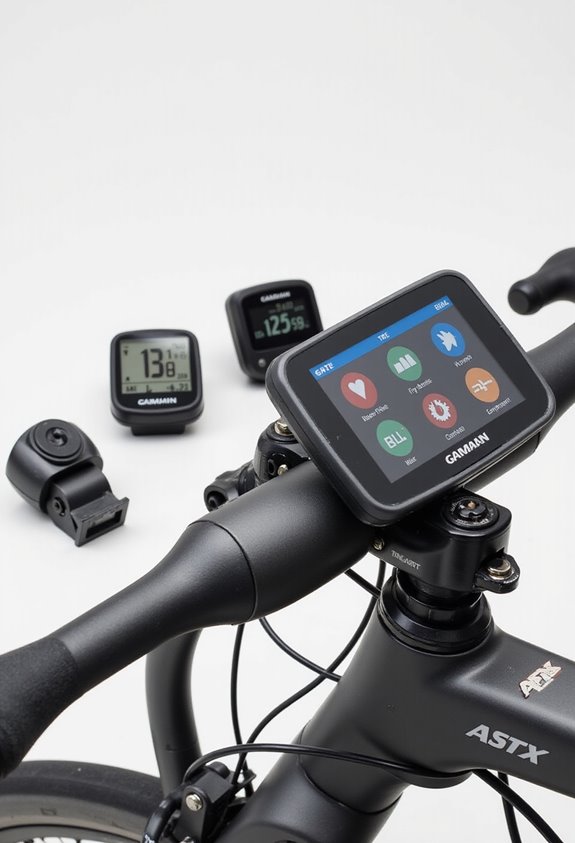
Understanding sensor pairing in cycling GPS computers enhances the functionality of our cycling experience. This pairing provides numerous sensor benefits, improving data accuracy by delivering direct measurements that supplement GPS signals.
Enhanced Accuracy
When we pair sensors like cadence and power meters, our data reliability increases notably. This is essential, especially in challenging environments where GPS accuracy may falter.
Diverse Metrics
Sensor pairing allows us to gather thorough performance insights, including metrics on heart rate and cadence. These insights enable structured training, helping us manage fatigue and improve form.
Convenience and Safety
Moreover, paired sensors enhance ride safety and convenience, offering features like automated ride logging and real-time feedback on pacing. This technology ultimately optimizes our overall cycling performance. Additionally, utilizing advanced sensors in newer heart rate monitors can significantly improve the reliability of our heart rate data during rides.
Types of Speed Sensors

Speed sensors play an essential role in cycling, enabling us to measure our pace and performance with precision. There are several types of speed sensors, each utilizing different technologies:
- Magnet-Based Sensors: These employ magnet technology, where a magnet on a wheel spoke is detected by a stationary sensor, guaranteeing high sensor accuracy.
- Magnetless Sensors: Using accelerometers, these provide data reliability without magnets.
- Hub-Based Sensors: These sit inside the wheel hub, offering easy installation and better measurement precision.
- GPS-Based Sensors: Although they offer wireless connectivity, their accuracy can suffer in poor conditions. Additionally, maintaining proper tire pressure can enhance overall cycling performance, making accurate sensor readings even more crucial.
When choosing a sensor, consider installation techniques and the need for sensor calibration to guarantee accurate performance across various biking environments.
Recommended Products

44 POUND FLYWHEEL: 44-pound heavy-duty flywheel ensures stability to avoid jolting while riding. Emergency push-down brake stops the wheel immediately for safety.

Huge Time Saver: Bill counter machine mixed denomination counts and reports total value, clear breakdown of quantity and value by Denom, and serial number. Besides, supports multi-currency value counting(USD/EUR/MXN/CAD/LBP/COP/ILS/etc). Available to print them all with MUNBYN printer. Ideal for the small business, gas station, police department, bank

Heavy-Duty Stability for Seniors & Adults Built with a reinforced steel frame supporting up to 450LB, this recumbent exercise bike delivers confident, wobble-free stability for seniors, adults, and rehabilitation users. The low step-through design allows easy on/off access, helping reduce strain on knees and hips during daily workouts.
Types of Cadence Sensors

Cadence sensors are integral for cyclists looking to optimize their pedaling efficiency and performance. There are two main cadence measurement methods: traditional magnet-based sensors and newer accelerometer technology.
- Magnet-Based Sensors: These sensors use magnets positioned near a sensor on the crank or frame to count pedal revolutions, providing reliable data but requiring precise alignment.
- Accelerometer Sensors: More advanced, these systems detect pedal rotation without magnets, offering easier installation and improved aesthetics.
When we consider sensor accuracy comparison, both types deliver essential cadence data, though accelerometers can be more consistent in various conditions. Overall, each type serves different cyclist needs and preferences, impacting choice based on performance goals and installation ease. Additionally, cyclists should consider power meter compatibility when selecting sensors to ensure seamless integration with their existing equipment.
Recommended Products

Material: metal, plastic

ADVANCED PERFORMANCE MONITOR: Sunny Health & Fitness’ most advanced performance monitor tracks: Speed, Avg Speed, Max Speed, Cadence (RPM), Avg Cadence, Max Cadence, Distance, Target Distance, Time, Calories, Race, Target Time, and Pulse.

IN THE BOX: 1x Left pedal with power sensor, 1x Right pedal without power sensor, 1x MTB-compatible SPD cleats, 1x 4 Washers, 1x Magnetic charging connector (2x MX-2 | 1x MX-1), 1x Micro USB 2-way charging cable, 1x Greasing tools kit, 1x Guarantee and safety manual, 1x Power Bank (Wearable4U)
Types of Power Meters

Power meters play an essential role in modern cycling, enabling us to measure and analyze our performance accurately. There are several types of power meters, including:
Pedal Power Meters: These measure power from one or both pedals. They’re easy to install but can be vulnerable to pedal strikes.
Crank Power Meters: Mounted on the crank arms, these provide reliable data but may have installation compatibility issues with different cranksets.
Spider Meters: Positioned between the crank arm and chainrings, they offer dual-sided readings with high accuracy and durability.
Hub Meters: Located in the rear hub, they protect against dirt and impact.
Single-Sided vs. Dual-Sided: Single-sided meters are lighter and lower cost, while dual-sided meters provide detailed performance accuracy by measuring both legs’ power. Additionally, investing in a reliable power meter can enhance your overall cycling experience by providing insights similar to those gained from using bike back protectors that prioritize rider safety and comfort.
Recommended Products

Includes: Media Tray, Stretch Pads, and M Connect Display.

🎁【Dual-Motor Electric Bike with Complete Accessories】 Designed for off-road and outdoor adventures, this dual-motor electric bike delivers strong power, smooth acceleration, and excellent climbing ability. It comes equipped with 𝐚 𝐫𝐞𝐚𝐫 𝐫𝐚𝐜𝐤 𝐛𝐚𝐠, 𝐫𝐞𝐚𝐫𝐯𝐢𝐞𝐰 𝐦𝐢𝐫𝐫𝐨𝐫, 𝐚𝐧𝐝 𝐚𝐢𝐫 𝐩𝐮𝐦𝐩, providing a complete, ready-to-ride experience for everyday use and outdoor exploration.

Types of Heart Rate Monitors
Optical Heart Rate Monitors:
- Worn on the wrist, these use LED lights to detect blood flow.
- While convenient, they may be less accurate for serious training.
Chest Strap Heart Rate Monitors:
- Worn around the chest, they use electrodes for precise readings.
- They provide consistent data preferred for structured workouts.
In terms of accuracy comparison, chest straps typically outperform wrist-based models. User preferences will often dictate the choice—casual cyclists may prefer the simplicity of optical monitors, while serious riders benefit from chest straps’ enhanced precision and connectivity. Additionally, safety certifications are crucial for ensuring the reliability of the devices used during training.
Recommended Products

Bluetooth enabled Heart Rate Monitor with LCD screen

IN THE BOX: 1x Garmin HRM-Fit - Women Heart Rate Real-Time Monitor, 1x Wearable4U Power Bank
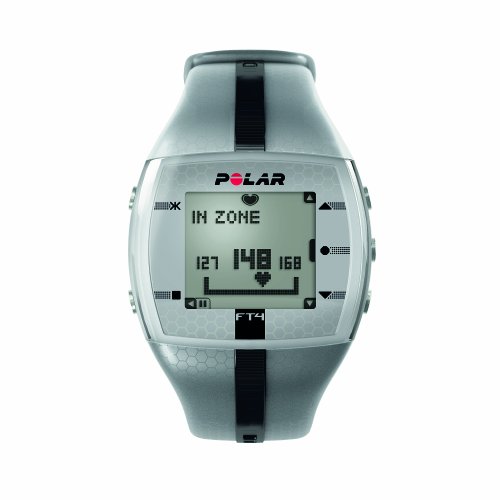
Provides continuous, accurate heart rate to keep your fitness training simple
Radar Safety Sensors for Enhanced Protection
As cycling technology continues to evolve, radar safety sensors emerge as an essential tool for enhancing rider protection on the road. These devices utilize advanced radar technology applications to detect vehicles up to 150 meters behind us. By emitting radio waves, they identify obstacles, providing accurate classifications with around 87% precision.
These systems enhance rider safety by delivering early warnings of approaching vehicles, allowing us time to react. Alerts are visual and audible, seamlessly integrated with cycling GPS computers for real-time updates. Additionally, radar sensors excel in various lighting and weather conditions, improving our situational awareness while riding. By focusing on the road ahead, riders can reduce distractions and enjoy safer cycling experiences. High volume levels from integrated alarms can also serve as an effective deterrent against theft while parked.
Connectivity Standards: ANT+ and Bluetooth
Cycling technology benefits greatly from connectivity standards like ANT+ and Bluetooth, which enable seamless communication between various devices.
ANT+ Advantages
ANT+ is widely adopted in fitness devices, allowing for real-time data transmission. This standard is popular for connecting heart rate monitors, cadence sensors, and power meters. Its compatibility with many cycling GPS computers enhances our experience by ensuring we can track various performance metrics efficiently.
Bluetooth Versatility
Bluetooth stands out for its versatility, offering connections not just with cycling sensors, but also with smartphones and fitness trackers. This broad compatibility allows for easy data integration, providing us with a holistic view of our cycling performance. Many modern devices support both ANT+ and Bluetooth, ensuring we have flexible options for our training needs. Additionally, long battery life is a key feature that enhances the usability of these connected devices during extended rides.
Single vs. Dual Band Sensors
Understanding the differences between single and dual band sensors is essential for enhancing our cycling experience.
Single Band Limitations
Single band sensors operate on one frequency, typically ANT+ or Bluetooth. While they’re often more affordable, they may restrict compatibility with various devices, limiting our options. If we only use one type of bike computer, these sensors may suffice.
Dual Band Advantages
In contrast, dual band sensors transmit data on both ANT+ and Bluetooth simultaneously. This versatility allows us to connect multiple devices at once, such as a GPS unit and a smartphone. Also, they tend to perform better in environments with radio interference, ensuring reliable data transmission. Ultimately, dual band sensors provide a more future-proof investment, accommodating both current and evolving cycling technology. Additionally, their compatibility with adjustable fit mechanisms ensures a seamless integration with smart helmets, enhancing safety and comfort during rides.
Installation Benefits of Magneticless Sensors
One of the key advantages of magneticless sensors is their straightforward installation process. These sensors allow for easier sensor installation, as they typically require fewer modifications to our bikes compared to traditional magnetic sensors.
Cost-Effective
They’re generally more affordable, making them a smart choice.
Reduced Maintenance
With fewer moving parts, maintenance needs are minimized, saving us time and effort.
Wide Sensor Compatibility
Magneticless sensors are compatible with various GPS devices and cycling apps, making them versatile for different cycling setups.
Durability
Designed to resist mud, moisture, and dust, they prove reliable in various conditions. Additionally, their design is similar to manual pumps that are lightweight and easy to carry, ensuring optimal performance while cycling.
Comprehensive Data Tracking for Performance
Cyclists can greatly enhance their performance by utilizing extensive data tracking systems. By integrating various sensors with our GPS cycling computers, we can achieve thorough performance analytics.
Heart Rate Monitors: These track cardiovascular effort and help maintain target heart rate zones for tailored training.
Cadence Sensors: By measuring revolutions per minute, we can optimize our pedaling efficiency and rhythm.
Power Meters: These provide direct wattage measurements, essential for precise training and pacing.
Speed Sensors: Accurate speed and distance data enhance our understanding of performance metrics.
Environmental Sensors: They add critical context, such as elevation changes and weather conditions.
Ensuring sensor compatibility with our devices allows us to analyze and improve our cycling performance systematically.
Popular Sensor Brands and Models
When it comes to cycling GPS sensors, several prominent brands offer a range of models tailored to enhance our riding experience through precise data collection.
Garmin: Known for reliable products, models like the Garmin Bike Cadence Sensor 2 and Garmin Bike Speed/Cadence Sensor 2 provide accurate metrics. Their various GPS computers, including Edge 1050 and Edge 840 Solar, support seamless sensor connectivity.
Wahoo Fitness: The RPM Cadence Sensor is popular for easy installation, while their Elemnt series, including Elemnt Roam V3, offers robust connectivity with built-in features.
Lezyne: With GPS bike computers focusing on navigation, their offerings work well with various sensors.
COROS and Hammerhead: Both brands emphasize compatibility with multiple sensor types, catering to tech-savvy cyclists.
Recommended Products

【IoT Smart Anti-Theft】This smart electric bike integrates IoT technology, GPS tracking, and anti-theft alerts, designed for modern adult electric bicycles users who value security and connectivity. The dedicated ENGWE app lets you remotely check battery status, track your routes and instantly receive alert notifications if the bike is moved under anti-theft protection,making every ride safer and more convenient.

Pedal-based power meter bundle for road (compatible with LOOK KEO cleats) and off-road (compatible with SHIMANO SPD cleats)

IN THE BOX: 1 x Garmin Rally RK200 Pedals, 1 x Cleat hardware, 1 x 55 mm Q-factor washers, 1 x Wearable4U PowerBank
Advanced Metrics Enabled by Sensors
How can advanced metrics from cycling GPS sensors transform our riding performance? By leveraging sensor compatibility, we can gather precise data on speed, cadence, and power output.
Speed and Cadence Metrics
Speed sensors grant accurate speed readings, essential in areas with poor GPS signals. Cadence sensors track pedal revolutions per minute (RPM), enabling effective training zone optimization. Together, these metrics enhance our performance analysis.
Power Monitoring
Power meters measure output in watts, important for evaluating training efficiency. They enable advanced training strategies with metrics like Functional Threshold Power (FTP) and power zones.
Heart Rate Insights
Heart rate monitors provide an understanding of our cardiovascular response, allowing for tailored training loads and recovery plans.
Collectively, these advanced metrics work to improve our cycling performance through informed decision-making and strategic planning.
Integration With Cycling Apps and Platforms
As we explore the integration of cycling GPS sensors with various cycling apps and platforms, it’s clear that this synergy substantially enhances our riding experience. High-end GPS computers sync directly with popular platforms like Strava and TrainingPeaks, ensuring smooth data transfer.
- Real-Time Data Sharing: Many devices enable instant analysis and group ride coordination.
- Connectivity: WiFi and Bluetooth allow automatic uploads to apps and platforms.
- Ecosystem Integration: Compatibility with third-party sensors through ANT+ and Bluetooth Smart fosters a diverse sensor ecosystem.
Choosing the Right Sensors for Your Needs
Choosing the right sensors for our cycling needs can greatly enhance our performance and safety on the road. When selecting sensor types, we should consider what data we need.
Heart Rate Monitors can help track our fitness levels. Cadence Sensors assist in improving our pedaling efficiency, while Power Meters measure our power output, essential for advanced training.
Speed Sensors offer reliable tracking for distance and speed, especially in areas with poor GPS reception.
Lastly, Radar Safety Devices increase awareness of vehicles approaching from behind. By carefully selecting these sensors, we can enhance training efficiency and guarantee a safer riding experience. Remember, pairing devices via ANT+ or Bluetooth can streamline our data collection, keeping us focused on our performance goals.
Frequently Asked Questions
Can I Use Multiple Sensors Simultaneously With One GPS Computer?
Imagine a symphony, each instrument playing harmoniously. Yes, we can use multiple sensors simultaneously with one GPS computer, enjoying fantastic sensor compatibility and seamless connections. It enriches our ride data, enhancing our overall cycling experience.
How Do I Troubleshoot Connectivity Issues With My Sensors?
To troubleshoot connectivity issues, we should check sensor compatibility first. Then, let’s follow these troubleshooting steps: replace batteries, restart devices, re-pair sensors, and update firmware to enhance overall performance and connection stability.
Will My Sensors Work in Wet or Cold Conditions?
In the tempestuous domains of cycling, our sensors thrive! With their impressive durability and weather resistance, they conquer wet and cold conditions. We can rely on them to keep us connected, rain or shine.
How Often Should I Replace My Sensor Batteries?
We should replace our sensor batteries every 6 to 12 months, depending on battery lifespan. Regular sensor maintenance helps us guarantee peak performance and avoid issues during our rides, keeping our cycling experience enjoyable and hassle-free.
Can Sensors Be Used for Indoor Cycling as Well?
Yes, indoor cycling sensors can be used effectively. We should consider sensor compatibility issues, ensuring our devices connect seamlessly for ideal performance and accurate data tracking during our indoor training sessions.


