As an Amazon Associate, we earn from qualifying purchases. Some links on this site are affiliate links at no extra cost to you. Our recommendations are based on thorough research and editorial judgment.

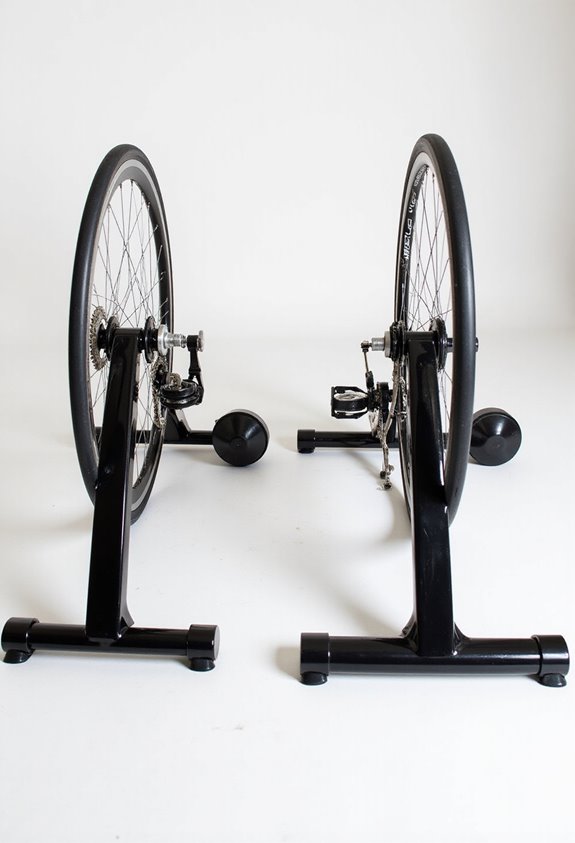
What Is the Difference Between Wheel-On and Direct-Drive Trainers?

Wheel-on and direct-drive trainers are key indoor cycling tools, each with distinct features. Wheel-on trainers keep the rear wheel in place, offering quick setup and lower costs (around $300-$600), but they may lead to tire wear and less accuracy. In contrast, direct-drive trainers replace the rear wheel, providing enhanced stability, precise power measurements (±1.5% to ±3% accuracy), and a more immersive experience, but at higher prices ($800-$1,200+). Understanding these differences helps us choose the right trainer for our needs, so let’s explore further.
Key Takeaways
- Wheel-on trainers maintain the rear wheel on, while direct-drive trainers require the rear wheel to be removed for mounting directly onto the trainer’s cassette.
- Direct-drive trainers offer superior power measurement accuracy (±1.5% to ±3%) compared to wheel-on trainers (±5%), which are affected by tire variables.
- Setup of wheel-on trainers is quicker and easier, allowing users to ride their bike “as is,” versus the more complex setup required for direct-drive trainers.
- Direct-drive trainers provide a more stable ride with less bike sway, enhancing comfort during longer sessions compared to wheel-on trainers that may exhibit minor instability.
- Wheel-on trainers are generally more budget-friendly ($300-$600) than direct-drive trainers ($800-$1,200+), making them appealing for beginners and casual users.
Definition and Basic Mechanism
You may be interested


When we talk about bike trainers, understanding their basic mechanisms is essential. There are two primary types: wheel-on and direct-drive trainers.
Wheel-On Trainer
This trainer keeps the rear wheel on, resting on a roller connected to the trainer. It generates resistance through friction, magnets, or fluids acting against the tire. Setup is quick; we only need to attach the bike via the rear axle—no wheel removal required.
Direct-Drive Trainer
Here, the bike’s rear wheel is removed, mounting the frame directly onto the trainer’s built-in cassette. This mechanism applies resistance directly to the drivetrain, eliminating power loss. The electronically controlled resistance offers a more precise simulation of terrain and gradient changes, which can enhance your cycling experience significantly.
Understanding these basic features helps us choose the right trainer for our cycling needs.
Cost and Market Positioning

In considering bike trainers, many of us encounter significant differences in cost and market positioning between wheel-on and direct-drive models.
Price Comparison
Direct-drive trainers typically range from $800 to $1,200+, while wheel-on models are more economical, costing between $300 and $600. For instance, entry-level direct-drive trainers like the Wahoo Kickr Core are around $900, compared to the Wahoo Kickr Snap, which costs $370-$500. Additionally, various road and mountain bike frames can be accommodated by wheel-on trainers, increasing their appeal to a broader audience.
Market Segmentation
Direct-drive trainers target serious enthusiasts and competitive cyclists who value accuracy and realism. In contrast, wheel-on trainers appeal to beginners and casual users seeking affordability and versatility. While wheel-on models are cheaper initially, they may incur higher maintenance costs due to tire wear, impacting long-term value.
Recommended Products

Innovative design creates a realistic feel and accurate-to-life riding position; virtual shifting even simulates the sensation of changing gears

Now in its third generation, the KICKR BIKE PRO delivers the ride feel serious cyclists expect from the KICKR name. A precision flywheel and integrated motor recreate real-world resistance with every stroke. Feel every gradient, from punchy climbs to steep descents, and gear changes that respond almost immediately. Built on athlete feedback and years of innovation, this is indoor training at the cutting edge.

New built-in integrated motion plates give you the most realistic riding feel and can be toggled on and off as desired
Ride Experience and Realism

Understanding the ride experience is essential when choosing between wheel-on and direct-drive trainers. Direct-drive trainers provide a more stable and controlled ride since they connect to the bike’s rear cassette. This connection minimizes bike sway and vibrations, leading to improved ride feedback.
In contrast, wheel-on trainers can cause minor instability due to tire pressure and inconsistent contact, impacting gear changes during high-intensity efforts. The direct-drive models replicate outdoor cycling more accurately by mimicking terrain changes through their advanced resistance systems.
Additionally, the direct connection eliminates tire slip, ensuring immediate feedback from pedaling. This feature enhances the overall realism of the ride, creating an immersive indoor cycling experience that’s hard to match with wheel-on trainers. Moreover, direct-drive trainers often feature superior resistance efficiency, allowing for a more varied and intense workout experience.
Recommended Products


[Compact & Effortless Setup]: Occupying only 0.77㎡, the T7 fits seamlessly into your home. After the first setup, enjoy pro-level indoor training anytime, no frequent disassembly, no hassle. Just ride and go.

Compatible sprockets: Shimano type 8/9/10/11 speeds
Power Accuracy and Data Quality

Power accuracy and data quality are essential factors to take into account when choosing between wheel-on and direct-drive trainers.
Power Measurement
Direct-drive trainers typically achieve power accuracy within ±1.5% to ±3%. They measure directly at the cassette, minimizing interference from factors like tire slippage. In contrast, wheel-on trainers offer lower accuracy, around ±5%, affected by variables such as roller pressure and tire grip.
Data Stability
Data quality is generally better with direct-drive trainers. They produce more stable ANT+ and Bluetooth signals since information comes directly from the trainer’s sensors. Wheel-on trainers may experience fluctuations in power data due to mechanical variables. Additionally, maintaining a regular cleaning routine for your equipment can contribute to accurate performance metrics.
Ultimately, direct-drive trainers provide superior power measurement and data stability, making them a better option for serious training.
Recommended Products

Material: metal, plastic

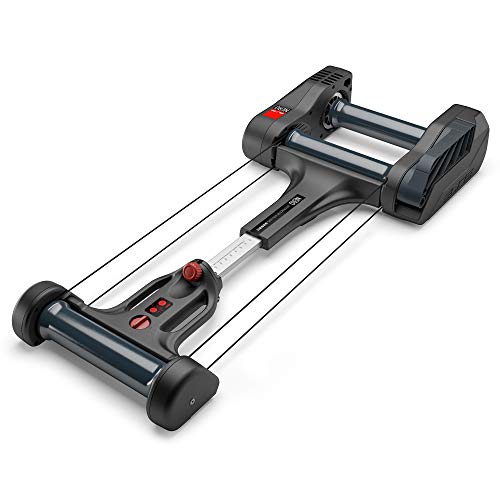
Interactive Smart Roller – Electronically controlled magnetic brake delivers ultra-smooth resistance and direct power transfer for a realistic road-like ride feel.
Setup and Convenience

When considering a bike trainer, setup and convenience play a significant role in our decision-making. Direct drive trainers require a higher setup complexity, as we must remove the rear wheel and attach the bike’s chain to the cassette. In contrast, wheel-on trainers allow us to use our bikes “as is,” resulting in a quicker setup process.
Moreover, we need to address portability issues. Direct drive trainers are larger and heavier, making them less convenient for transport. Wheel-on trainers are compact and easier to store, making them ideal for smaller living spaces. For casual users or those needing frequent setup and takedown, wheel-on is clearly the more user-friendly option. Additionally, noise levels during operation can be a deciding factor, as wheel-on trainers tend to be quieter, enhancing the overall experience in shared living spaces.
Recommended Products

An enhanced version of the Me-Mover Speed, which features upgraded materials and added accessories. Rechargeable light kit, GPS (optional), sports handlebar, foot cushions and more! Each order is custom-built.

HIGH SPEED: The Me-Mover Speed PRO combines high speed with incredible stability. If you are looking to travel fast and further the Speed PRO will be the right companion.
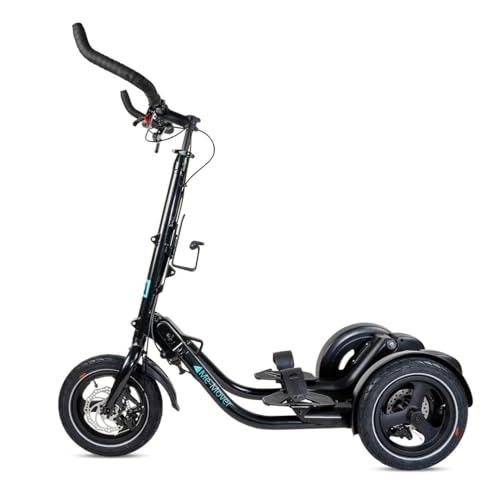
HAVE FUN AND STAY FIT: The Me-Mover FIT is the perfect stand-up bike if you are looking for outdoor body workout. Forget the boring standard machine workout and take your training to the next level while having fun.
Durability and Maintenance
Durability and maintenance are essential factors to take into account when choosing between wheel-on and direct-drive trainers.
Component Lifespan
Wheel-on trainers suffer from roller wear and require frequent tire inspections. This wear can lead to tire degradation and eventual replacement. In contrast, direct-drive trainers eliminate tire wear and have components built to withstand higher stress, enhancing lifespan. Additionally, many direct-drive trainers like the Elite Direto XR are designed with quality materials for extended durability.
Repair Accessibility
Wheel-on trainers offer simpler repairs, such as replacing rollers or tires, making them cost-effective. Direct-drive trainers, while more durable, often involve complex electronic repairs that can be costly and require specialized service. Parts like cassettes may have limited availability, impacting maintenance.
Choosing between these trainer types depends on our preferences for durability and the level of maintenance we’re prepared to handle.
Noise Levels
Noise levels play a noteworthy role in our experience when using trainers, impacting both training effectiveness and overall enjoyment.
Wheel-On Trainers
These trainers generate noise mainly from the tire rolling against the resistance unit. Factors like tire pressure, type, and higher gearing can increase noise levels. Users often resort to ambient sounds to mask these noises, which can lead to noise complaints in apartment living environments.
Direct-Drive Trainers
In contrast, direct-drive trainers operate without tire contact, producing considerably less noise. Most sound comes from the motor and internal mechanisms, which are generally quieter. Many users report being able to watch TV or hold conversations in adjacent rooms, making this option preferable for noise-sensitive settings. Overall, switching to a direct-drive trainer often results in dramatic noise reduction. Additionally, helmet safety certifications highlight the importance of investing in quality equipment for enhanced performance and protection.
Weight and Size Considerations
Weight and size considerations are essential factors when choosing between wheel-on and direct-drive trainers.
Size Comparison
Direct-drive trainers are typically bulkier since they replace the bike’s rear wheel and include a cassette. This results in a larger footprint compared to wheel-on trainers, making them less portable.
Weight Distribution
Direct-drive models, like the Wahoo KICKR, can weigh between 48.5 to 64 lbs, offering improved stability during intense efforts. In contrast, wheel-on trainers weigh under 20 lbs, providing easier transport and storage. Their lighter weight allows for quick setup, ideal for users with limited space. Additionally, helmets must comply with CPSC regulations to ensure safety during cycling activities.
Ultimately, the choice between these trainers often depends on how frequently one needs to move them and the trade-offs between stability and portability.
Compatibility With Bikes
When considering bike trainers, compatibility with our bicycles is a crucial factor.
Direct-Drive Trainers
These models require us to remove the rear wheel and attach our bike to the trainer’s cassette. This setup can lead to compatibility issues, particularly with bikes that have uncommon axle standards or frame sizes. We may need to swap cassettes or use adapters, adding complexity.
Wheel-On Trainers
In contrast, wheel-on trainers allow our bike setups to remain intact. They simply press against the rear tire, accommodating a variety of bikes without modifications. This makes them ideal for households with multiple bicycles, ensuring a quick changeover without the hassle of changing parts or dealing with compatibility issues. Overall, wheel-on trainers provide a more universal solution. Additionally, many cyclists appreciate the convenience of tool-free installation which simplifies the process of mounting trainers on their bikes.
Maintenance Requirements
Maintenance requirements for bike trainers play a significant role in their overall usability and efficiency.
Wheel-On Trainers
These trainers require regular cleaning routines to avoid tire residue buildup. Frequent attention to the roller and tire interface is vital to guarantee peak performance. After every session, we should dry the roller surface to prevent slippage. Lubrication frequency is essential, especially for external moving parts, but expect increased tire wear over time.
Direct-Drive Trainers
In contrast, direct-drive trainers need less cleaning due to the absence of tire contact. However, we must periodically clean the cassette and check the drivetrain interface. These trainers require lubrication aligned with bike use, and we shouldn’t overlook firmware updates for ongoing compatibility. Regular inspection of mechanical interfaces guarantees longevity. Additionally, premium trainers typically offer quieter operation, which can enhance the training experience.
User Experience and Comfort
How do user experience and comfort differ between wheel-on and direct-drive trainers?
When we look at user feedback, direct-drive trainers often surpass wheel-on trainers in comfort metrics. This is largely due to reduced bike sway and consistent ride posture, which minimizes discomfort during longer sessions. Many riders prefer direct-drive trainers as they provide a more stable platform, enhancing the immersive experience.
In contrast, wheel-on trainers can introduce slight lateral movement and wear on the tire, potentially affecting ergonomics. While their setup is quicker, some riders find the convenience comes with trade-offs in ride quality. Ultimately, our preferences reflect a balance between setup simplicity and the comfort derived from a more realistic riding feel.
Recommendations for Different Riders
Choosing the right trainer depends on our riding habits and training goals.
Beginner Recommendations
For those new to indoor training, wheel-on trainers are our best bet. They’re budget-friendly, easy to set up, and allow quick shifts between bike and trainer. This option minimizes initial investment while providing adequate performance for casual rides.
Competitive Cyclist Suggestions
For competitive cyclists, direct-drive trainers are ideal. They offer precise power measurements and enhanced durability for frequent, intense training sessions. Despite the higher upfront cost, these trainers yield better performance analytics, making them worthwhile for serious athletes.
Recommended Products

Designed by professional athletes and trainers - Get the same workout as athletes and trainers with the AssaultRower Elite. Professionals put this rower to the test so you can complete your home gym and get the maximum out of your workout.
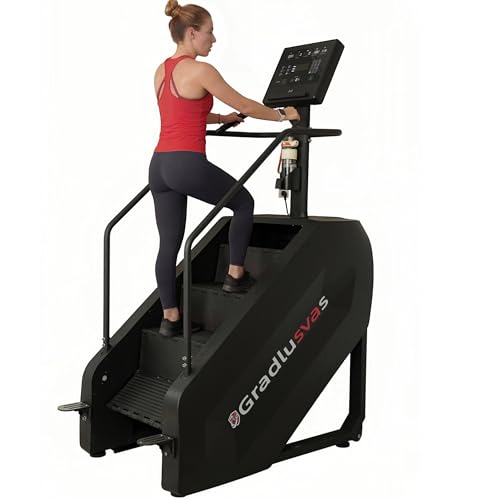
[COMMERCIAL GRADE] TRIPLE SAFETY ASSURANCE (0.3s Response): Safety is engineered in. Our commercial-grade stair stepper features gravity-sensing brakes and non-slip pedals. Integrated photoelectric + infrared sensors trigger an intelligent auto-stop within 0.3 seconds upon obstacle detection. Includes an emergency stop button for ultimate protection. Low-impact and reliable, it’s the safest stair climber for active teens, seniors, home gyms, and professional fitness studios.

Your purchase includes One Concept2 BikeErg Stationary Exercise Bike - 2900 model, One PM5 Performance Monitor, 2 Alkaline 1.5V size D Batteries, Tools and Assembly Manual
Frequently Asked Questions
How Long Do Both Trainers Typically Last?
Wheel-on trainers typically last 5 to 10 years, while direct-drive trainers can last 7 to 15 years. To maximize lifetime expectations, we suggest regular maintenance tips like lubrication and proper storage.
Can I Use My Trainer for Mountain Bikes?
Absolutely, we can use our mountain bikes on trainers, but we’ll need to assess compatibility and might have to make some adjustments, especially with wheel-on trainers to accommodate wider tires. Let’s check the specifications.
What Is the Best Way to Clean My Trainer?
We all know our trainers deserve love! For effective cleaning, let’s use these tips: wipe sweat right after workouts, maintain a regular maintenance schedule, and don’t forget to check for grime buildup regularly.
Are There Any Specific Brands Known for Reliability?
When considering brand comparisons for trainers, Wahoo and Tacx consistently receive high reliability ratings. We’ve found their direct drive models particularly dependable, offering exceptional durability and performance that meet the needs of dedicated cyclists.
How Do I Know Which Trainer Is Right for Me?
Finding the right trainer’s like choosing a path in a forest—guided by our fitness goals and trainer compatibility. Let’s assess what we value most, balancing convenience and performance to map our indoor cycling journey.


