As an Amazon Associate, we earn from qualifying purchases. Some links on this site are affiliate links at no extra cost to you. Our recommendations are based on thorough research and editorial judgment.


How Accurate Are Power Measurements on Bike Trainers?

Power measurements on bike trainers can vary in accuracy based on several factors. Direct-drive trainers typically offer accuracy within 1-2%, while wheel-on trainers may show discrepancies of 3.5-5% compared to crank-based power meters. Calibration is essential; regular zero calibrations and spindown tests help maintain reliability. Environmental factors like temperature and humidity can also affect readings. Finally, small discrepancies can notably impact training effectiveness. There’s much more to understand about ensuring peak performance and accuracy.
Key Takeaways
- Direct-drive trainers typically offer accuracy within 1-2%, while wheel-on trainers may vary by 3.5-5% compared to crank-based power meters.
- Accuracy can be influenced by the power meter’s location and calibration practices, necessitating regular zero calibration before rides.
- Calibration errors and device drift over time can lead to discrepancies exceeding 4-5%, impacting overall performance data.
- Environmental factors like temperature changes and humidity can affect sensor reliability and lead to inaccurate readings.
- Small errors in power measurements can significantly impact workout effectiveness, complicating intensity zone settings and perceived effort levels.
Understanding Power Meter Accuracy
You may be interested


When we talk about power meter accuracy, we need to evaluate how well a power meter measures actual power output. The power meter fundamentals encompass validity, sensitivity, and robustness. A power meter’s accuracy reflects the closeness of reported wattage to true power output. Leading models claim accuracy within +/- 1% to +/- 2%.
Several factors influence accuracy implications. The power meter’s location on the bike affects measurements, with pedals generally providing more reliable data compared to rear hubs. Additionally, single-sided meters can be prone to larger inaccuracies due to left/right leg imbalances. Real-world conditions such as temperature and cleanliness of the drivetrain also play important roles. Regular calibration is essential to maintain claimed accuracy in daily use. Helmet safety standards should also be considered, as they ensure that riders are protected while training and testing their power outputs.
Variability in Wheel-on vs. Direct-Drive Trainers

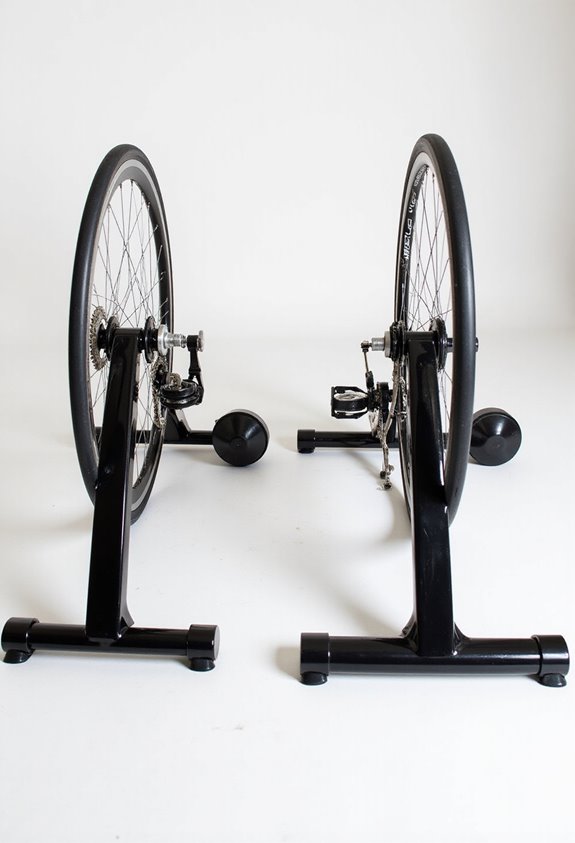
Power measurement accuracy is a critical factor in choosing between wheel-on and direct-drive bike trainers. Wheel-on variability arises from factors like tire pressure and temperature, affecting power readings because these trainers gauge power indirectly through the rear wheel. In contrast, direct-drive stability is achieved by measuring power directly at the hub or cassette, eliminating tire-related inconsistencies.
- Wheel-on trainers can exhibit variability of 3.5-5% when compared to crank-based power meters.
- Direct-drive trainers often deliver closer accuracy, generally within 1-2%.
While direct-drive units cost more, they offer notably improved measurement validity. For consistent training data, direct-drive trainers are more reliable and provide repeatable power output across sessions, allowing for better performance tracking. Additionally, smart trainers provide connectivity for app integration, further enhancing the training experience.
Recommended Products
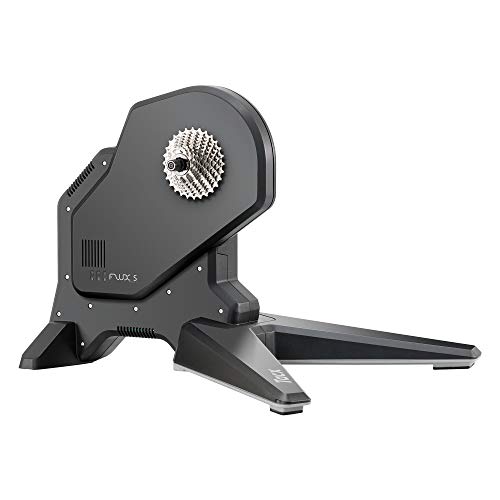
Measure your power within 3% accuracy

Powerful smart direct drive Trainer with full cycling app compatibility
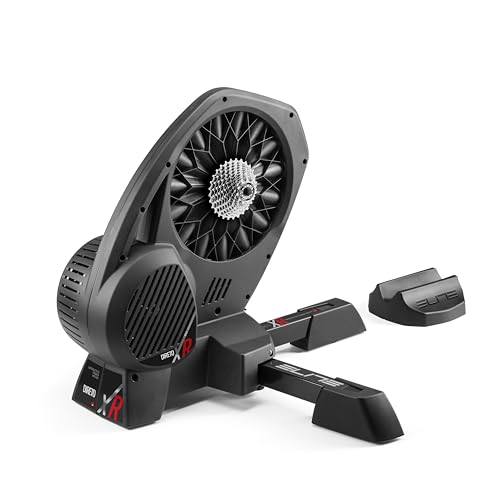
INTERACTIVE DIRECT-DRIVE TRAINER: Provides seamless direct transmission for an immersive training experience.
Testing Methods for Power Measurement

Testing methods for power measurement on bike trainers are essential for ensuring accuracy and reliability. We start by calibrating the trainer and power meter according to manufacturer instructions. Warm-up and roll-down tests reveal if the trainer measures power accurately.
Incremental tests help us evaluate responses to varying power outputs. We employ torque sensors to measure precise power delivery during these tests.
To confirm accuracy, we compare the trainer’s readings with multiple power meters, ensuring consistent performance. Conducting repeated trials is vital for verifying repeatability.
Finally, we analyze data collected through specialized software, facilitating detailed comparisons and insights into performance metrics and any potential discrepancies that arise during testing scenarios. This systematic approach leads to enhanced confidence in power measurements, especially when considering breathable materials that can impact ride comfort and performance.
Recommended Products

±1% Consistent Power Accuracy, Record Your Every Effort Precisely

Dual-Sensing Side Precision – Independently measure left and right leg power with ±1% accuracy, making the P715 a professional cycling power meter for serious riders

Unmatched Precision: Achieve ±1% power accuracy with advanced strain gauges, acceleration sensors, and intelligent temperature compensation, delivering reliable data in any environment
Environmental Factors Affecting Accuracy

Understanding how various environmental factors affect power measurements on bike trainers is vital for achieving accurate results.
Temperature Fluctuations
Temperature changes can alter sensor behavior. Warmer conditions may lead to lower power readings, while cooler temperatures might inflate these numbers.
Humidity Influences
High humidity can affect sensor reliability, causing reading drift. Proper airflow management, facilitated by fans, helps stabilize the trainer’s internal temperature and guarantees consistent power readings.
Wireless Interference
Wireless signals can experience disruptions from other devices, impacting data transmission. Awareness of these factors guarantees cleaner signal paths.
Environmental Consistency
An environment with stable conditions is essential for accurate measurements. Variability can greatly affect our power output, making consistency key for reliable training data. Additionally, high-quality materials used in equipment can further enhance overall performance stability under varying environmental conditions.
Calibration and Consistency in Training

Direct drive trainers require less frequent calibration, as they lack tire variability. Additionally, consistency practices are essential for reproducibility. Keeping our firmware updated minimizes errors and guarantees stable performance. Adhering to these methods helps maintain accurate readings amidst environmental changes and mechanical wear. Ultimately, our commitment to proper calibration and consistent practices can greatly enhance our training data quality. Furthermore, regular maintenance of tire wear can also contribute to more reliable power measurements.
Differences Among Types of Power Meters
When it comes to measuring power output during cycling, various types of power meters each have unique characteristics that affect their accuracy and usability.
Pedal Meters
Pedal meters measure force at the pedals, providing dual-sided data for better leg balance. They are lightweight and compatible with various pedal types.
Crank Arm Meters
Crank arm meters use strain gauges in crank arms to measure single-leg power, estimating total output by doubling. They are generally lightweight but may lack precise left-right data unless dual-sided.
Spider Meters
Spider meters mount between chainrings, offering accurate power measurement from both legs combined, ideal for serious cyclists.
Spindle Meters
Spindle meters replace the bottom bracket’s spindle, providing high accuracy by measuring combined power without estimation, suitable for those needing detailed leg balance data. Additionally, padded cycling shorts can enhance overall comfort during long rides, which is crucial for maintaining performance when using power measurement tools.
Recommended Products


Built-in Dual Spectrum Chirp Sonar: Visualize fish, structure, and bottom contours with enhanced clarity and detail compared to traditional sonar, with all transducer components safely concealed within the trolling motor shaft
Accuracy Challenges During High-Intensity Efforts
Although power trainers are designed to deliver precise measurements, numerous factors can hinder accuracy during high-intensity cycling efforts.
Temperature Effects
Changes in temperature can notably affect power readings. Without proper warm-up, inaccuracies can arise as electronics heat up, especially during sprint duration.
Algorithm and Firmware Limitations
Power spikes during maximal efforts often lead to data stability issues. Older firmware may struggle with rapid changes, creating erratic readings that might misrepresent our true output.
Mechanical Factors
Wheel-on trainers are especially prone to inaccuracies from wheel slip. Proper setup is essential; inadequate contact can lead to misleading data during dynamic efforts. Additionally, battery life and quick-charging features of devices can influence how well they function under stress, impacting overall performance.
The Importance of Zero Offset Calibration
Understanding the importance of zero offset calibration is vital for accurate power measurements on bike trainers. This procedure resets the baseline measurement to account for residual torque effects caused by installation or environmental factors. By performing a zero offset, we guarantee our power meter records the correct values during our rides.
To execute this calibration, the bike must be stationary, and the rider should be off the pedals. For crank-based meters, position the crank arms vertically. This quick process can typically be done through our compatible head units and should be performed before every ride. Neglecting zero calibration can lead to inaccuracies, ultimately affecting our performance data. Therefore, maintaining consistent power readings relies on our vigilance in performing zero offset calibration regularly. Moreover, understanding safety certifications can enhance our overall riding experience by ensuring we are equipped with reliable equipment.
Reported Error Rates in Real-World Conditions
To accurately assess the reliability of power measurements on bike trainers, we must consider the reported error rates encountered in real-world conditions. In controlled settings, top-tier power meters boast accuracy within ±1–2%. However, real-world variability often leads to cumulative errors exceeding manufacturer tolerances.
Factors contributing to these inaccuracies include:
- Calibration Inconsistencies: Many trainers require regular calibration, but compliance varies.
- Drift Over Time: As sessions progress, two devices measuring simultaneously may drift apart, with differences at times exceeding 4–5%.
- Environmental Influences: Temperature and humidity can impact readings.
Ultimately, while specified accuracies look promising, the practical application shows greater complexity, emphasizing the need for caution when interpreting power data from bike trainers. Additionally, proper sizing in cycling shoes is crucial for ensuring optimal performance and comfort during rides, similar to the importance of accurate power measurements.
The Impact of Measurement Discrepancies on Training
When we consider the impact of measurement discrepancies on training, it’s clear that even small differences in power readings can lead to significant variations in workout effectiveness.
These discrepancies can alter our perceived difficulty during workouts. For instance, a 3% error at 300 watts translates to a 9-watt difference, potentially turning a manageable interval into a grueling challenge. This misrepresentation affects our pacing strategies during high-intensity efforts.
Additionally, variations between indoor and outdoor measurements can distort our understanding of effort levels. Inconsistent data complicates setting appropriate intensity zones, which may result in overtraining or undertraining.
In short, power discrepancies undermine our ability to monitor performance accurately, ultimately hindering effective training progression. Furthermore, the smooth resistance offered by fluid bike trainers can help reduce perceived discrepancies, aiding in a more consistent training experience.
Recommended Products

ElliptiGO 11R: The 11R is the only elliptical bike on the market that offers our patented running-like pedaling motion, vibration-dampening carbon-fiber drive arms, and a folding-steering column for easy transport. With 11 gears, the 11R can take on the steepest hills and push the pace on flats. 250lb Weight Limit. Ships Almost Fully-Assembled. No Tools Required.

ElliptiGO 8C: Leave the boring gym behind. With eight gears capable of tackling tough climbs, it's perfect for professional athletes and recreational riders alike. Whether your goal is to lose weight, cross-train, or just get moving, the 8C delivers the best bang for your buck. 250lb Weight Limit. Ships Almost Fully-Assembled. No Tools Required.
ZERO-IMPACT EXERCISE: Ideal for all fitness levels. The natural stepping motion and comfortable seated position eliminates stress on the joints and back while delivering a total body, fat-burning cardio workout. A great exercise option for those with Arthritis, Parkinson's or MS.
Best Practices for Ensuring Accurate Power Measurements
Ensuring accurate power measurements on bike trainers requires a systematic approach that incorporates calibration, environmental factors, and device validation.
Best Calibration Practices
We should always perform a spindown calibration before rides for wheel-on trainers, except for models like Tacx Neo. Make sure to warm up the trainer for 10-15 minutes first. Checking zero offsets within manufacturer specifications, like SRAM’s ±1000 counts for Quarq units, is vital.
Trainer Setup
Proper tire inflation and secure bike installation are essential for consistent power transfer. We must periodically recalibrate whenever equipment or environmental conditions change, especially temperature or tire pressure. Regular firmware updates enhance accuracy and should not be overlooked.
Recommended Products

Easy to install

PATENTED INTERNAL PROGRESSIVE RESISTANCE VIA EDDY CURRENT: Features friction-less, progressive resistance that accurately simulates the rolling and wind resistance you encounter while cycling outdoors, providing a more natural and challenging workout.
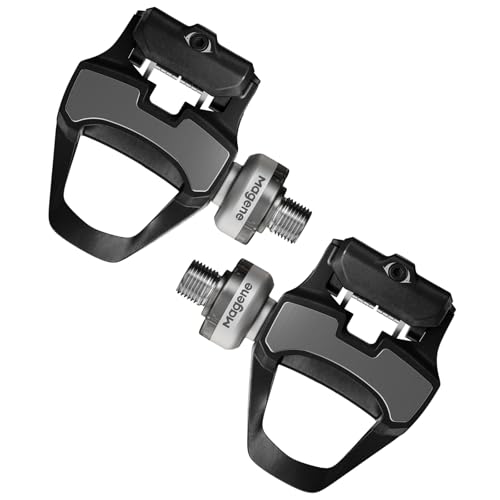
Dual-Sensing Side Precision – Independently measure left and right leg power with ±1% accuracy, making the P715 a professional cycling power meter for serious riders
Frequently Asked Questions
How Can I Improve Power Meter Accuracy During Training Sessions?
Want to enhance our power meter accuracy during training? Let’s focus on regular calibration techniques and pay attention to user feedback. By optimizing our setup and environment, we’ll guarantee more reliable measurements and improved performance.
Are There Recommended Brands for Reliable Power Meters and Trainers?
For reliable power meters and trainers, we recommend Garmin power meters, Stages Cycling products, Wahoo trainers, and Pioneer power meters. Quarq power meters are also a great choice, consistently providing accurate and dependable measurements for our rides.
How Do Pedal-Based Meters Compare to Hub-Based Options?
When comparing pedal accuracy to hub precision, we find both have strengths. Pedal meters provide raw power data, while hub meters mitigate drivetrain loss. Ultimately, consistency in calibration and environment matters more than the type.
What Maintenance Is Needed for Consistent Power Measurement Accuracy?
For consistent power measurement accuracy, we need to perform regular calibrations, maintain battery health, clean sensors, apply firmware updates, monitor temperature effects, check frame alignment, use calibration tools, and conduct resistance checks consistently.
What Are Common User Errors Affecting Power Meter Readings?
Common user errors affecting power meter readings include calibration issues, like failing to zero offsets, and environmental factors, such as temperature changes or inconsistent tire pressure. We need to guarantee our setup is optimized for accurate data.