As an Amazon Associate, we earn from qualifying purchases. Some links on this site are affiliate links at no extra cost to you. Our recommendations are based on thorough research and editorial judgment.


What Are the Legal Requirements for Bike Lights in My Area?

To understand the legal requirements for bike lights in our area, we should first check state standards. Most states mandate a white front light visible from at least 500 feet and a red rear light or reflector. Some areas might allow flashing lights, while others restrict their use. It’s essential to guarantee all lights and reflectors are well-maintained for visibility. Familiarizing ourselves with local regulations can prevent fines and enhance safety. More specific details await further exploration.
Key Takeaways
- Check your state laws for specific front and rear light visibility requirements, typically ranging from 500 to 1,000 feet.
- Most states mandate a white front light and a red rear light for nighttime cycling; some allow flashing modes.
- Ensure reflectors meet federal durability standards: front reflectors must be colorless, while rear reflectors should be red.
- Additional local regulations may require helmet-mounted lights or additional reflectors for increased visibility in urban areas.
- Familiarize yourself with local enforcement practices and penalties to avoid fines and enhance cycling safety.
Understanding the Basics of Bike Light Legality
You may be interested


Understanding the basics of bike light legality is vital for all riders who want to stay safe and compliant while cycling. For effective urban cycling safety, we need to be aware of the necessary reflectors and lights. Federal regulations require new bikes to have reflectors—white in front and red in the rear. While reflectors are passive, they play an essential role in visibility.
Dynamic lighting technology enhances our safety, especially in low-light conditions. States may have differing requirements for rear lights, with some mandating red lights visible from 500 to 1,000 feet. Ignoring these laws can have legal consequences, making it important to familiarize ourselves with our state’s specific rules. Always verify that our lighting systems are functional and compliant. Additionally, ensuring our lights have a minimum brightness of 100 lumens can significantly improve our visibility to others on the road.
Front Light Requirements Across States

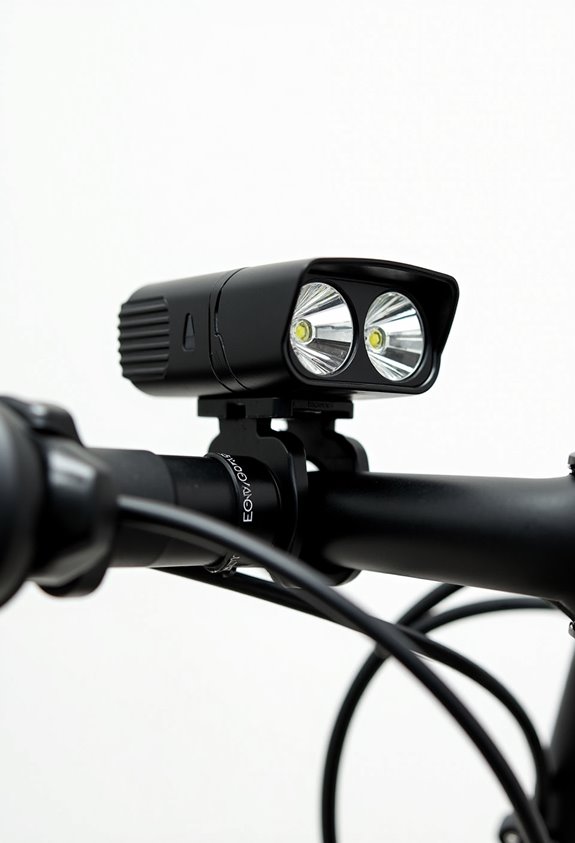
When we ride our bikes, having a clear understanding of front light requirements across different states is crucial for ensuring our safety and legal compliance. Most state regulations require a front light that emits a white light visible from at least 500 feet. This visibility requirement is essential for night cycling, as it helps illuminate our path and enhances our visibility to motorists.
While most states mandate a steady light for nighttime use, Oregon permits flashing lights. States like Texas align with this standard but may vary on light modes allowed. Regardless of specific rules, we must remember the 500-foot visibility standard is nearly universal. Compliance with these requirements not only keeps us safe but also helps us avoid potential legal issues. Additionally, using a high-quality helmet with proper ventilation can further enhance your safety during nighttime rides.
Recommended Products

Limited Time Special Edition: 2-Pack Gift Bundle - This bundle includes both the Guardian Angel Elite Series (White Front & Red Rear) and Micro Series (All White Front & Red Rear) wearable safety lights. Designed for professionals and outdoor enthusiasts alike, this dual-light set ensures unmatched visibility and versatility in any environment. Keep one in your patrol gear and the other in your go-bag, vehicle, or emergency kit for 24/7 readiness.

【4 LED Split Type Bike Light】 12000Lm Super Bright Bike lights, High beam + low beam design, 13 light modes and 3 brightness by 2 button, easy to control.

Extremely Bright 1800 Lumen CREE LED Technology: This Bike Light with new 10,400mAh battery gets Approximately 4-5 Hours on High, 7 hours on medium, 12 hours on Low
Rear Light and Reflector Regulations

Rear lights and reflectors play a critical role in enhancing cyclist safety during low visibility conditions. Different regions have distinct regulations regarding rear light and reflector visibility.
Recommended Products

🏍️eAhora Romeo Pro 2 electric bike for adults! 🛍️ Excellent value for money, let him unleash the beast within you!

DOMINATE ANY TERRAIN WITH 50MPH RAW POWER & 6500W PEAK MOTOR:Unleash explosive torque from the 6500W peak motor to conquer steep hills, sand dunes, and rocky trails. This high-speed electric dirt bike for adults leaves gas bikes and competitors in the dust — experience adrenaline-pumping off-road performance that redefines full-size electric motocross. (Note: Check local laws before purchase.)

2026 Upgraded Swift Horse Ultra – Featuring a larger 48V 35Ah battery and an upgraded sensor drivetrain algorithm, the ebike responds more naturally to your pedaling input, delivering smoother power output and improved energy efficiency. The result is up to 20 extra miles of range, enhanced climbing capability, and a more refined riding experience.
State Requirements
- Oregon: Requires a red light or reflector visible from up to 600 feet, but not both.
- Pennsylvania: Needs a rear reflector visible from at least 500 feet; a rear light is advised but not mandatory.
- UK: Mandates both a red rear light and a red rear reflector for night cycling.
Compliance and Visibility
When mounting rear lights or reflectors, guarantee they are visible directly from behind and secured properly. Regular maintenance of these devices is essential for safety and legal compliance. Additionally, ensure that the rear light has high lumens brightness for maximum visibility, especially in urban areas.
The Importance of Visibility Standards

Visibility standards are critical for guaranteeing cyclist safety in various conditions. These standards dictate how bright our bike lights need to be. For instance, front lights must emit white light visible from 300 to 1000 feet, depending on local laws. This allows drivers to see us in low-light situations.
We should also be aware of visibility technology and lighting innovations. Reflectors and lights must be placed correctly on our bikes to assure 360-degree visibility. Color differentiation is essential: white for the front and red for the rear. Additionally, proper placements help maintain visibility even in challenging conditions. By adhering to these regulations, we enhance our safety and promote a more visible presence on the road. Furthermore, ensuring that our lights offer at least 220-degree visibility can significantly improve our chances of being seen by others.
Flashing Lights: What’s Allowed?

Understanding the regulations surrounding flashing bike lights is important for maintaining compliance and enhancing safety. Each country and region has different rules regarding flashing patterns.
In the UK, flashing lights are allowed if they flash between 1-4 Hz and meet the brightness requirement. Germany, the Netherlands, and Austria prohibit flashing lights entirely due to potential distractions. In the United States, legal variations exist: Oregon permits flashing bike lights without restrictions, while Washington State prohibits flashing white lights.
To guarantee compliance, we must know what’s legal in our area. Generally, flashing lights must maintain consistent patterns and meet visibility standards. We should also consider that while flashing can enhance visibility, it can sometimes confuse other road users, impacting overall safety. Additionally, many lights incorporate high-lumen output features that significantly improve rider visibility in low-light conditions.
Recommended Products

[🥰Extend Your Journey, Eliminate Range Anxiety🥰]Unlock uninterrupted exploration with the M1P Pro's optional dual-battery system. By adding a second 60V/50AH battery (sold separately), you can extend your total range by up to 60 miles, achieving over 110 miles on a single charge cycle. This ample power effortlessly covers extended daily commutes and liberates you for longer outdoor adventures, ensuring you always have a reliable reserve.

[Eahora M1P Pro 4000W Electric Motorcycle - Core Features]1️⃣ 110+ Miles Dual-Battery Range:60V/42AH Main Battery + 60V/50AH Backup Battery2️⃣ 50MPH Top Speed:4000W Brushless Motor for Highway-Ready Power3️⃣ 3-4H Fast Charging:67.2V-7A Smart Charger Minimizes Downtime4️⃣ All-Terrain Control:Dual Hydraulic Disc Brakes + Full Suspension System5️⃣ Unstoppable Traction:TNT Tubeless Fat Tires + 360° LED Lighting6️⃣ Rider-Focused Comfort:Breathable Air Cushion Seat + Parking Assist (P-Gear)

【🎏Bring the Crew: The Ultimate Family Cruiser🎏】The Eahora M1P Pro now offers an optional detachable sidecar, transforming it into the ultimate family cruiser. Whether your co-pilot is a curious child or your loyal furry friend, the sidecar provides a safe, fun, and stable seat for passengers of all kinds. This versatile Street legal electric motorcycle gains the practicality for school runs, weekend journeys, or ice cream dates, making every outing a memorable adventure.
Specific State Variations in Bike Light Laws
When we navigate the landscape of bike light laws across the United States, it’s vital to recognize that each state establishes its own requirements. For instance, Virginia mandates a white headlamp visible from 500 feet and a red taillight visible from 600 feet. This aligns with similar requirements in nearby states like New York and New Jersey.
Key differences can include:
- Permitted light types and brightness
- Requirements for additional reflectors or side lighting
State comparisons reveal varied regulations, with some states allowing local jurisdictions to impose specific rules. These localized regulations have led to unique lighting innovations, affecting how cyclists guarantee visibility and safety. Understanding these variations is fundamental for compliant and safe cycling. Additionally, many states encourage cyclists to use lights with a minimum of 1000 lumens for enhanced visibility in low-light conditions.
Recommended Products

Dual-Motor Beast: Conquer 45° Hills & Hit 50 MPH: Unlock the full 8000W peak power of dual hub motors for extreme off-road climbing and thrilling speed. Effortlessly tackle 45° steep slopes and reach up to 50 MPH using throttle-only or pedal assist. Switch between rear-wheel and all-wheel drive instantly with one button for total terrain mastery

【4000W Peak Performance & 45° Climbing】 Dominate any terrain with the 60V high-torque motor, delivering a massive 4000W peak output. Unlike standard 750W ebikes, the MA-S out-accelerates competitors and effortlessly conquers 45-degree inclines, making it the ultimate machine for thrill-seekers and off-road enthusiasts

8000W Peak Dual Motor Electric Bike 50MPH Max Speed for Thrilling Rides: Unleash heart-pounding acceleration with dual 4000W peak brushless motors (8000W combined output) and 210N·m torque. Conquer 45° inclines effortlessly and hit 50MPH max in PAS Level 5,perfect for adrenaline-fueled off-road adventures or swift urban commutes. Our smart torque algorithm ensures seamless power delivery across all terrains, so you ride smoothly no matter the surface
Minimum Legal Standards for Night Cycling
To ride safely at night, cyclists must adhere to specific legal standards that vary by jurisdiction. Front white lights must be visible from 300 to 500 feet ahead and should produce a minimum brightness of 200 to 400 lumens. Rear lights, which must be red, need visibility from 300 to 600 feet behind. Side visibility may also be required, demanding lights or reflectors visible from 200 feet to enhance cycling safety. Light placement is essential; front lights should be mounted facing forward, while rear lights are positioned at the back. Using proper lighting during required hours—typically from sunset to sunrise—is vital. Compliance helps guarantee our visibility and notably reduces the risk of nighttime collisions. Additionally, ensuring that your bike lights have adequate brightness levels significantly contributes to overall safety on the road.
Additional Reflector Requirements
While riding a bike at night, we must guarantee our visibility extends beyond just front and rear lights; reflectors play an important role in enhancing our safety.
Required Reflector Colors
Bicycles are required to have specific reflector colors. These include a colorless front reflector, a red rear reflector, and amber or colorless pedal reflectors.
Visibility Angles
Reflectors must maintain visibility angles of ±10° vertically and ±50° horizontally, ensuring they’re seen from multiple positions. Side reflectors are also important; they should be mounted on both tires and wheel spokes or rims.
Additional Requirements
Pedals require recessed colorless or amber reflectors, enhancing our lateral visibility. For compliance, reflectors must meet federal durability and reflectance standards, ensuring we stay safe on the road. Additionally, many cyclists benefit from using high-lumen outputs for better visibility in low-light conditions.
Compliance With Consumer Product Safety Standards
Compliance with consumer product safety standards is essential for guaranteeing the safety and visibility of our bicycles on the road. The U.S. Consumer Product Safety Commission (CPSC) mandates specific requirements.
Reflector Durability
Reflectors must meet durability standards to remain effective. Front reflectors should be colorless, and rear reflectors red, properly mounted to maximize visibility for motorists.
Visibility Enhancements
To enhance visibility, front lights must be visible from at least 300 feet in some states, while reflectors on wheels aid lateral visibility. Adhering to reflector placements not only guarantees legal compliance but also greatly boosts our safety. Additionally, using lights with 400 lumens brightness can significantly improve your visibility during night rides.
Penalties for Non-Compliance
The penalties for not using required bike lights can be significant, and they vary across different jurisdictions. For instance, in California, we might face fines for not having a white front light visible from 300 feet. In Oregon, a similar violation can lead to traffic tickets, especially during poor visibility.
Lighting enforcement is stricter in urban areas where cycling safety risks are heightened. Many states categorize riding without proper lighting as a traffic offense, leading to fines. Some places implement increased penalties if accidents occur due to insufficient lighting. Furthermore, using rechargeable bike lights can enhance visibility and compliance with safety regulations.
Ultimately, adhering to lighting regulations not only helps us avoid fines but also promotes a safer cycling environment, reducing accidents and potential liabilities in case of collisions.
Enhancing Safety With Extra Precautions
Enhancing safety while biking requires several essential precautions that go beyond the basic use of bike lights. First, we should consider high-lumen front and rear lights. These greatly enhance visibility in low-light situations. Adding side-facing reflectors or light strips on our wheels increases lateral visibility, reducing risks during turns.
Next, helmet-mounted lights provide better illumination than bike-mounted lights alone. Reflective accessories, such as vests and ankle straps, further elevate our roadside presence.
Lastly, employing electronic signaling devices or audible alerts improves communication with other road users. By integrating these extra precautions and safety enhancements, we can create a multi-faceted visibility approach, dramatically reducing our accident risk while cycling, especially at night.
The Role of Reflective Clothing and Accessories
While we often focus on bike lights and reflectors for safety, the role of reflective clothing and accessories cannot be overlooked. Wearing bright or fluorescent clothing enhances our visibility during daylight, while reflective materials are essential at night. These reflective benefits include improving our conspicuity to motorists, greatly reducing accident risks.
When considering accessory options, items like reflective belts, arm bands, and ankle bands provide additional visibility without the need for full outfits. They’re lightweight, easy to wear, and often more cost-effective. In addition, incorporating pedal and shoe reflectors enhances side visibility, vital for traversing intersections.
Maintenance of Lights and Reflectors for Safety
Maintaining the functionality of bike lights and reflectors is just as important as selecting the right gear. We must guarantee that lights are securely mounted to prevent slipping, utilizing compatible fittings for our electrical systems. Regular cleaning enhances beam clarity, so we should use a soft cloth to wipe lenses and check reflectors for dirt or damage.
Periodic functional checks are essential. We must inspect wiring and battery performance, making sure lights operate effectively before each ride. Additionally, employing proper charging practices prolongs battery life, keeping our lights ready when needed.
Local Codes and Regulations to Check
When we ride our bikes, it’s vital to understand that local codes and regulations can greatly impact our safety and legal status on the road. Local ordinances can vary greatly from one municipality to another.
For instance, certain cities may require helmets for minors or restrict sidewalk riding. In Houston, helmets are mandatory for riders under 18, but not for adults.
Additionally, lighting regulations might differ. Some municipalities may enforce stricter penalties for lighting non-compliance.
We should also be mindful of where we’re allowed to ride, whether on sidewalks or in bike lanes, as this also affects visibility and safety.
It’s important for us to familiarize ourselves with these municipal variations to make sure we comply with all legal requirements.
Recommendations for Safe Night Riding
What do we need to take into account for safe night riding? First, utilize essential lighting equipment. We should equip our bikes with a white front light and a red rear light, giving preference to blinking rear lights for visibility enhancement. Helmets and handlebar lights are also important for illuminating our path.
Next, wear bright, retro-reflective clothing to improve visibility. This is crucial for riding comfort, especially in variable lighting conditions.
Finally, we must follow safe riding behaviors. Staying in designated bike lanes and maintaining distance from other riders keeps us safe from hazards. Opt for familiar routes, avoiding poorly lit areas. By considering these factors, we can greatly enhance our safety while enjoying night rides.
Recommended Products
![eAhora M1P Pro [2026] Peak 6000W Electric Motorcycle for Adults, 50MPH High Speed Street Legal Electric Scooter, 110 Miles Max Range with Dual Battery, DOT Certified Fat Tire Chopper for Commuting](https://m.media-amazon.com/images/I/41iszPp6uCL._SL500_.jpg)
[Industry-Leading 110-Mile Range: The Ultimate Distance] – Redefine your boundaries. The 2026 M1P Pro introduces a revolutionary dual-battery system, extending your total range to a massive 110 miles. Whether it's a cross-city commute or a weekend road trip through the countryside, this smart design eliminates range anxiety forever. Swap batteries in seconds and keep the adventure going—freedom is now truly limitless.

【Total System Weight: Just 7.72kg】This is total carbon integration. Beyond a light frame, crafted from T1000 carbon. The result is a unified racing system where every ounce of effort translates directly into speed. Feel the bike disappear beneath you, and the road respond to every input

Designed with the Future in Mind
Frequently Asked Questions
Are There Age Restrictions for Cyclists Regarding Light Usage?
We don’t need to worry about age restrictions when it comes to youth cycling and light regulations. All cyclists, regardless of age, should gear up with lights for safety during low visibility.
Can I Use Decorative Lights if They Meet Legal Color Standards?
Absolutely, we can use decorative lights as long as they meet legal color standards. They add flair but must not distract or impair visibility. Safety’s our priority, so let’s guarantee compliance while brightening our rides!
Is There a Specific Wattage Requirement for Bike Lights?
There aren’t specific bike light wattage requirements everywhere, but focusing on overall bike light brightness and compliance with local regulations is essential. Let’s guarantee our lights are safe and effective for all cycling conditions.
Are There Penalties for Riding Without a Front Light in Daylight?
Like a sunbeam cutting through clouds, we find there aren’t penalties for riding without a front light in daylight. Still, we should consider daylight safety; visibility’s vital, even if regulations don’t demand it.
Do Bike Lights Need to Be Certified by Any Organization to Be Legal?
Yes, bike lights need light certification for legal compliance. It guarantees they meet safety standards, providing visibility without glare and reducing accident risks. Let’s always choose certified lights for safe and lawful riding.