As an Amazon Associate, we earn from qualifying purchases. Some links on this site are affiliate links at no extra cost to you. Our recommendations are based on thorough research and editorial judgment.

What Is the Difference Between Flashing and Steady Bike Light Modes?

Flashing and steady bike light modes offer distinct advantages for visibility and safety. Flashing lights are detectable from greater distances, especially during the day and in urban settings. They also conserve battery life, making them suitable for longer rides. Steady lights provide consistent illumination for nighttime use and help cyclists see their path clearly. Choosing the right mode enhances overall cycling safety. By understanding their differences, we can make informed decisions about our lighting setups.
Key Takeaways
- Flashing lights enhance visibility at greater distances, particularly in urban settings, while steady lights provide continuous illumination for clear path visibility at night.
- Flashing modes attract more attention and reduce inattention blindness, making cyclists more noticeable to drivers during the day.
- Steady lights drain battery power faster than flashing lights, which use less energy and prolong battery life on longer rides.
- Local regulations may dictate the preferred or legal light mode, influencing cyclists’ choices based on safety compliance.
- Effective light positioning and beam patterns are crucial to maximize visibility and minimize dazzling others, especially in shared paths.
Visibility and Detection Differences
You may be interested


When it comes to visibility and detection, understanding the differences between flashing and steady bike lights is vital for safety. Flashing advantages are significant; studies show that cyclists using flashing lights can be detected up to three times further away on straight roads. This advantage stems from our eyes’ sensitivity to movement, making flashing lights more conspicuous in visual clutter.
Conversely, steady limitations can reduce their effectiveness. While steady lights are beneficial, they often lose detection distance in less common placements. On curved roads or areas with short sightlines, the difference in visibility diminishes. Therefore, choosing the right light mode is essential for enhancing visibility and improving road safety for all cyclists. Additionally, many bike lights now offer multiple flashing modes, which can further enhance visibility in various riding conditions.
Safety Considerations in Different Settings

Safety considerations in different cycling environments vary considerably.
Urban Settings
In urban areas, flashing lights enhance visibility, standing out against traffic and distractions. We should follow local light regulations to guarantee we’re compliant while prioritizing our safety.
Rural Settings
In contrast, steady lights are often adequate in rural or dark areas, aiding drivers in estimating our distance and speed. This helps avoid potential collisions on curves or complex road layouts.
Interactions with Others
When riding in groups or on shared paths, steady lights are essential to prevent dazzling fellow cyclists or pedestrians.
General Safety Tips
Ultimately, adjusting our light modes according to conditions—daytime or nighttime—significantly contributes to safer cycling practices. We gain effective visibility by remaining aware of our surroundings and employing appropriate lighting. Additionally, using lights with minimum brightness required ensures we are seen and reduces the risk of accidents in various environments.
Battery Life and Energy Efficiency

How do bike light modes affect our battery life and energy efficiency? Flashing bike lights typically consume less energy than steady ones. The light pulses on and off, which reduces total active time and power drain. This design can often extend battery life by several times compared to steady modes.
In steady mode, lights continuously draw power, resulting in faster battery depletion. Additionally, rechargeable bike lights generally last a few hours less in steady mode due to this constant energy use. Using flashing mode is especially beneficial on longer rides, where energy savings are critical. This efficiency not only extends our light usage but also minimizes the need for frequent recharges, ensuring we stay safe and visible on our journeys. Furthermore, lights with multiple lighting modes offer versatility, allowing riders to adjust settings based on their specific needs and conditions.
Brightness and Usage Scenarios

Understanding brightness in bike light modes is essential for optimizing visibility in various riding conditions. Flashing rear lights enhance detectability, especially during daytime or in urban settings with steady background lights. They’re ideal for quick detection at intersections.
In contrast, steady lights offer reliable illumination at night, allowing us to clearly see our path and preventing misidentification by motor vehicle drivers. Effective light positioning is vital since steady modes provide better spatial judgment in complex traffic.
It’s important to note that mode compatibility can vary based on local regulations. For certain areas, only steady lights may be legal. To maximize safety, we must choose our light modes based on specific conditions and local laws. Furthermore, selecting lights with high lumens brightness can significantly improve visibility in challenging environments.
Psychological and Perceptual Factors

Psychological and perceptual factors play an essential role in how we perceive bike lights on the road. Flashing lights create an eye-catching effect that captures our attention more effectively. This is due to our visual system’s sensitivity to motion, allowing us to detect flashing lights earlier—up to three times farther away than steady lights.
Moreover, the psychological impact of flashing lights enhances driver awareness, reducing the likelihood of inattention blindness. With quick cognitive processing, drivers can easily categorize a cyclist on the road.
Perceptual differences also highlight how changing light patterns improve situational awareness, especially in complex environments. This earlier identification not only aids in safety but also gives drivers more time to react appropriately in preventing potential collisions. Additionally, multiple lighting modes provide adaptability for various situations, enhancing overall visibility and safety for cyclists on the road.
Flashing Lights in Urban Environments
In urban environments, flashing bike lights greatly impact visibility and safety for cyclists. It is understood that legal restrictions vary widely; some areas allow flashing lights while others, like Germany and Austria, prohibit them to reduce distraction factors. These rules are essential, as cyclist visibility can increase up to 240% with proper flashing frequency.
Data supports the benefits of flashing lights; they can reduce cycling accidents by 33%. However, we must consider driver perception. Overly bright flashes may impair distance judgment, leading to confusion among road users. To enhance safety, let’s choose compliant lights that maintain effective visibility without causing glare. Additionally, selecting lights with IPX5 water resistance ensures durability in varying weather conditions, further improving rider safety. Balancing light patterns can help us navigate our complex urban environments safely and legally.
Steady Lights for Group Riding
When we ride in groups, using steady lights offers crucial advantages for maintaining safety and coordination. Their continuous light beams enhance spatial awareness, allowing us to gauge speed and distance with precision. This is imperative for smooth group coordination and pacing.
Positioning matters; steady lights mounted behind a saddlebag can reduce glare for riders directly behind, minimizing discomfort. By using uniform steady lighting, we create clearly identifiable patterns that differentiate our bikes from vehicles.
Additionally, angling lights slightly downward helps avoid distractions while still ensuring visibility to motorists. Overall, steady lights help us maintain focus and reduce visual fatigue, supporting better communication and awareness within the group. This ultimately leads to safer group riding experiences for everyone involved. Furthermore, the high-visibility taillight included with many bike light sets enhances safety by making our presence known to other road users.
Recommended Products
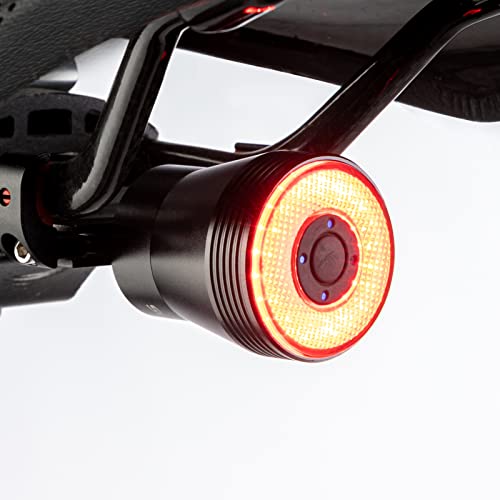
High-Intensity LED & Brake Sensing Advancement:Illuminate your surroundings with our rear bike light's high lumen COB LED. featuring smart sensor technology that activates a brake light when you slow down. The light emits a high-intensity flash for 5 seconds, alerting riders behind you for enhanced safety

1.Super Bright: Powerful bike rack tail light use 4pcs high quality LED, with two modes steady and flashing. Visible to cyclist over 100 meters away
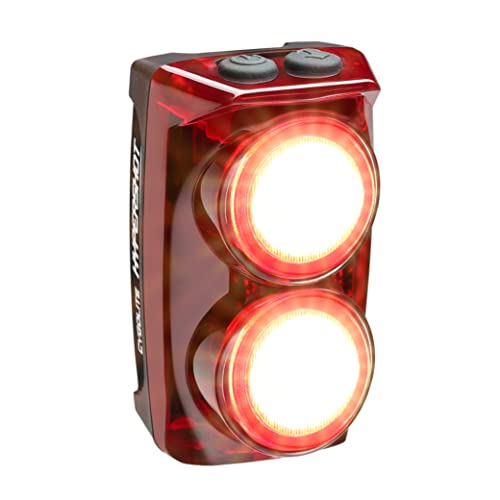
One of a kind extremely bright 350 lumen tail light stands out day and night on busy streets. Patent pending adjustable flash speeds lets you maximize motorist awareness with its unique and easy to use 2 button control
Daytime Visibility Enhancements
To enhance our visibility while cycling during the day, we must understand the essential role of daytime running lights (DRLs) in improving safety. DRLs considerably increase our daytime visibility, making us more noticeable to motorists. Research indicates that using DRLs can reduce collision risks by up to 19%.
Key Features of DRLs:
- Brightness: Lights should have at least 100 lumens to stand out in daylight.
- Flash Modes: Flashing patterns attract more attention than steady modes, enhancing cyclist awareness.
- Smart Features: Automatic brightness adjustments improve visibility in varying conditions.
In urban areas or low-light weather, these lights can help us remain safe while traversing the streets, ensuring a more secure riding experience. Additionally, models with multiple brightness settings offer versatility for different riding conditions, further enhancing safety.
Recommended Products
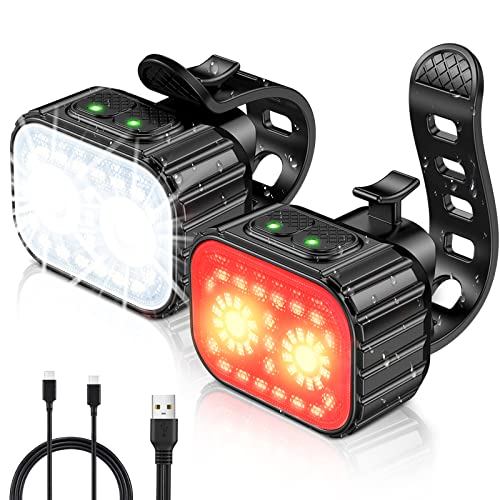
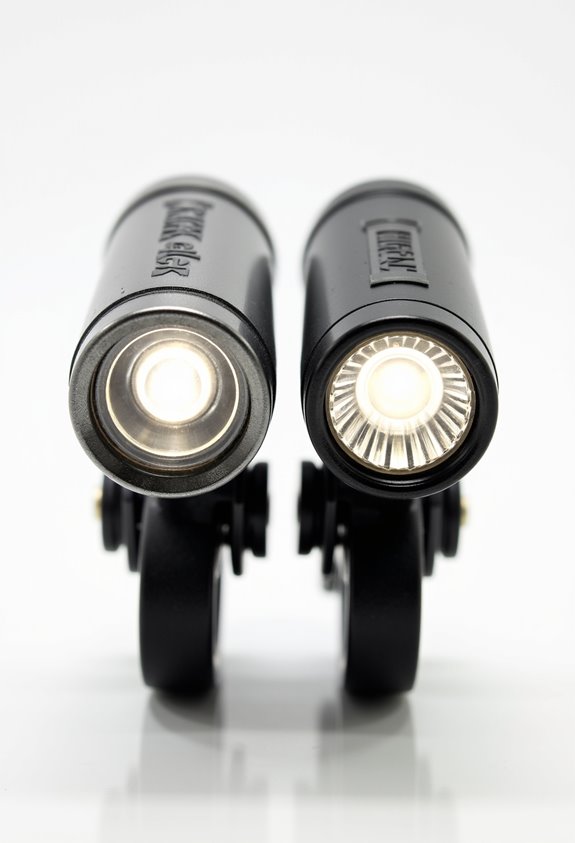
HIGH BRIGHTNESS & MULTI LIGHT MODES - Each bike light is designed with 2 main LEDs and 19 surrounding auxiliary LEDs, controlled by independent switches. The front light has 2 X 4 modes and the tail light has 2 X 6 modes, which can be used individually or in combination to meet your needs.

【Multi-light source design】Using the combination of low beam and high beam, the irradiation distance is farther and the irradiation range is wider to meet the needs of different scenarios. Better lighting effect, safer night riding.

THE OG HAT: Your ultimate sidekick for staying cool and looking fresh! Made from lightweight, moisture-wicking polyester, this hat works as hard as you do—whether you're crushing a run or kicking back with an evening drink. With breathable mesh inserts, it’s like air conditioning for your head.
Mounting and Practical Considerations
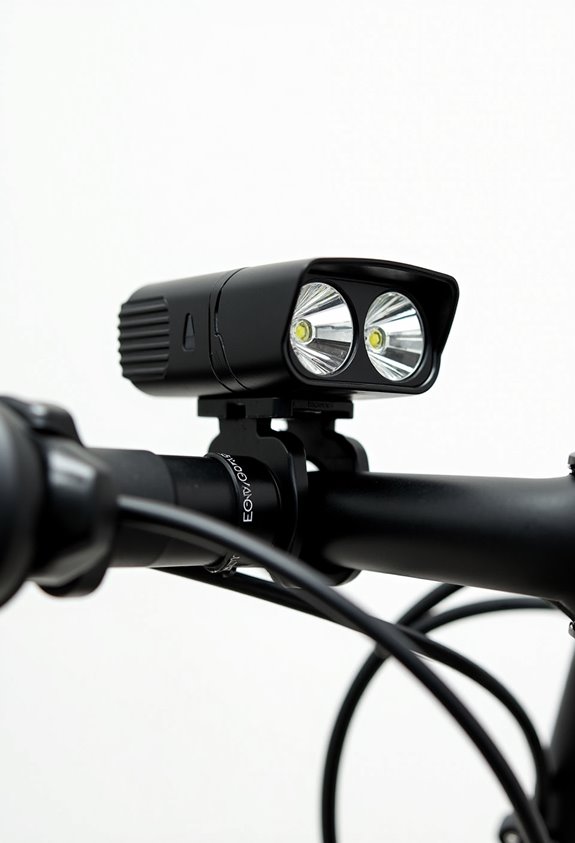
Mounting bike lights correctly is vital for guaranteeing both visibility and safety while riding. Effective mounting mechanisms, such as secure clamps or quick-connect straps, determine the stability and alignment of the light. Proper light positioning is critical for beam alignment; front lights should be mounted on handlebars, while rear lights need to be centrally located on seat posts.
Visibility angles are maximized when lights are mounted high and unobstructed. Avoid low placements that can decrease visibility. It’s also important to certify that lights aren’t blocked by bike components like cables and bags. A secure fit and appropriate angle maintain effective beam orientation, whether in steady or flashing modes, enhancing our overall safety as cyclists on the road. Additionally, prioritizing weather resistance in your bike light choice ensures functionality in adverse conditions.
Recommended Products

【Great for Safe Night Riding】- The bike light features with 6pcs TG3 LED beads that increase the lighting range by 50% with a maximum output of 1400 lumens. It features a 4000 mah battery which at full charge can provide up to 1.5 to 3 hours of use depending on the setting. It provides 5 light modes(Low Beam; High Beam; Low+High Beam; Flash light, and daytime running light) settings, with bright enough to illuminate the path ahead, makes riding safer

Bright Bike Lights for Night Riding: This bike light set includes both a bright headlight and taillight. Powerful LED headlight illuminates your path ahead while the bright red tail light keeps you visible to traffic behind. See clearly and be seen safely on every ride after dark. The front light can be horizontally rotatable 360°(rear light: 45° up/down), which makes light beam to reach different angles and ranges.

【 Extremely bright to keep you safe riding】Bike headlight is 1200Lumens each. so 2pcs headlights will be 2400 lumens and it can be working at the same time, it can be making you visible miles away to improve your visibility. Bracket of bike light are mountable and easy installation.
Energy Consumption and Light Modes
Energy consumption varies considerably between flashing and steady light modes, impacting battery life and cycling performance. Flashing modes consume less energy because the light is off or dimmed part of the time, leading to less battery depletion. For example, the Lezyne Power Drive 1100XL’s pulse mode can last up to 19 hours, while the highest brightness steady mode lasts about 1 hour and 45 minutes.
Flashing modes optimize energy use by running at medium to low lumens, while steady modes require constant higher brightness, draining batteries faster. Additionally, some lights automatically reduce brightness as battery level drops. Ultimately, selecting the right mode balances safety and battery efficiency through thoughtful energy optimization, extending usable light time for cyclists. This is particularly important for cyclists needing high-lumen outputs to ensure visibility in low-light conditions.
Optimal Use of Flashing and Steady Modes
When steering through the choice between flashing and steady modes for bike lights, understanding ideal usage is essential for enhancing visibility and safety on the road.
Flashing Advantages
Flashing lights excel in urban areas with dense lighting, improving detection distance by up to three times. Their changing patterns attract attention, helping drivers notice us sooner, which is critical in heavy traffic.
Steady Effectiveness
Conversely, steady lights offer continuous illumination and are best for nighttime rides or rural roads. This consistent beam aids in traversing technical paths and guarantees we see the road clearly.
Optimal Use
Adapting our light mode to conditions—using flashing during the day and steady at night—maximizes visibility while keeping safety a priority across different environments.
Selecting the Right Lighting for Your Ride
Selecting the right lighting for our ride can greatly impact our safety and visibility on the road. For commute or urban riding, lights ranging from 200 to 500 lumens with flashing rear lights are ideal due to existing streetlights. Road cyclists should prioritize 500 to 1,000 lumens for dim conditions, blending steady and flashing modes for visibility and hazard awareness. Mountain bikers often need over 1,000 lumens and may often require setups exceeding 3,000 lumens for technical terrain.
Consider USB rechargeable options for convenience and smart lights that adapt to varying riding conditions. We must also select appropriate beam patterns. Wide-beam patterns enhance peripheral vision, while cut-off beams provide efficient road lighting without blinding others.
Frequently Asked Questions
Can I Use Both Light Modes Simultaneously on My Bike?
Yes, we can use both light modes simultaneously on our bikes. This enhances safety considerations and improves visibility impact, allowing us to attract attention while providing consistent illumination in various riding conditions. Let’s stay safe!
Are There Legal Requirements for Bike Light Modes in Different Regions?
Yes, there’re legal regulations on bike light modes varying by region. While some jurisdictions align with international standards, others specify steady or flashing modes. We should always check local laws to verify compliance and safety.
How Do Weather Conditions Affect Bike Light Performance?
Weather conditions greatly affect our bike lights’ performance. In rain, fog visibility decreases, making flashing lights more effective for detection, while steady lights struggle. We’ll navigate safely by choosing the right mode for the situation.
Can Flashing Lights Cause Distractions for Other Road Users?
Yes, flashing lights can potentially cause distractions for other road users, complicating distraction analysis. However, they also enhance road safety, improving visibility in various conditions. Balance is essential to optimize both attention and safety for everyone.
What Are the Best Practices for Maintaining Bike Lights?
To guarantee our bike lights function well, we should prioritize regular light maintenance and battery care. Checking charge levels, cleaning lenses, and storing lights properly will enhance performance and prolong their lifespan for safer rides.