As an Amazon Associate, we earn from qualifying purchases. Some links on this site are affiliate links at no extra cost to you. Our recommendations are based on thorough research and editorial judgment.


How Do I Choose Between USB-C and Micro-USB Bike Lights?

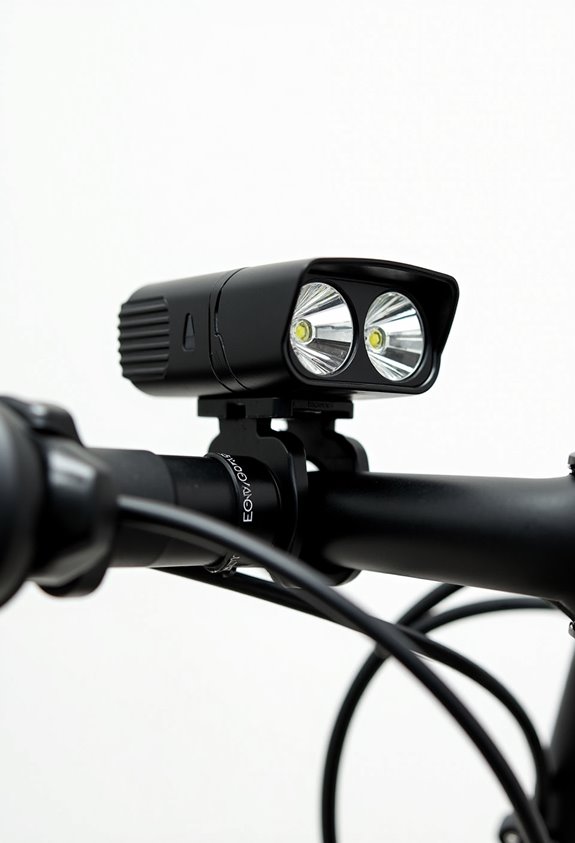
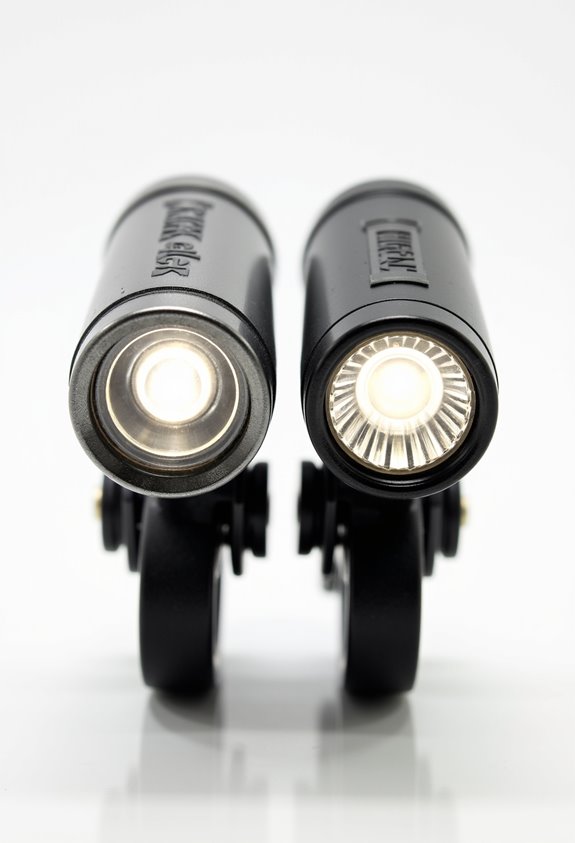
When choosing bike lights, we should consider several factors. USB-C lights offer faster charging, reduced downtime, and longer battery life of 4 to 24 hours. They also provide better durability and water resistance. Micro-USB lights tend to be cheaper but might not match the performance of USB-C models. Brightness is essential; USB-C lights often provide higher lumens for visibility. Ultimately, understanding these differences helps us select the best option for our needs. More insights follow.
Key Takeaways
- Consider USB-C for faster charging and longer battery life, achieving full charges in about two hours compared to Micro-USB options.
- Evaluate your riding frequency; USB-C lights typically offer better durability and performance for regular cyclists.
- Assess the brightness needs; for urban commuting, 90 to 300 lumens is ideal, regardless of the connector type.
- Factor in budget constraints; Micro-USB lights are cheaper but may lack the advanced features of USB-C models.
- Check for waterproof designs and features; USB-C connectors tend to be more robust and often include weather-resistant ports.
Prevalence and Availability of Charging Ports
You may be interested


As we examine the prevalence and availability of charging ports, it’s clear that USB-C is quickly becoming the dominant standard. The USB Type-C market was valued at USD 42.15 billion in 2023 and is projected to grow considerably, reaching USD 91.65 billion by 2031. Major electronics manufacturers are increasingly adopting USB-C, ensuring improved port compatibility across devices.
In comparison, Micro-USB still holds a market share worth USD 2.4 billion, mainly used in older or budget-friendly devices. However, market trends indicate that USB-C connectors are taking over due to their versatility in power delivery, data transfer, and video output. As new bike lights and devices emerge, USB-C’s prevalence is expected to dominate the charging landscape. Many USB rechargeable bike lights are now featuring USB-C ports, enhancing convenience for users.
Recommended Products

Ultra Slim & Portable Design: This 2026 bike light set features a sleek and compact design, with a thickness of only 1.7cm and a weight of 27g. It won't take up too much space on your bicycle. The slim form factor enables you to tuck it into any chest or jeans pocket with ease, making it ideal for outdoor activities, camping, or traveling.
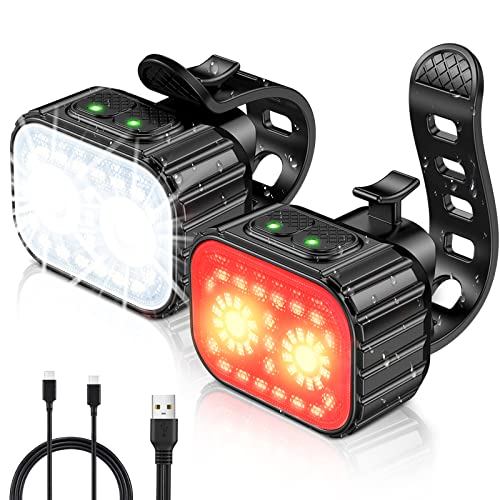
HIGH BRIGHTNESS & MULTI LIGHT MODES - Each bike light is designed with 2 main LEDs and 19 surrounding auxiliary LEDs, controlled by independent switches. The front light has 2 X 4 modes and the tail light has 2 X 6 modes, which can be used individually or in combination to meet your needs.

Is the Gator 320 bright enough for everyday night riding? Yes. The Gator 320 includes a bright white front headlight to illuminate the road ahead and a red rear taillight to improve visibility from behind. It’s designed for city streets, neighborhood roads, commuting, and low-light riding, providing reliable visibility for everyday cycling rather than extreme off-road trail use.
Charging Speed and Convenience Factors

When we consider charging speed and convenience factors, USB-C bike lights stand out for their superior capabilities. They typically achieve a full charge in about two hours, thanks to higher current delivery of up to 2A. This reduced downtime allows us to charge our lights more frequently, maintaining battery capacity for longer rides.
In terms of connector durability, USB-C ports are designed to withstand more insertions and removals than Micro-USB, lessening wear and tear over time. The reversible USB-C connection simplifies plugging in, especially in low-light situations, increasing overall charging convenience. In addition, USB-C lights often feature water-resistant ports, enhancing usability in various weather conditions. This combination makes USB-C the clear choice for those seeking efficiency and durability in their bike lighting solutions. Furthermore, many USB-C bike lights offer a minimum brightness of 100 lumens, ensuring optimal visibility during night rides.
Recommended Products

Ultra Bright Headlight: The 1000-lumen powerful headlight beam illuminates wider and further areas, allowing you to spot obstacles and hazards early. Perfect for dark trails, poorly lit streets, and night commutes. The red glow of the tail light alerts trailing vehicles with clarity, providing all-around safety for your riding.

9+9 Modes Bright Dual Safe Bike Lights TioyFiuy bicycle lights for night riding ensure clear vision in dark places. This bike headlight and tail light set features 300lm front and 100lm rear light. Both bike lights front and back have 9+9 modes with memory. It keeps you visible to passing cars during evening urban road commutes, and lights rugged mountain forest trails to avoid hidden riding risks easily.

MAXIMUM VISIBILITY & SAFETY: Move beyond standard beams. This bike light features a super-bright 1200 Lumen, enhanced by dual side-emission lenses and a sweeping 270° wide-angle beam that creates a cocoon of visibility. It brilliantly illuminates your forward path and curb, ensuring you are conspicuously seen from oblique angles, a critical defense at intersections.
Battery Life and Performance Differences

Battery life and performance of bike lights can greatly influence our riding experience. When comparing USB-C and micro-USB lights, we see significant differences in battery longevity. USB-C models usually have larger battery capacities, enabling longer run times, often ranging from 4 to 24 hours. For example, Trek’s USB-C lights increased capacity to 350mAh, providing up to 28% more run time than micro-USB options. Additionally, selecting lights with high lumens ensures exceptional visibility during night rides, enhancing overall safety. In terms of maintenance ease, USB-C lights typically come as sealed units, reducing user intervention but complicating battery replacement. In contrast, many micro-USB lights offer removable batteries like the 18650 lithium-ion, allowing us to swap them for extended riding. Ultimately, our choice should depend on our personal riding needs and maintenance preferences.
Recommended Products

Ultra-Bright LED Bike Tail Lights for Maximum Visibility: The BLITZU Cyborg 120T red LED bike tail lights provide exceptional brightness, ensuring high visibility during night cycling, commuting, and mountain biking. Perfect for road bike riders, MTB cyclists, and anyone who rides in low-light or dark conditions.
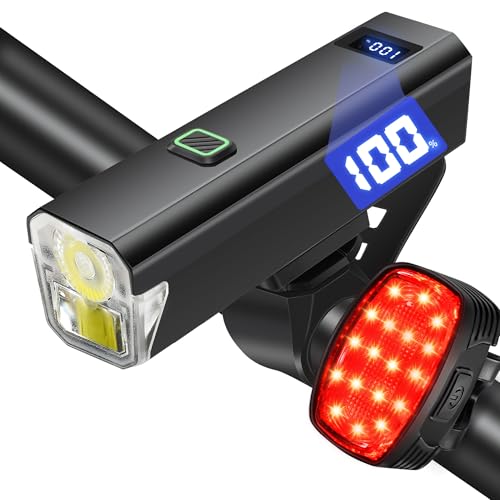
SUPER BRIGHT HEADLIGHT & WARNING TAILLIGHT: Bike headlight using new upgraded 2 LED beads with high lumens. Easily illuminate the road ahead, so that your cycling vision is clearer. Do not hesitate to use this bike headlight and taillight to enjoy wider visibility to ensure your safety when you are on night cycling or outdoor adventures

Bright Bike Lights for Night Riding: This bike light set includes both a bright headlight and taillight. Powerful LED headlight illuminates your path ahead while the bright red tail light keeps you visible to traffic behind. See clearly and be seen safely on every ride after dark. The front light can be horizontally rotatable 360°(rear light: 45° up/down), which makes light beam to reach different angles and ranges.
Brightness and Light Output Considerations

In choosing the right bike light, understanding brightness and light output is essential for both safety and performance. Bike lights are measured in lumens, with options ranging from 15 lumens for commuter lights to over 4000 for high-end models. For urban commuting, we typically need lights with 90 to 300 lumens output, which provide adequate visibility. Beam patterns also play a critical role; wide beams enhance side visibility in city settings, while narrow beams are suited for dark country roads, illuminating distant objects. Some lights combine these patterns, optimizing both visibility and illumination. It’s key to choose lights with adjustable brightness modes, ensuring adaptability under varying conditions for enhanced rider safety and performance. Additionally, lights with multiple lighting modes can further enhance visibility and safety during different riding scenarios.
Recommended Products

SUPER BRIGHT : Our bike safety lights for night riding with 2 LED lights high lumens bring you brightness to make everything in front of you illuminated and clear, protecting you from darkness and unknown, ensuring the safety of you and your family.

Super Bright & Wide Coverage:1000 Lumen super bright bike headlight creates a focused and powerful beam pattern, visible up to 650 feet, evenly illuminates from your tire all the way to where your eyes are looking. Additionally, eight auxiliary floodlights enhance penetration and provide a wider coverage area, ensuring optimal visibility even in challenging weather conditions like heavy fog and rain.
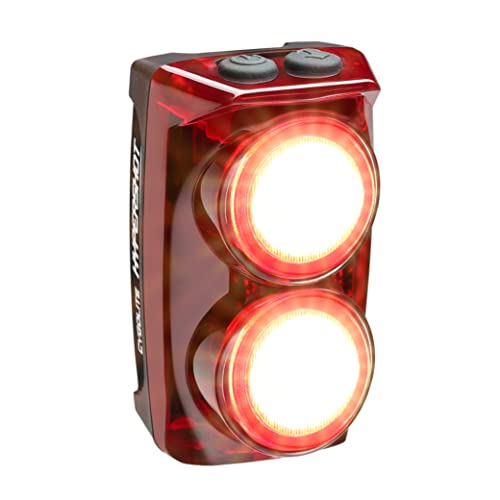
One of a kind extremely bright 250 lumen tail light stands out day and night on busy streets. Patent pending adjustable flash speeds lets you maximize motorist awareness with its unique and easy to use 2 button control
Cost, Durability, and User Experience

Although both options are widely available, the cost and durability of bike lights particularly differ between USB-C and micro-USB models.
Cost Comparison
Micro-USB lights often come at a lower price, providing excellent price value for budget-conscious riders. In contrast, USB-C models may have a higher upfront cost but justify it with advanced features like faster charging and improved battery life.
Durability and Maintenance
USB-C connectors are more robust, enhancing long-term durability. They often feature waterproof designs, while micro-USB ports can suffer from wear and tear.
User Experience
USB-C lights support faster charging and often come with convenient features like battery life indicators. Both types may offer removable batteries, enhancing maintenance options. Ultimately, considering these factors helps us make a more informed decision. Additionally, USB-C lights tend to have improved battery life, making them a favorable choice for frequent riders.
Recommended Products
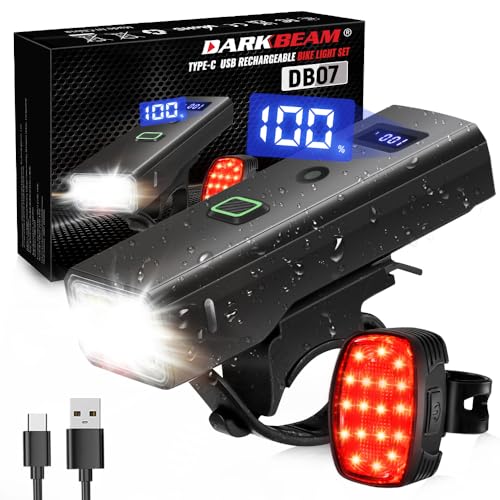
【Bike Headlight and Taillight】The bike headlight uses new, upgraded LED beads with a high lumen output and an intelligent light sensor that automatically turns on when it...
Frequently Asked Questions
Can USB-C Bike Lights Be Used With Micro-Usb Cables?
USB-C bike lights can’t use micro-USB cables directly due to compatibility issues. While we might find adapters, they could slow charging speed and reliability. It’s best to stick with the appropriate cable for ideal performance.
Are USB-C Bike Lights Heavier Than Micro-Usb Models?
Yes, USB-C bike lights can be slightly heavier due to design differences and larger batteries. However, the weight comparison is generally minor, as other factors like light output and materials play significant roles too.
How Do I Maintain My Bike Light’s Battery Life?
We can’t stress enough how crucial proper battery care is! By following smart charging practices, storing wisely, and cycling the battery usage, we’ll guarantee our bike lights shine bright for every adventure we initiate.
Can I Use USB-C Lights on Older Bike Mounts?
Yes, we can use USB-C lights on older mounts, but we might face compatibility issues. Sometimes, mount adapters are needed to secure the light properly, ensuring it’s correctly fitted and functional on our bikes.
Will My USB-C Bike Light Charge From a Power Bank?
Yes, our USB-C bike lights charge efficiently from power banks, typically recharging fully in 1-2 hours. With better compatibility considerations, they streamline our charging experience, especially compared to older micro-USB options we often encounter.