As an Amazon Associate, we earn from qualifying purchases. Some links on this site are affiliate links at no extra cost to you. Our recommendations are based on thorough research and editorial judgment.


Can I Use My Bike Lights in the Rain Without Damage?

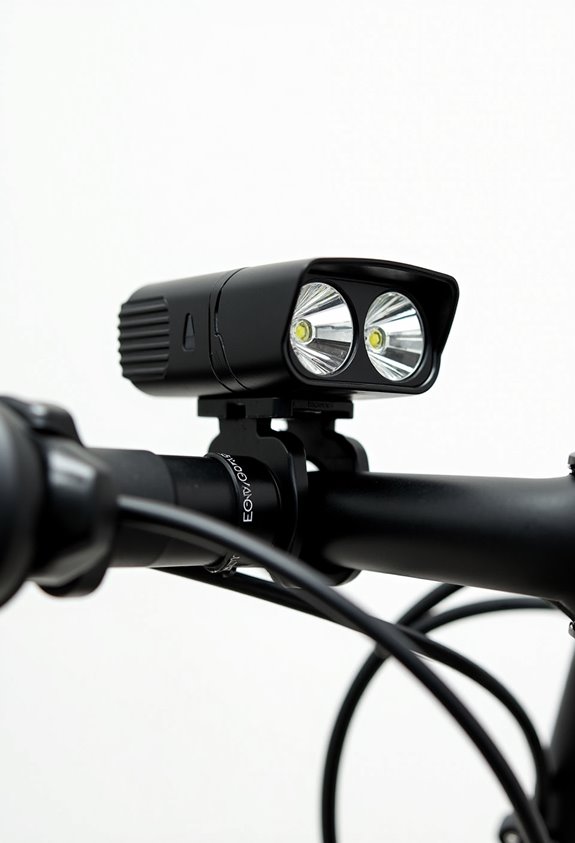
Yes, we can use our bike lights in the rain if they meet specific waterproof standards. Lights with an IPX5 rating or higher are suitable, offering protection against heavy rain and splashes. It’s important to maintain and store lights properly to avoid corrosion. Regular maintenance, such as cleaning lenses and checking for water damage, is vital for longevity. We should also consider features like anti-glare lenses and mudguards for added protection. We’ll discuss more waterproof options shortly.
Key Takeaways
- Ensure your bike lights have an IPX5 rating or higher for reliable performance in rainy conditions without damage.
- Regular maintenance, including cleaning lenses and removing batteries after heavy rain, helps prevent moisture-related issues.
- Choose lights made from corrosion-resistant materials and with sealed compartments to improve water resistance.
- Utilize flashing modes and bright lights over 200 lumens to enhance visibility in wet weather.
- Consider additional protective measures, such as mudguards and proper storage, to further safeguard your bike lights against rain.
Understanding IPX Ratings for Waterproofing
You may be interested


When selecting bike lights for wet conditions, understanding the IPX rating system is vital for guaranteeing reliability and durability. The IPX classification clarity provides a straightforward way to gauge a device’s water resistance.
The rating ranges from IPX0, which offers no protection, to IPX8, indicating suitable resistance against continuous immersion. For bike lights, we recommend looking for an IPX5 rating or higher. This guarantees they can handle splashes and heavy rain without risking damage.
The waterproof testing methods follow IEC 60529 standards, simulating conditions like spraying or immersion. Higher ratings ensure better protection, important for consistent performance in rainy weather. Our choice in bike lights directly impacts safety; therefore, understanding these ratings is vital for informed decisions. Many bike lights, such as those with an IP66 waterproof rating, are designed specifically to withstand various weather conditions while maintaining performance.
Importance of Durability in Rainy Conditions

Durability plays an essential role in ensuring that bike lights perform reliably during rainy conditions. When we consider durability factors, it’s imperative to assess how moisture affects visibility. Reliable lighting that resists water condensation prevents brightness decline and enhances safety. A consistent light output is critical, as sudden dimming or flickering can lead to accidents.
Optimal materials like corrosion-resistant metals and sealed plastics are important for resisting prolonged moisture exposure. Weatherproof construction, including O-rings and sealed battery compartments, protects against water ingress. Additionally, shock-resistant casings safeguard internal components from impact in wet conditions. By prioritizing these durability factors, we can confidently ride in rainy conditions, maintaining visibility and safety on the road. Furthermore, products with an IP65+ waterproof rating are designed to withstand various weather conditions, ensuring their functionality even in heavy rain.
Insufficient Waterproofing: Risks and Consequences

Insufficient waterproofing in bike lights presents serious risks and consequences that can compromise both visibility and safety. Moisture accumulation can occur through tiny cracks and faulty seals, leading to significant electrical failures. As water infiltrates, the integrity of seals diminishes, allowing corrosion on circuit boards and connections.
This can cause short circuits, flickering lights, or complete failure. Additionally, fogging and clouding inside the lens impact light output, reducing visibility for the rider and other road users. It’s important to choose lights with an IP65 or higher waterproof rating, as this ensures reliable performance in adverse weather conditions.
If we notice persistent moisture or flickering, it’s vital to inspect the light for seal integrity issues. Over time, unresolved moisture problems can escalate repair costs and reduce the overall lifespan of our bike lights. Regular maintenance and inspection are essential for safety.
Recommended IPX Ratings for Bike Lights

IPX Ratings Overview
- IPX4: Basic rain protection against splashing water.
- IPX5: Enhanced resistance to low-pressure water jets, ideal for light to moderate rain.
- IPX6: Suitable for serious cyclists, guaranteeing protection against high-pressure water spray and heavy downpours.
- IPX7 & IPX8: These ratings offer waterproofing for immersion but are typically unnecessary for most cycling needs.
Recommendations
For commuting, aiming for at least IPX4 suffices. However, if we’re frequently cycling in wet conditions, we should consider IPX6 or higher. These ratings guarantee better durability and performance, giving confidence in our bike lighting during rainy weather. Additionally, choosing lights with high water resistance ensures that they can withstand the demands of adverse weather conditions without compromising safety.
Recommended Products
![eAhora Romeo Pro 2 [2025 Version] Electric Bike for Adults, 4000W 46MPH Dual Motor Electric Bike,52V 70Ah 200+ Miles Long Range Ebike,26*4.0'' Fat Tire Electric Mountain Bike, Full Suspension& UL2849](https://m.media-amazon.com/images/I/51cN0G6G1EL._SL500_.jpg)
Eahora Romeo Pro II 2025 - Engineered for Durability & Stability! Limited stock, order now.🔥 Major Features: 🚀dual 4000W peak motors accelerating to 46 MPH (20.5 m/s) in 3 sec. 🚀The 52V 70Ah battery delivers a 200+ mile range. 🚀Conquer 45° slopes with dual 120 N ·m torque motors and 30 A controllers. 🚀Custom dual-shoulder air damper suspension front fork and adjustable rear shock ensure smooth rides. 🚀Reinforced carbon steel frame and double-thick tires support a 500 lb load.

5000W Peak Power & 200Nm Torque: Unleashes rapid acceleration and conquers 35° off-road climbs with ease. Reaches 50mph top speed in seconds, delivering dirt bike-level performance for adult thrill-seekers.

5000W Peak Power & 200Nm Torque: Unleashes rapid acceleration and conquers 35° off-road climbs with ease. Reaches 50mph top speed in seconds, delivering dirt bike-level performance for adult thrill-seekers.
How Waterproofing Affects Performance

When we consider the impact of waterproofing on bike lights, it’s clear that the materials and design choices made can greatly affect performance. Effective waterproofing relies on durable rubber gaskets and silicone seals, which act as barriers against water ingress. A poor seal or aging components can lead to moisture penetration, causing internal damage and condensation effects that reduce beam clarity.
When moisture infiltrates, it can degrade circuits, leading to flickering or total failure. Additionally, reduced lumen output results from water droplets disrupting light energy. To maintain long-term performance, regular inspection and replacement of seals, along with the use of marine-grade waterproof connectors, are essential. This proactive approach helps avoid risks associated with electrical shorts and enhances overall visibility during rainy rides. Waterproof designs are essential for safety during wet conditions, ensuring that cyclists can rely on their lights to perform optimally.
Key Features of High-Quality Bike Lights
High-quality bike lights incorporate several essential features that greatly enhance their performance and usability. First, brightness levels vary considerably. For road riding, around 800-1500 lumens is ideal, while trails may require 3,000+ lumens. Multiple output levels, including flashing modes and SOS signals, offer flexibility for different scenarios.
Battery management is another crucial aspect. Most high-quality lights use rechargeable lithium-ion batteries, providing both convenience and cost-effectiveness. Battery life ranges widely, lasting from 1.5 hours at high output to over 37 hours at lower levels. Smart features like battery status indicators help us monitor power. Additionally, some models have auto-off and stationary detection to extend battery life during our rides. These features guarantee our lights perform reliably in varying conditions.
Recommended Products

【4000W Peak Performance & 45° Climbing】 Dominate any terrain with the 60V high-torque motor, delivering a massive 4000W peak output. Unlike standard 750W ebikes, the MA-S out-accelerates competitors and effortlessly conquers 45-degree inclines, making it the ultimate machine for thrill-seekers and off-road enthusiasts

【𝟗𝟎𝟎𝟎𝐖 𝗣𝗲𝗮𝗸 𝗣𝗼𝘄𝗲𝗿𝗳𝘂𝗹 𝗗𝘂𝗮𝗹 𝗠𝗼𝘁𝗼𝗿 𝗘𝗯𝗶𝗸𝗲】The electric bike equipped with 9000W peak dual motors. Boasting a torque of 220N·m, this electric bike offers more stable power and support, boasting superior strength and climbing capabilities, boosted a top speed of 47 M PH perfect for adrenaline-fueled adventures and efficient daily commutes alike.

[BEST VALUE 5 E BIKES IN 1 – Dirt + Fat Tire + Mountain + Commuter + Cruiser]: Why spend $1500 on a dedicated e dirt bike or fat tire electric bike? This entry-level electric dirt bike does it all – and fits most riders from 5'5" to 6'8" (max load 330 lbs), a nice ebike perfect for beginners (big kids), intermediates (youth), and pros (adults). 𝐒𝐚𝐟𝐞𝐭𝐲 𝐒𝐞𝐭𝐭𝐢𝐧𝐠: 𝐏𝐚𝐫𝐞𝐧𝐭𝐬 𝐜𝐚𝐧 𝐬𝐞𝐭 𝐚 𝐦𝐚𝐱 𝐬𝐩𝐞𝐞𝐝 𝐥𝐢𝐦𝐢𝐭 𝐟𝐨𝐫 𝐤𝐢𝐝𝐬' 𝐬𝐚𝐟𝐞𝐭𝐲
Practical Tips for Using Lights in Rain
To guarantee our safety and visibility while riding in the rain, we need to adopt practical strategies when using bike lights. First, let’s make certain our lights are bright enough, ideally over 200 lumens for rainy conditions. Flashing modes can notably enhance light visibility, attracting attention. Next, proper placement of lights is essential; mounting the front light on the handlebar and the rear light on the seat post maximizes our visibility from all angles.
Regular maintenance also matters. Before a rainy ride, we should test lights for functionality and check seals. After riding, remove mud and moisture gently to maintain performance. Finally, store our bike and lights in a dry place to prevent corrosion, preserving their effectiveness for future rides. Additionally, selecting lights with IPX4 rating or higher ensures durability in wet conditions, further enhancing safety.
Common Misconceptions About Bike Light Waterproofing
Understanding common misconceptions about bike light waterproofing is essential for ensuring our safety during rainy rides.
Not All Lights Are Fully Waterproof
Many bike lights seem waterproof but are often only water-resistant. It’s vital to check the Ingress Protection (IP) rating, with IP64 being the minimum for splashes.
Water-Resistant Limits
Water-resistant doesn’t mean no risk. While they handle light rain, heavy downpours can still cause damage.
IP Ratings
IP ratings aren’t uniform; they vary among lights. Lights with IPX4 resist splashes but not immersion.
Cheap Lights
Budget options often misrepresent light brightness and lack robust waterproof features. Additionally, models with high IP ratings ensure better protection against water damage, making them a safer choice for rainy conditions.
Maintenance for Longevity in Wet Conditions
Maintaining bike lights in wet conditions is essential for guaranteeing their longevity and effectiveness. Regular cleaning of lenses after rides in the rain should be a priority. Use a soft cloth and mild cleaner to remove dirt and debris. Avoid abrasive materials that may cause scratches.
Electrical Component Care
To prevent corrosion, make certain electrical contacts remain dry. Applying waterproof grease on connectors is a good maintenance tip. Inspect wiring regularly for damage and remove batteries from lights after heavy rain to dry separately. Additionally, ensure that your bike lights have a waterproof rating to withstand rainy conditions effectively.
Storage Practices
Store bike lights in cool, dry places around 25°C. Recharge batteries partially before long-term storage and use protective cases to minimize exposure to humidity and damage. Following these cleaning techniques and maintenance tips will extend the life of your bike lights considerably.
Budget-Friendly Options for Rainy Weather
When considering budget-friendly bike lights for rainy weather, we’re prioritizing safety and visibility without overspending. Selecting affordable light models with at least an IPX7 waterproof rating offers protection from heavy rain, guaranteeing durability. For instance, the ALLTY series or the NiteRider Lumina Micro 850 provide robust aluminum housings and light output ranging from 400 to 1200 lumens.
Key features to look for include:
- Anti-glare lenses to maintain visibility without blinding others.
- USB-C charging for quick recharges, minimizing rain exposure.
- Multiple mode settings for adaptive brightness.
Models like the CygoLite HotShot rear light, priced around $25, safeguard visibility in wet conditions. With these options, we can guarantee safe riding without a hefty investment. Additionally, many models offer high lumens to ensure maximum visibility, particularly in urban environments.
Recommended Products

Larger and brighter 6” sunlight-readable display, built to withstand weather and handlebar vibrations with IPX7 design

The information below is per-pack only

Built with an always-on, full-color display that’s light on the wrist and easy to read even in direct sunlight.Special Feature:Waterproof.
The Role of Mudguards in Protecting Bike Lights
Mudguards play an essential role in protecting bike lights from the harsh conditions of wet weather. Their key benefits include shielding lights from direct water splashes, reducing moisture ingress, and decreasing dirt accumulation around light mounts. This protection guarantees ideal light output, maintaining lens clarity for brighter visibility.
Additionally, mudguards help prevent electrical issues. They guard connectors and cables from water damage, thereby preserving the integrity of internal components. This reduces the likelihood of corrosion and electrical short circuits. Furthermore, using waterproof cycling overshoes can enhance your overall riding experience in wet conditions, ensuring that you remain comfortable and dry.
Dynamo-Powered Lights: A Reliable Choice for Rain
Dynamo-powered lights offer an effective solution for riders steering through rainy conditions, as their robust design guarantees reliable performance.
Recommended Products
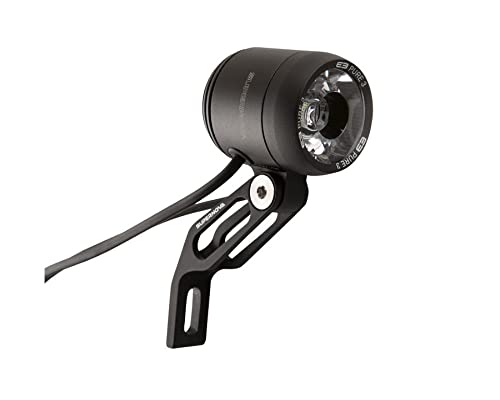
Warm lumens, 205 lumens.

Light Front-Type: 1 LED

Design headlight with aluminum housing. Extremely wide, wide and homogeneous IQ-X illumination with up to 100 lux
Dynamo Advantages
These lights feature waterproof housings and durable wiring, ensuring they withstand rain. Models like the Schmidt SON Edelux II offer scratch-resistant glass, enhancing their longevity. Their internal power generation means they maintain lighting reliability, unaffected by wet conditions.
Performance in Rain
Modern dynamo lights provide constant brightness, essential for low-visibility situations. With beam patterns optimized for rain, they deliver clear illumination while reducing glare for oncoming traffic.
Conclusion
Frequently Asked Questions
Can I Use Regular Batteries in Waterproof Bike Lights?
Yes, we can use regular batteries in waterproof bike lights, provided they fit well and maintain the waterproof seals. However, we should always check battery compatibility to guarantee peak performance and reliability in our rides.
How Often Should I Replace My Bike Lights?
We should replace our bike lights every 2 to 5 years, watching for replacement indicators like dimming brightness. Remember that despite their light lifespan, usage conditions can speed up the replacement necessity.
Will Using Bike Lights in Heavy Rain Void the Warranty?
Using bike lights in heavy rain can void the warranty if damage occurs, as manufacturer guidelines often exclude water damage. We should always check specific warranty policies to guarantee our lights remain protected.
Can I Repair a Damaged Waterproof Bike Light?
Absolutely, we can repair a damaged waterproof bike light using effective repair techniques and waterproof materials. It’s like giving our light a second chance at illuminating our rides, rain or shine! Let’s explore it together.
How Does Temperature Affect the Performance of Bike Lights in Rain?
Temperature fluctuations can affect our bike lights’ performance in rain. While LEDs generally maintain brightness, battery efficiency may drop, impacting run-time. We should choose lights designed for various conditions to guarantee consistent light performance.