As an Amazon Associate, we earn from qualifying purchases. Some links on this site are affiliate links at no extra cost to you. Our recommendations are based on thorough research and editorial judgment.


What Are the Most Common Bike Problems I Should Prepare For?

When cycling, we should prepare for common problems that can disrupt our ride. Flat tires often occur due to punctures or improper pressure. Faulty brakes can lead to dangerous situations, caused by worn pads or alignment issues. Chain problems might stem from improper installation or neglecting lubrication. Gear shifting inconsistencies often result from cable tension or debris. Finally, loose or broken spokes can jeopardize wheel integrity. Staying informed about these issues helps guarantee a smooth ride. More details await us.
Key Takeaways
- Flat tires are common; maintain tire pressure, inspect for debris, and consider tire liners for better durability.
- Faulty brakes can arise from dirty pads or misalignment; regular checks ensure safe braking performance.
- Chain problems often stem from inadequate maintenance; clean and lubricate the chain regularly to prevent wear.
- Gear shifting issues may occur due to cable tension; adjust limit screws and keep the drivetrain clean for optimal performance.
- Regularly inspect for loose or broken spokes to prevent wheel distortion and crashes; replace damaged spokes promptly with quality materials.
Flat Tires
You may be interested


Flat tires are a frequent problem that many cyclists encounter. To reduce the chances of flats, puncture prevention and tire maintenance are crucial. Regularly inspect tires for embedded debris, like glass or thorns, which can cause puncture flats.
Proper Tire Pressure
We should maintain tire pressure within recommended ranges. Underinflated tires are prone to pinch flats when hitting bumps.
Tire Inspection
Routine checks for tire wear are essential. Worn-out tires can expose cords, leading to flats.
Preventative Measures
Using tire liners or sealants can offer additional protection against punctures. We should also consider tubeless tire options for added durability, as tire inserts significantly enhance puncture resistance and provide better overall performance.
Faulty Brakes

Squeaky Brakes
Often caused by dirty pads or misaligned calipers, we should regularly clean our brake components. Persistent noise may indicate incompatible materials.
Weak Braking Power
Worn pads can reduce stopping power. If our brake cables are loose, we must adjust them. In hydraulic systems, bleeding the lines can restore performance.
Brake Rub
Misalignment can cause unnecessary friction. Adjusting calipers and ensuring proper cable tension are key steps in brake maintenance.
Regular checks and timely brake upgrades are critical for ensuring our braking systems function effectively. This promotes safe riding and prolongs the lifespan of our bike components. Additionally, having a comprehensive bike tool kit can greatly assist in making these necessary adjustments and repairs.
Chain Problems

Understanding chain problems is essential for maintaining a bike’s performance and reliability. Proper chain installation is critical; reusing a pin can lead to breakage. We must inspect chainrings and cogs for damage to prevent failures.
Chain maintenance is also crucial. Regular cleaning and lubrication reduce wear and keep the chain functioning smoothly. Neglecting wear assessments accelerates chain failure and increases repair costs.
We should avoid shifting under heavy loads, which puts additional stress on the chain. Ensuring the correct chain length prevents undue tension that can lead to breaks. Additionally, using high-quality tools during maintenance can significantly enhance the durability and performance of your bike chain.
Gear Shifting Issues

Gear shifting problems can greatly impact our cycling experience, just as chain issues do. The most common cause of these problems is cable tension. Too little tension leads to sluggish upshifts, while too much causes slow downshifts. Regular adjustments of the limit screws are essential for maintaining proper derailleur alignment, as any misalignment can also affect gear engagement.
Debris accumulation in the drivetrain can hinder shifting performance, increasing resistance. We should regularly clean our bikes to prevent this. Additionally, chain wear can lead to shifting inconsistencies, making timely replacements necessary. Regular checks for derailleur alignment and ensuring cables are in good condition will also help maintain peak shifting performance, keeping our rides smooth and enjoyable. Having a spare chain breaker on hand can also prepare you for unexpected breakdowns during your rides.
Loose or Broken Spokes

Loose or broken spokes can greatly impair our bike’s performance and safety. Regular spoke inspection is essential, as metal fatigue from wear and tear can weaken spokes over time. When we hit potholes or obstacles, these external forces may cause sudden failures. An uneven spoke tension can lead to wheel distortion and disrupt balance, increasing the risk of crashes.
For effective wheel maintenance, we should palpate spokes to check for tension irregularities and inspect for visible damage at stress points. If we identify a loose spoke, it’s vital to tighten it carefully to avoid misalignment. Broken spokes must be replaced promptly with high-quality materials. By monitoring our wheels’ condition regularly, we enhance safety and extend spokes’ lifespan. Using tools like bike spoke wrenches can facilitate these adjustments and ensure proper fit across various spoke sizes.
Structural and Frame Problems
Structural problems in a bike’s frame can greatly affect performance and safety, much like loose or broken spokes. Common issues include frame fatigue, where repeated stress causes micro-cracks. This is particularly concerning for aluminum and carbon frames, with aluminum showing 50% failure rates compared to just 31% for carbon.
Corrosion damage can markedly impact steel frames, especially in damp conditions. Manufacturing defects, like poor welds and improper bonding in frames, may lead to premature failure. Design flaws, aimed at reducing weight, often compromise strength at vital joints. To prevent these issues, regular inspections for visible cracks and impact damage are essential. Additionally, employing ergonomic designs in your bike setup can help enhance overall comfort and reduce strain on the frame during rides. Addressing maintenance and storage practices can reduce risks associated with environmental factors, ensuring longevity and safety in our rides.
Frequently Asked Questions
How Often Should I Perform Routine Maintenance on My Bike?
We should perform regular check-ups every week for basic maintenance, while following a maintenance schedule that includes thorough inspections every 3 to 6 months. This guarantees our bikes stay safe and efficient for every ride.
What Tools Do I Need for Basic Bike Repairs?
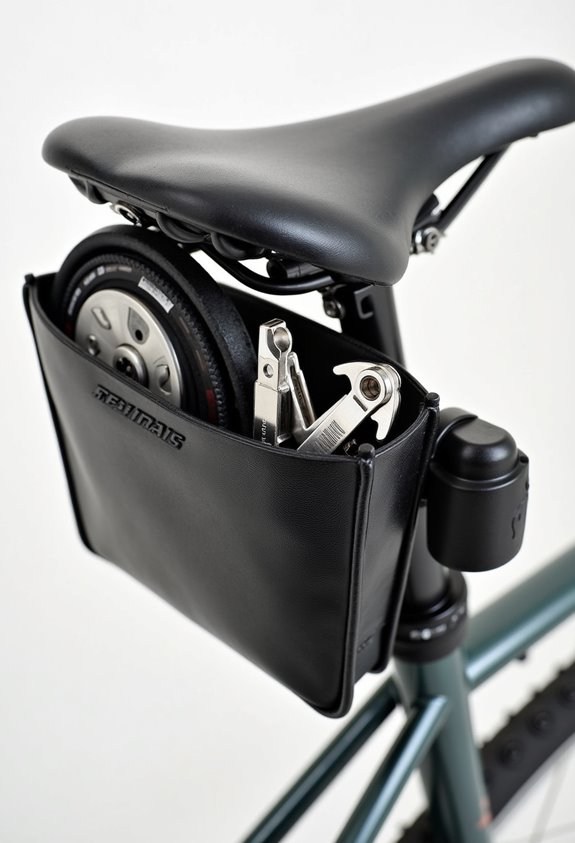
For basic bike repairs, we should have a well-rounded toolkit. Essential supplies include wrenches, a chain tool, tire levers, a floor pump, and a torque wrench. This way, we’re always prepared for maintenance or unexpected issues!
How Can I Prevent Rust on My Bike Frame?
After a rainy ride, we’ve learned to wipe our bike down to prevent rust. Regular frame care and applying rust prevention products like Frame Saver keeps our bike looking great and lasting longer. Let’s protect our rides!
What Are the Signs of a Worn-Out Tire?
We can spot worn-out tires by checking the tire tread for flattening or bald spots, and looking for puncture signs like cracks or cuts. Regular inspections keep us safe and enhance our riding experience.
How Can I Improve My Bike’s Visibility at Night?
Have we ever noticed how easily we blend into the darkness? To improve our bike’s visibility at night, let’s use bright bike lights and wear reflective gear to guarantee we stand out and stay safe.