As an Amazon Associate, we earn from qualifying purchases. Some links on this site are affiliate links at no extra cost to you. Our recommendations are based on thorough research and editorial judgment.


How Do I Reduce Noise From My Indoor Bike Trainer?

To reduce noise from our indoor bike trainer, we should identify the noise sources and implement effective strategies. Choosing a location on a concrete floor helps absorb sound. Using thick mats, at least 5mm to 3/4″ thick, dampens vibrations. We can benefit from carpet under mats for extra sound isolation. Regular maintenance of the bike and using specialized trainer tires further decrease noise. With these methods, we can create a quieter training environment, and there’s more to explore for further improvements.
Key Takeaways
- Select a quiet location with hard surfaces minimized; use carpet or rubber flooring to absorb noise and vibrations effectively.
- Invest in a high-quality trainer mat or heavy-duty foam mat at least 5mm thick to reduce vibration and noise from your trainer.
- Regularly maintain your indoor trainer, including tire selection, pedal lubrication, and drivetrain upkeep, to enhance smooth operation and minimize mechanical noise.
- Consider noise-dampening materials like rubber stall mats or PVC foam to further isolate noise and vibrations during workouts.
- Time your training sessions appropriately, avoiding high-intensity efforts during sensitive noise periods to limit disturbance to neighbors.
Understanding Noise Sources From Indoor Trainers
You may be interested


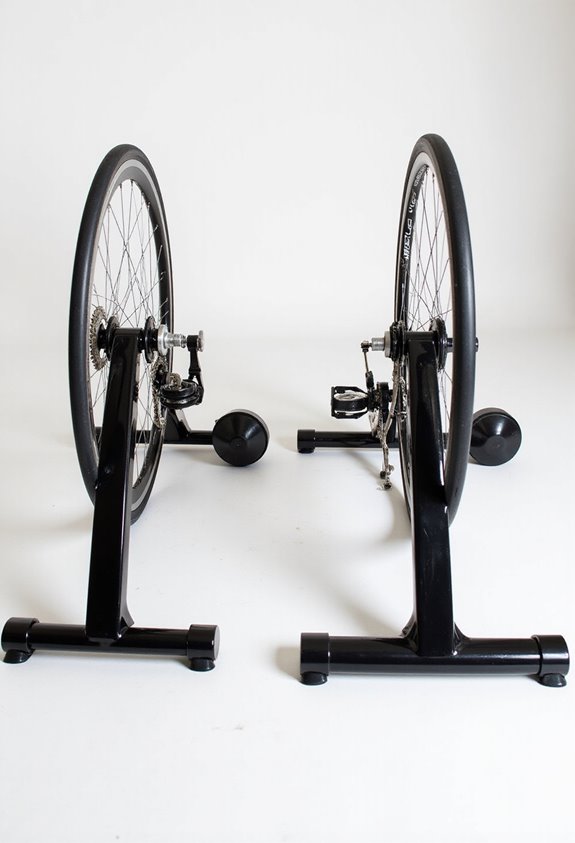
When we consider indoor bike trainers, it’s vital to understand the various sources of noise they generate. The noise characteristics differ considerably among trainer types. Wind trainers are prominently loud, producing mechanical sounds, while magnetic and fluid trainers offer quieter experiences but still create some resistance noise.
Trainer vibrations also contribute to unwanted sound. For example, wheel-on trainers make noise from the tire-roller interaction, especially if the tire isn’t properly maintained.
Mechanical components play a key role, too. Improperly aligned or worn parts can result in grinding or clicking noises. Regular maintenance, like lubricating the drivetrain, can mitigate these issues. Regular inspection of your bike pump can also help ensure smooth operation, reducing potential noise from trainer vibrations. Our understanding of these factors can help us address noise pollution in our indoor cycling experience.
Choosing the Right Location for Your Trainer

Selecting the ideal location for your indoor bike trainer can considerably reduce noise and enhance your cycling experience.
Floor Type
Choosing the right flooring options is critical. Concrete floors absorb noise and vibration better than wooden floors, reducing perceived noise by up to 50%. Ideally, we should set up our trainers on a basement or ground floor for the best results.
Room Size and Acoustics
Large rooms with high ceilings improve indoor acoustics by dispersing sound. Rooms should be furnished or carpeted to minimize echoes. Additionally, having high-flow ventilation ports in your helmet can help keep you cool during intense training sessions.
Disturbance Considerations
We should position the trainer away from living spaces and noise-sensitive areas. Avoid small, enclosed spaces to prevent noise amplification and guarantee ventilation for comfort during workouts.
The Importance of Surface Selection

The choice of surface for your indoor bike trainer plays a crucial role in controlling noise levels. Hard surfaces like hardwood, tile, and concrete amplify noise and vibrations, while soft surfaces such as carpet provide limited vibration damping. To minimize sound transmission, we should consider flooring materials with natural sound absorption properties, such as cork or rubber. Additionally, noise levels vary significantly between models, affecting home use. Floor structure matters: floating floors or those with underlayment can effectively reduce vibration passage. Uneven surfaces can lead to rattling noises, increasing overall sound output. For ideal performance, we recommend larger, denser sound-dampening surfaces to distribute weight and vibrations. Selecting appropriate surface materials tailored to our trainer design is essential for effective noise reduction during indoor cycling sessions.
Recommended Products

LUXURY AND COMFORT - Enjoy the warmth of LuxHeat's easy to install electric floor heating system. Electric floor heating promotes individual room control, ensuring personal comfort. Kit includes: 1x LuxHeat 200sqft (240volt) heating cable, 1x 221sqft Prova Flex-Heat uncoupling membrane, 1x Programmable Touchscreen thermostat (UDG4-4999), 1x alarm, 1x floor sensor (included with Thermostat), and 1x wood float, for decoupling membrane install

LUXURY AND COMFORT - Enjoy the warmth of LuxHeat's easy to install electric floor heating system. Electric floor heating promotes individual room control, ensuring personal comfort. Kit includes: 1x LuxHeat 160sqft (240volt) heating cable, 1x 186sqft Prova Flex-Heat uncoupling membrane, 1x Programmable Touchscreen thermostat (UWG5-4999), 1x alarm, 1x floor sensor (included with Thermostat), and 1x wood float, for decoupling membrane install.

LUXURY AND COMFORT - Enjoy the warmth of LuxHeat's easy to install electric floor heating system. Electric floor heating promotes individual room control, ensuring personal comfort. Kit includes: 1x LuxHeat 150sqft (120volt) heating cable, 1x 170sqft Prova Flex-Heat uncoupling membrane, 1x Programmable thermostat (UDG-4999), 1x alarm, 1x floor sensor (included with Thermostat), and 1x wood float, for decoupling membrane install.
Utilizing Thick Mats for Vibration Dampening

To effectively minimize noise from an indoor bike trainer, utilizing thick mats for vibration dampening is a highly beneficial strategy. Mats constructed from heavy-duty foam or dense rubber provide excellent vibration absorption. We recommend a mat thickness of at least 5mm to 6mm, with some opting for up to 3/4″ (~19mm) for additional noise control. Thicker mats enhance vibration isolation by increasing distance and material mass that vibrations must travel through. These mats also stabilize the trainer’s footing, helping to reduce rattling noises. In addition, combining mats with plywood can improve noise reduction, especially in older buildings. Ultimately, the right thickness and material density will greatly affect the effectiveness of vibration dampening and overall noise levels during workouts. Additionally, consider using a mat with high volume levels to further aid in reducing noise disturbances from vibrations.
Recommended Products

Heavy Duty – 1” Thick Tiles Crafted of High-density, High-impact Rubber Provides Maximum Durability, Shock Absorbency, And Sound Dampening For Any Type Of Heavy-duty Gym Equipment, Or Machinery

DIMENSIONS: 33 in L x 18 1/4 in W x 10 in D; Minimum Cabinet Size: 33 in – COMPATIBLE WITH – PST-1WHITE or ST-4 drain assembly, KRM-10 Multifunctional Rolling Mat

AUTOMOTIVE SOUND DEADENING MATERIAL: Damplifier Pro auto sound deadening material will eliminate metal rattles & vibration to stop structural noise, to give your vehicle a luxury feel. Used for car audio, hot rods, trucks, Jeeps, RVs, anything loud and metal
The Impact of Carpet Padding Under Mats

When considering the addition of carpet padding beneath exercise mats, we find considerable benefits in noise reduction and vibration isolation. Using various padding types, we can enhance noise absorption during indoor cycling. Thicker carpet padding is particularly effective as it traps sound waves and dampens vibrations from our trainers. Dense rubber-based underlays outperform standard foam, offering superior impact noise reduction. Additionally, a double-layered system, combining carpet padding with an exercise mat, notably improves stability and noise isolation. It’s important to evaluate thickness and density to prevent vibration amplification while ensuring comfort. Properly chosen padding extends the lifespan of both our floors and equipment, making workouts quieter and more enjoyable. Incorporating durable construction into your setup can further enhance performance and longevity.
Selecting Indoor Trainer Tires for Reduced Noise
How can we guarantee that our indoor cycling experience is quieter and more efficient? Selecting the right indoor trainer tires is essential for achieving considerable noise reduction. Trainer tires offer specific benefits designed to minimize vibration and friction, which leads to a quieter ride.
Tire Composition
- Made from specially formulated rubber compounds that dampen noise.
- Improved heat dissipation prevents overheating and additional noise.
Performance
- Trainer tires are notably quieter than standard road tires due to reduced friction.
- They maintain a consistent noise profile, unlike regular tires that wear out.
Sizing and Compatibility
- Common sizes like 700x23c or 700x25c fit most trainers.
- Guarantee a tight fit to minimize vibration and slipping noises.
- Additionally, considering high-pressure capacities can enhance tire performance during indoor cycling sessions.
Comparing Different Trainer Models and Technologies
Direct-Drive Trainers
Direct-drive trainers, like the Saris H3, rank highest in noise efficiency. They eliminate tire contact, resulting in decibel levels below 60 dB. These models boast enhanced trainer efficiency and stability, making them ideal for tight living spaces. Additionally, their low maintenance needs ensure a hassle-free experience for users.
Magnetic Resistance Trainers
Magnetic trainers produce less noise than fluid models. With noise levels under 59 dB, they provide cost-effective portability, although manual resistance adjustments limit dynamic control.
Fluid Resistance Trainers
Fluid trainers, such as the Saris Fluid2, are quieter than non-smart options but typically achieve 69 dB due to tire-roller interaction. They deliver progressive resistance but may contribute to increased noise levels over time.
Recommended Products

Dual-Screen Console

Innovative design creates a realistic feel and accurate-to-life riding position; virtual shifting even simulates the sensation of changing gears

Service-free technology provides a substantial resistance range with vertical lever provides Tactile feedback and allows for quick adjustment
Maintenance Tips for Quieter Performance
To achieve a quieter indoor cycling experience, we must prioritize regular maintenance across various components of our bike and trainer setup.
Drivetrain Care
Regular chain lubrication is essential. We should clean the chain frequently using a chain cleaner, which minimizes noise from friction. Inspect the chain for wear to prevent increased sound from drivetrain damage. Implementing high-performance formulas for lubrication can further enhance the efficiency of your drivetrain.
Pedal Maintenance
For quieter performance, we must maintain our pedals. Cleaning and lubricating pedal springs reduces mechanical noise, particularly with SPD pedals. Additionally, tightening crank arm bolts can prevent creaking sounds during workouts.
Engineer Your Space for Noise Control
Creating a quieter space for indoor cycling involves more than just maintaining your bike; it requires thoughtful consideration of your environment. First, we should place our trainer on solid surfaces. Concrete floors are preferable, as they absorb vibrations more effectively than wooden ones, minimizing noise frequency.
Next, using thick, industrial-grade mats beneath the trainer can considerably reduce sound reflection. Doubling up on padding can further enhance this effect. Additionally, we can improve room acoustics by adding soft materials, like carpets or curtains, to absorb noise. Positioning our trainer away from walls or sound-reflective surfaces can also decrease perceived noise levels. Investing in a high-density mat can provide excellent floor protection and further minimize vibrations during your workouts.
Soundproofing Materials to Consider
When we consider soundproofing materials for our indoor bike trainer, it’s important to assess various options that can effectively reduce noise transmission.
Recommended Products

1. Fully customizable to fit your boat’s exact layout and needs. 2. For a perfect fit, we suggest sending swim platform and cockpit photos via Amazon message at checkout. We confirm details before production. 3. Premium 6mm EVA foam offers long-lasting marine-grade durability. 4. Quick peel-and-stick installation, no extra tools required. 5. Color card is for reference only; actual color prevails.

The Ultimate Floor Liner: A waterproof carpet replacement, DynaDeck will upgrade your ride experience; the 1/8” embossed vinyl layer with the 1/4” Dynaliner layer combine to stop noise and heat transfer through the floor – ideal for use in boats, RVs, trucks, jeeps and vintage sports cars

Buyuneed 15mm Closed Foam Sound Deadener Material Specification: Nominal thickness 590 mil/15 mm(5/8 inch); Total coverage area of 105 sqft;Nominal sheet size 382 x 40 inches.Working temperature range: -30°F~300°F;ROLL PACKAGING;15mm closed cell foam sound deadening road noise dampening
Vibration Dampening Materials
PVC foam mats are excellent for absorbing both vibration and noise. These durable mats not only protect our floors but also help keep the trainer stable during intense workouts. Additionally, using high-quality materials like tear-resistant fabrics can enhance the overall stability and durability of the trainer setup.
Rubber stall mats offer a cost-effective solution, effectively absorbing shock with their textured surfaces.
High-density interlocking floor tiles enhance noise dampening and are suitable for wet and dry areas, although they can be expensive.
Using vibration isolation pads under our trainer localizes vibration reduction, targeting the main noise source.
Timing Your Training Sessions for Minimal Disturbance
To optimize our training, we should consider the following:
- Align weekday sessions with neighbors’ work hours, respecting expected quietness.
- Be aware of local noise ordinances that define quiet hours.
- Adjust training intensity; avoid high-intensity intervals during sensitive periods.
- Keep sessions shorter to limit noise exposure, particularly in shared spaces.
Layering Solutions for Maximum Noise Reduction
Achieving maximum noise reduction during training sessions requires a strategic approach to layering materials. By utilizing thick, multi-layer mats, such as 12mm industrial gym matting, we can markedly absorb vibrations. Doubling up on these mats, especially on wooden floors, enhances vibration isolation and minimizes noise.
Placing our trainer on hard surfaces like concrete aids in noise reduction. We should also consider dense padding, like rubber or foam layers, beneath the trainer. Creating combinations of different materials maximizes sound absorption.
When using rocker plates, adding extra foam or padding further reduces noise transfer. By strategically layering materials, we can effectively mitigate both noise generation and vibrations, ensuring a quieter training environment that benefits us and our neighbors.
Community Solutions and User Experiences
As we explore community solutions for reducing noise from indoor bike trainers, many users have shared valuable insights on effective strategies and equipment choices.
Trainer Preferences
Direct-drive trainers, like the Wahoo KICKR Core and Tacx Neo models, are reported to be quieter than wheel-on versions. Many users recommend switching to these higher-end models for reduced noise levels.
Noise-Dampening Mats
Rubber mats, yoga mats, or specialized trainer mats are essential for minimizing vibrations. Some users have found success combining these mats to enhance sound absorption.
Managing Vibration
Placing trainers on a plywood base with padding can greatly decrease vibration transmission. Users advise maintaining your drivetrain for smoother operation and less noise during workouts. Following these user recommendations can lead to a noticeably quieter training environment.
Final Tips for a Quieter Indoor Cycling Experience
When it comes to reducing noise during indoor cycling, the final setup and maintenance are just as pivotal as selecting the right trainer or mat.
Check Connections
Tightening all bolts and connections minimizes rattling noises. Regularly maintain the trainer’s drivetrain to prevent squeaks.
Optimal Location
Positioning the trainer on stable ground, preferably concrete, can absorb vibrations better than wooden or upper floors.
Layer for Absorption
Thick mats or industrial gym matting provides effective vibration absorption. Layering mats can further enhance noise reduction.
Tire Selection
Using specialized indoor trainer tires decreases noise from tire contact.
Noise Monitoring
Consider using training music at a moderate volume to mask residual noise. This creates a more pleasant environment for focused workouts.
Frequently Asked Questions
Can Noise-Reducing Features Affect My Indoor Trainer’s Performance?
In our fitness symphony, noise-reducing features can slightly alter performance impact, like a whisper amid thunder. While noise levels may drop, we often won’t notice any significant trade-offs in power or efficiency.
How Much Noise Can I Expect From Different Trainer Brands?
We can expect varying noise levels from different trainer types. For instance, rollers tend to be quieter than direct-drive trainers. Brands like Wahoo and Tacx have models that balance noise and performance effectively during workouts.
Do Noise Reduction Measures Impact Training Accuracy or Metrics?
No, noise reduction measures won’t compromise our training effectiveness or metrics. While they help with noise measurement, stability remains essential, ensuring our power and cadence data stay accurate during indoor sessions.
Is Noise From Indoor Trainers Typically Covered by Warranty?
Noise complaints from indoor trainers often aren’t covered under warranty coverage unless caused by defects. We should verify warranty details and consider proactive noise reduction methods instead of relying solely on warranty support for noise issues.
What Are the Best Brands for Noise-Reducing Trainer Mats?
When choosing noise-reducing trainer mats, we’ve found Kinetic and Zwift to be top picks in trainer mat reviews, thanks to their durable materials and effective sound dampening. Rubber and PVC are great mat material types for vibration reduction.