As an Amazon Associate, we earn from qualifying purchases. Some links on this site are affiliate links at no extra cost to you. Our recommendations are based on thorough research and editorial judgment.


The 3 Best 26-Inch Bike Tires for Smooth Rides and Maximum Durability

For smooth rides and maximum durability, consider these top 26-inch bike tires:
- Hycline 26-inch Cruiser Tires: Made with premium butyl rubber and featuring a knobby pattern for superior grip.
- 26 Inch Bike Tires Replacement: Offers two tires and tubes, fitting widths from 1.95” to 2.125” for flexibility.
- MOHEGIA Mountain Bike Tires: Known for its deep knobs and shock-absorbing rubber, ideal for durability.
You may be interested
These options guarantee you get excellent performance and longevity. If you want more insights on tire selection, keep exploring the details.
Key Takeaways
- Hycline 26-inch Cruiser Bike Tires offer excellent grip and durability with a knobby pattern, rated 4.7 out of 5 stars for customer satisfaction.
- MOHEGIA Mountain Bike Tires provide deep, widely spaced knobs for stability and shock absorption, ideal for enhancing performance on rugged terrain.
- Look for tires made of thick butyl rubber for outstanding puncture resistance and longevity, ensuring smooth rides over varied surfaces.
- Consider the tire’s maximum PSI rating, typically between 30-80 PSI, to optimize comfort and performance during rides.
- Installation is made easier with models that include tire levers and compatible inner tubes, facilitating a hassle-free setup for users.
Hycline 26-inch Cruiser Bike Tires Set (2-Pack)
Sale


2-Pack Cruiser Bike Tires Set: Hycline 26x2.125 Inch Folding Replacement Bicycle Tires and Pair...
- The package includes 2 bike tires, 2 bike tubes, and 2 tire levers.
- Tire Size: 26x2.125 inch (ETRTO: 57-559mm); Fits tire widths: x 1.75”-2.125”; PSI Range: 40-65
- The 26-inch Beach Cruiser tires are made of high-quality rubber materials and nylon cord technology, with strong puncture and wear resistance.
If you’re looking for reliable bike tires that fit a variety of cruising and commuting needs, the Hycline 26-inch Cruiser Bike Tires Set is an excellent choice. This set includes two 26×2.125-inch tires made from premium butyl rubber, ensuring durability. The tires are designed for beach cruisers and urban commuting, offering robust performance.
Key Features
- Puncture Resistance: High-quality material with nylon cord technology enhances durability.
- Tread Design: Classic knobby pattern provides excellent traction and safety.
- Easy Installation: Inner tubes and tire levers simplify setup, even for beginners.
This set is rated 4.7 out of 5 stars, reflecting customer satisfaction regarding ease of use and performance.
Best For: Cyclists seeking durable and reliable tires for beach cruising and urban commuting.
Pros:
- Easy installation with included tire levers, making it suitable for all skill levels.
- Excellent grip and traction on various surfaces due to the classic knobby tread design.
- Compact folding design is convenient for storage and transportation.
Cons:
- Heavier than some premium options, which may affect performance.
- White wall may yellow with prolonged sun exposure, potentially impacting aesthetics.
26 Inch Bike Tires Replacement (2-Pack)
Sale
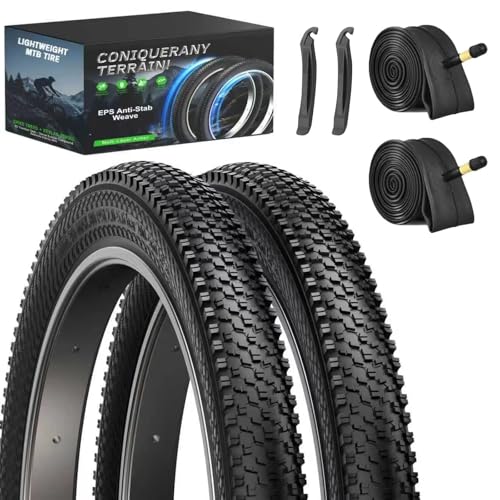
26 Inch Bike Tires Replacement 2-Pack 26x1.95 Bike Tire with Anti-Stab Weave, Folding Mountain...
- Mountain Bike Tire Size:26x1.95 inch (ETRTO:54-559 mm); Fits tire widths: x 1.95”-2.125”; PSI range: 30-80; TPI: 30.
- Bike Inner Tube Size: 26x1.75 inch, AV 32mm Schrader Valve. Made from thick, strong, and highly durable butyl rubber.
- Cost-Effective 2-Pack: Includes 2 bike tires, 2 bike tubes, and 2 tire levers.

When cyclists need reliable replacements for their mountain bikes, the 26 Inch Bike Tires Replacement (2-Pack) stands out as an excellent option.
Specifications
- Size: 26×1.95 inches (ETRTO: 54-559 mm)
- Fits widths: 1.95”-2.125”
- PSI range: 30-80
Durability
These tires are made from thick, durable butyl rubber, offering outstanding grip. The advanced manufacturing guarantees longevity across various terrains.
Cost-Effective Value
This package includes two tires, two tubes, and tire levers, delivering excellent value for your purchase.
Portability
With a folding design, these tires are easy to store and carry for travel or outdoor adventures.
Best For: Cyclists looking for reliable and durable replacement tires for their mountain bikes at a cost-effective price.
Pros:
- High durability due to thick, strong butyl rubber material, ensuring long-lasting performance.
- Cost-effective package that includes two tires, two inner tubes, and tire levers, providing great value.
- Folding design allows for easy storage and portability, ideal for travel and outdoor adventures.
Cons:
- Limited to a specific tire size (26×1.95 inches), which may not fit all bike models.
- PSI range may not accommodate extreme performance needs for heavy-duty mountain biking.
- TPI rating of 30 might not provide the same level of puncture resistance as higher-rated options.
MOHEGIA Mountain Bike Tires 2-Pack with Inner Tubes and Tire Levers
Sale
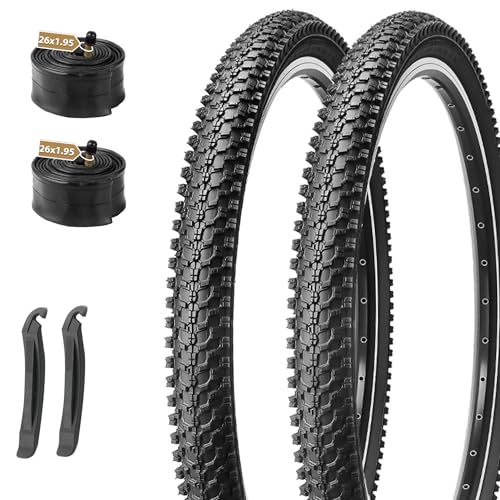
26x1.95 Inch Mountain Bike Tires Set: 2-Pack with 26" Folding MTB Replacement Tires, Inner Tubes...
- MOHEGIA 26-inch Mountain Bike Tires Replacement Kit includes 2-pack tires,2-pack inner tubes, and 2-tire levers.
- MTB Tire Size:26 x1.95 inch (54-559 mm); PSI range: 30-80 P.S.I.
- Ideal for all types of terrain, they feature double angle ramp and open sipes on center tread to provide excellent traction and control, and reduce dirt adhesion.
The MOHEGIA Mountain Bike Tires 2-Pack stands out as an ideal choice for riders seeking a robust upgrade to their 26-inch bikes. This package includes two high-performance tires, two inner tubes with Schrader valves, and two tire levers for easy installation.
Key Features:
- Tread Design: Deep, widely spaced knobs provide excellent grip on various terrains, enhancing stability during cornering.
- Durability: Made from a durable rubber compound, these tires offer shock absorption and longevity, making them suitable for all-terrain riding.
- Pressure and Sizing: Inflate to a maximum of 35 PSI; compatible widths range from 1.95 to 2.125 inches.
With positive user feedback, these tires are great for renewing performance on older bikes.
Best For: Riders looking to enhance their mountain biking experience with durable and high-performance tires for various terrains.
Pros:
- High grip and stability due to the deep, widely spaced tread design, making them suitable for all-terrain riding.
- Durable rubber compound enhances shock absorption and longevity, improving performance on rough trails.
- Easy installation with included tire levers, making it user-friendly for both novice and experienced cyclists.
Cons:
- Pressure retention issues reported by some users, indicating potential difficulties with maintaining optimal tire pressure.
- Mixed experiences with mounting, particularly for those less experienced with tire installation.
- Durability concerns noted by some customers after limited use in harsh terrains.
Factors to Consider When Choosing a Bike Tire 26 Inch

Choosing the right 26-inch bike tire involves several critical factors. You’ll need to reflect on tire size, material quality, tread patterns, and PSI ranges to suit your riding style. Additionally, think about how easy the tires are to install, as this can impact your overall experience.
Tire Size Considerations
Tire size plays a crucial role in optimizing your 26-inch bike’s performance. The width options typically range from 1.75 to 2.125 inches, impacting compatibility with various frames and riding styles.
ETRTO Standard
For 26-inch tires, the ETRTO size often corresponds to 57-559 mm, indicating effective rim diameter and tire cross-section width.
Optimal Tire Pressure
Pressure varies from 30 to 80 PSI based on tire type and usage, such as mountain biking versus cruising.
Width Considerations
A thicker tire offers better grip and stability, though it may increase weight, affecting overall speed.
Thread Count
Lastly, a tire’s TPI, around 30, influences flexibility and durability, ultimately affecting your ride quality and handling.
Material Quality Importance
When selecting 26-inch bike tires, understanding material quality is crucial for enhancing performance and safety.
Puncture Resistance
Tires made from quality rubber compounds, like butyl rubber, offer greater puncture resistance and durability across varied terrains.
Longevity and Strength
Premium options often use nylon cord technology, enhancing strength and wear resistance, leading to a longer lifespan.
TPI Considerations
A higher TPI (threads per inch) generally means a more flexible, lightweight tire. This improves ride quality and traction on different surfaces.
Vibration Dampening
Thicker butyl rubber provides excellent vibration dampening and better inflation retention, which helps maintain ideal PSI levels.
Choosing the right material guarantees your tires perform effectively, enhancing both your safety and overall cycling experience.
Tread Pattern Effects
The tread pattern of a 26-inch bike tire plays a vital role in determining your bike’s grip and overall performance on different surfaces.
Types of Treads
Knobby treads excel on off-road terrains, enhancing traction. Conversely, smooth treads minimize resistance, boosting speed on paved roads.
Design Considerations
A widely spaced tread design provides better grip in loose or muddy conditions, improving cornering stability.
Tread Depth and Orientation
The depth and orientation of tread knobs are essential for handling, especially in off-road scenarios.
Performance Balance
Tires designed with a mix of aggressive center knobs and pronounced side knobs balance straight-line speed and cornering grip.
Rolling Resistance
Smoother treads reduce energy loss on firm surfaces, while aggressive treads may increase rolling resistance. Choose wisely for best performance.
PSI Range Factors
Understanding the PSI range is vital for optimizing your 26-inch bike tires’ performance. The PSI (Pounds per Square Inch) determines the recommended inflation level necessary for comfort, safety, and performance.
PSI Recommendations:
- Lower PSI (30-40): Ideal for rugged terrains, enhancing traction and comfort.
- Higher PSI (60-80): Better for smooth surfaces, promoting speed and efficiency.
Benefits of Correct PSI:
- Prevents flats and improves control.
- Encourages even tire wear, extending lifespan.
Ride Quality Impact:
- Over-inflation can result in a harsh ride.
- Under-inflation leads to sluggish performance.
Choosing the appropriate PSI guarantees the best fit for your riding style, terrain, and overall ride quality, making it a significant factor in your tire selection.
Installation Ease Assessment
Choosing the right bike tires isn’t just about performance; it’s also about how easily you can install them.
Tire Levers
Many 26-inch bike tires come with tire levers, simplifying the process for all skill levels, especially beginners.
Pre-Folded Design
Look for tires that arrive pre-folded. You’ll need to flatten them before installation to guarantee they fit well within your bike frame.
Durable Composition
Tires featuring an easy-to-mount design often have thicker rubber. This enhances durability and reduces damage risk during installation.
Complete Packages
A good tire package usually includes compatible inner tubes, making replacements straightforward.
User Experience
User reviews often emphasize the speed and ease of installation, highlighting the importance of quick mounting and low difficulty levels.
Performance on Terrain
When considering performance on different terrains, cyclists need to recognize how various tire features affect their ride.
Tread Patterns
Choose tires with tread patterns suited to your riding conditions. Deeply spaced knobs work best for off-road, whereas smoother treads excel on urban surfaces.
Pressure Levels
Tire pressure matters. Typical PSI for 26-inch tires ranges from 30 to 80. Lower pressures enhance grip on rough terrains, while higher pressures improve speed on smooth roads.
Tire Width
Tires range from 1.75 to 2.125 inches. Wider options provide better traction and comfort on loose surfaces.
Tread Design
Finally, balance aggressive outer knobs for cornering stability with a smoother center for rolling efficiency to optimize performance across varying conditions.
Durability Over Time
Durability over time is crucial for any cyclist looking to maximize their investment in bike tires. To guarantee long-lasting performance, consider the following factors:
Materials: High-quality butyl rubber offers the best puncture and wear resistance.
Manufacturing Techniques: Advanced methods enhance grip and lifespan, especially across varied terrains.
Tread Pattern: Deep and widely spaced knobs improve traction while minimizing wear.
Proper Inflation: Maintain the recommended PSI range of 30-80. Under-inflation can lead to quicker deterioration and more punctures.
TPI (Threads Per Inch): Higher TPI indicates sturdiness, whereas lower TPI provides flexibility but may sacrifice durability.
Each of these elements contributes to a tire’s overall longevity, which is crucial for a reliable cycling experience.
Frequently Asked Questions
How Often Should I Replace My Bike Tires?
You should replace your bike tires every 1,000 to 3,000 miles, depending on usage conditions. This range varies based on factors like terrain, weather, and riding style.
Signs of Wear:
- Tread wear indicators are essential.
- Look for cracks or bulges on the tire surface.
Safety Considerations:
- Worn tires decrease grip and increase the risk of punctures.
- Regular checks can enhance performance and safety.
Can I Use 26-Inch Tires on a Different Size Bike?
No, you can’t use 26-inch tires on a different size bike. Bike tires must match the rim’s diameter for safe and effective performance. If your bike’s rim is designed for another size, using 26-inch tires will lead to poor fit and handling issues.
Key Points to Reflect Upon:
- Compatibility: Always check rim specifications.
- Performance: Mismatched sizes reduce handling stability.
- Safety: Proper fit is critical for rider safety.
How Do I Properly Inflate My Bike Tires?
To properly inflate your bike tires, start by checking the recommended pressure, usually marked on the tire sidewall. Use a reliable pump with a pressure gauge.
- Remove the valve cap.
- Attach the pump securely.
- Inflate until the gauge shows the proper PSI.
- Detach the pump and replace the valve cap.
Regular checks maintain peak performance, enhancing your riding experience while avoiding unexpected flats.
What Tools Do I Need to Install Bike Tires?
To install bike tires, you’ll need a few essential tools:
- Tire levers: These help you remove and install tires without damaging the rim.
- Pump: A floor pump or portable hand pump is necessary for inflation.
- Wrench: If your bike has bolt-on wheels, a wrench will be required.
- Patch kit: In case of a flat, a patch kit allows for quick repairs.
Having these tools on hand simplifies the installation process.
How Can I Tell if My Bike Tires Are Worn?
To tell if your bike tires are worn, check for these signs:
- Tread Degradation: Inspect for shallow tread. A smooth surface indicates wear.
- Cracking: Look for visible cracks. These can compromise the tire’s integrity.
- Bumpiness: Run your hand along the tire. Uneven surfaces suggest damage.
- Air Loss: Frequent flats may signal excessive wear.
Regular inspection guarantees safe riding. Replace tires when they show these signs for peak performance.


